Teacher takeaways
The use of technology in education continues to grow at a rapid pace and so does the imperative for learners to acquire digital citizenship skills.
Good digital citizenship skills can’t be taught or mastered all at once. Educators should look at the different components of good digital citizenship and find ways to integrate them into lessons and activities that are already being presented in the classroom. Teaching digital citizenship through a positive lens helps influence the growth of learners toward understanding this digital age.
Implementation requires careful planning, practice, and patience. It's why the International Society for Technology in Education (ISTE) standards are crafted to be learner-driven and focus in on the empowerment of learner voice. Here are suggestions to guide learners from being mere online users and consumers into becoming good digital citizens:
- A science educator uses a "Now, Soon, Later" planning document to identify good digital citizenship skills that run adjacent to class lesson plans, like integrating Minecraft Education “Element Scavenger Hunt.” The educator discusses how to work collaboratively inside the game using the chat feature as a mini-lesson. This document helps educators extract the components of good digital citizenship, by planning when to teach certain skills integrated into existing content lessons.
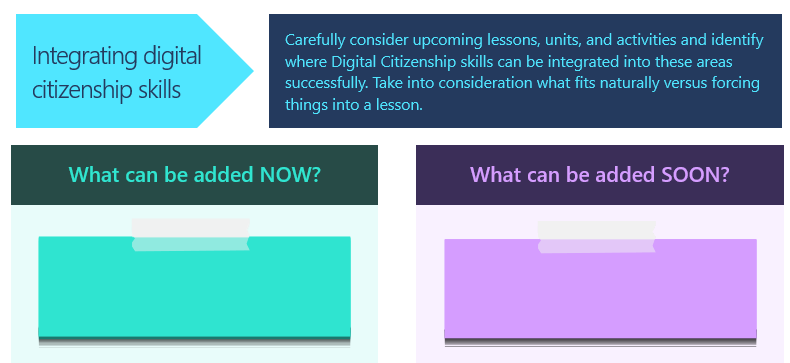
Download a copy of the Integrating Digital Citizenship Skills template to use with learners.
- In an English class, learners use a Sway presentation project to break down the components of digital citizenship. Educators engage learners in a jigsaw project in which individual "Be" statements are assigned to groups of learners. Learners create a collaborative Sway with their content, then take turns presenting their findings to the class. Learner Sway presentations are combined to share with the entire school to build a digital citizenship awareness campaign.
As technology continues to evolve and become more prominent in schools, it's imperative that good digital citizenship skills are covered. This doesn't mean rule-laden “no” statements, but rather an opportunity to focus on the positive aspects and promote thoughtful and empathetic intentions. These “Be Statements” promote collaboration with peers and learners, challenge educators to rethink traditional approaches, and prepare students to consider others first and drive their own learning in an online world.