Software and data integrity failures
- 2 minutes
With the increasing complexity of developed applications, you should avoid making assumptions related to software updates, critical data, and CI/CD pipelines without verifying integrity. Chances are your application relies upon plugins, libraries, or modules from untrusted sources or repositories.
Tip
Software Bill of Materials (SBOM), is a software security and software supply chain risk-management record that helps identify a piece of software's individual dependencies and components.
Software and data integrity failures can be connected to code and infrastructure that doesn't protect against integrity violations. An application that relies upon plugins, libraries, or modules from untrusted sources or repositories can be at risk. An insecure CI/CD pipeline can introduce the potential for unauthorized access, malicious code, or system compromise. Attackers could potentially upload their own updates to be distributed and run on all installations. Objects or data encoded into a modifiable structure are vulnerable to insecure deserialization, as well.
Perhaps you recall the high-profile SolarWinds cyberattack by a nation-state from 2020. The attackers managed to hide added malicious code among a genuine product codebase.
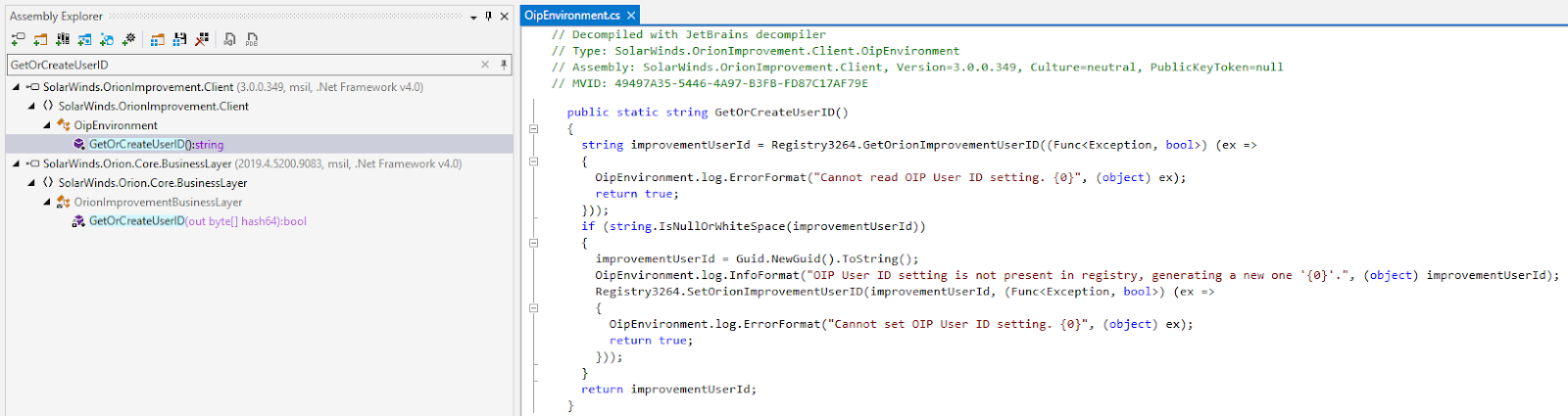 They carefully planted a backdoor for hosting malicious code (image source).
Naming the class containing malicious code OrionImprovementBusinessLayer was deliberate, not only to blend in with the rest of the code, but also to fool the software developers or anyone auditing the binaries. That class and many of the methods it uses can be found in other Orion software libraries, even thematically fitting with the code found within those libraries.
The company that develops the software had secure build processes and updated integrity processes. For several months, the firm distributed a highly targeted malicious update to more than 18,000 organizations, of which around 100 or so were affected.
Many applications now include autoupdate functionality, where updates are downloaded without sufficient integrity verification and applied to the previously trusted application. Supply-chain verification suggests depending only on vetted and verified libraries and components.
Use automation when possible. Explore free and vendor offerings for CI/CD integrated security tooling; for example, Defender for DevOps extension for Azure DevOps, which brings credential, dependency, and static analysis scanning to your workflow.
Code review notes
As you and your team adopt secure CI/CD practices, you want to make sure that:
- Your application only depends on properly vetted and verified dependencies, components, and repositories.
- You take advantage of CI/CI automation workflows (for example, GitHub Dependabot Alerts) to validate your supply-chain security review dependency graph.
- Your code reviews focus on the security aspects of the codebase.