The challenges of managing sensitive data
Contoso Ltd. continues to expand its use of cloud services, collaboration tools, and AI applications. As sensitive information spreads across different platforms, protecting that data becomes more complicated. Security teams face increasing amounts of data, stored in multiple locations, and constant changes in how users share and access information.
Managing sensitive data requires clear visibility, consistent policies, and strong control across the organization's systems.
The expanding data landscape
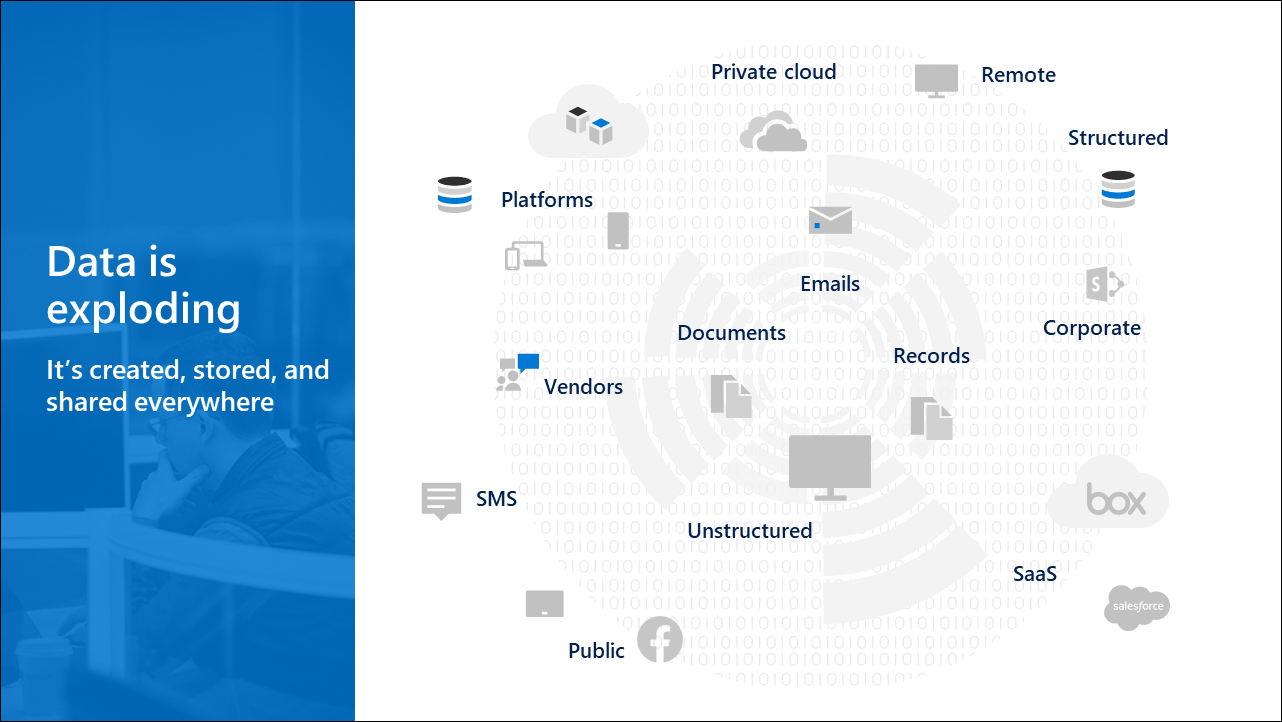
Sensitive information no longer stays on local servers. It's spread across cloud platforms, endpoints, AI tools, and collaboration apps. While these services support productivity, they also introduce security risks.
- Data is everywhere: Emails, cloud storage, AI services, and remote work tools create a distributed data environment, which makes it harder to control access and prevent leaks.
- Users collaborate across multiple platforms: Files are shared inside and outside the organization, increasing the risk of accidental or unauthorized exposure.
By 2025, global data volumes are expected to reach 175 zettabytes, a tenfold increase since 2016. As structured and unstructured data continues to grow, organizations need strong data discovery and classification strategies to keep sensitive information secure and compliant.
Balancing security with usability
Security policies must protect sensitive data without disrupting business operations. When controls are too restrictive, employees might try to bypass them to get work done, creating security gaps.
- Security vs. usability: Security controls should align with business workflows. Employees need secure collaboration tools that support productivity while still protecting sensitive data.
The challenge of data visibility
Many organizations struggle to track where sensitive data resides, how it's accessed, and who has permissions. Without clear visibility, security and compliance risks increase.
Lack of visibility: Research shows many organizations face challenges in detecting and protecting sensitive data:
88% of organizations aren't confident they can detect or prevent sensitive data loss.
More than 80% of corporate data remains unclassified and unprotected, often called "dark data."
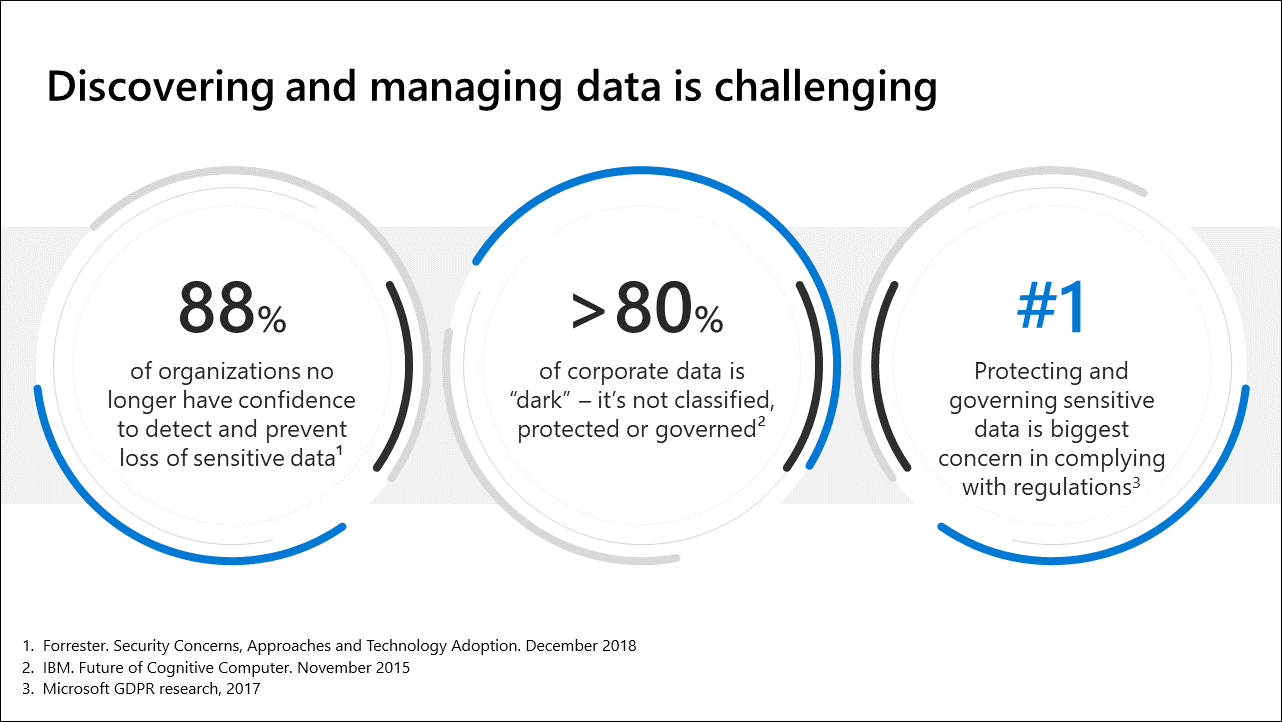
Without clear visibility, organizations struggle to enforce security policies, increasing the risk of breaches and compliance failures.
Why organizations must address these challenges
Failing to manage sensitive data can lead to:
- Financial and reputational damage from data breaches.
- Regulatory penalties for not meeting compliance requirements.
- Operational disruptions caused by security incidents and data loss.
To reduce these risks, organizations need a structured approach to identifying, securing, and governing sensitive data.