
Gode nyheder. Du kan afinstallere følgende software. Det var den, der oprettede PowerShell.exe-processen.
Winhance v26.03.12
This browser is no longer supported.
Upgrade to Microsoft Edge to take advantage of the latest features, security updates, and technical support.
' cx='32' cy='32' r='32' /%3E%3Ctext x='50%25' y='55%25' dominant-baseline='middle' text-anchor='middle' fill='%23FFF' %3EBS%3C/text%3E%3C/svg%3E)
Trussel stoppet
Vi stoppede en trussel i en fil, der var i brug.
Trusselsoplysninger
Navn på trussel: RealProtect.SuspectPowershell!a97e6573b97b
Status: Blokeret
Dato | Tid: 13.03.2026 07:12
Elementer, der er under mistanke for at udgøre en trussel, opbevares i karantæne på en
sikker placering, hvor de ikke kan skade din enhed. Elementerne kan slettes eller gendannes //bs
Filer scannet: 770458
Registrerede filer: 4
Rensede filer: 4
Samlet scanningstid: 00:46:30
Scanningsstatus: done
//bs - dk
' cx='32' cy='32' r='32' /%3E%3Ctext x='50%25' y='55%25' dominant-baseline='middle' text-anchor='middle' fill='%23FFF' %3ERS%3C/text%3E%3C/svg%3E)
Hej,
Kørte du den kommando umiddelbart efter PowerShell-vinduet/-vinduerne dukkede op?
Det hjælper ikke at køre den senere.
Okay, min fejl. Jeg kørte testen efter scanningen. Næste gang: McAfee-vinduet vises, kører jeg ny test og tager skærmbillede og sender //bs
@Bo:
Skærmbilledet mangler i dit seneste indlæg.
Trussel stoppet
Vi stoppede en trussel i en fil, der var i brug.
Trusselsoplysninger
Navn på trussel: RealProtect.SuspectPowershell!a97e6573b97b
Status: Blokeret
Dato | Tid: 14.03.2026 10:21
Elementer, der er under mistanke for at udgøre en trussel, opbevares i karantæne på en sikker placering, hvor de ikke kan skade din enhed. Elementerne kan slettes eller gendannes.
Lad os bruge et specialiseret værktøj til at se softwarekonfigurationen.
Del venligst dine Farbar-scanningslogfiler til analyse.
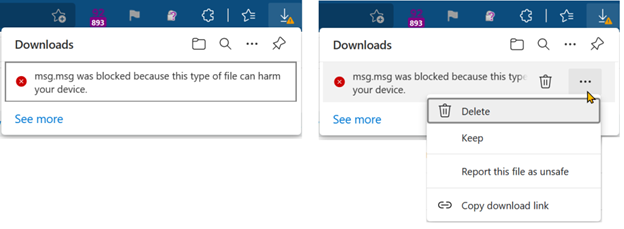
FRST64.exe til FRST64English.exe.Bemærk: Hvis Microsoft Edge eller Chrome fejlagtigt mærker den eksekverbare Farbar Scanner-fil som PUA/malware, skal du vælge at beholde den ved at trykke på … i den nederste bjælke, vælge Behold og derefter vælge Behold alligevel i den dialogboks, der vises. Se dette skærmbillede. Det er et sikkert værktøj, der bruges i de fleste antimalware-fora.
Standardansvarsfraskrivelse: Der er et link til et websted, der ikke tilhører Microsoft. Siden ser ud til at give nøjagtige og sikre oplysninger. Vær opmærksom på annoncer på webstedet, der kan reklamere for produkter, der ofte klassificeres som PUP'er (potentielt uønskede produkter). Undersøg grundigt ethvert produkt, der annonceres på webstedet, før du beslutter dig for at downloade og installere det.
Gode nyheder. Du kan afinstallere følgende software. Det var den, der oprettede PowerShell.exe-processen.
Winhance v26.03.12
Kør venligst nedenstående fixlist.
Fixlist.txt i den samme mappe som FRST64English.exe.BEMÆRK: fixlist.txt-scriptet blev skrevet specifikt til denne bruger og til brug på den pågældende maskine. Det anbefales ikke at køre det på en anden maskine, og kør ikke den samme fixlist.txt mere end én gang.
Filen mangler i dit indlæg.
Vi deaktiverede den planlagte Winhance-opgave, som startede PowerShell.
Ser du stadig PowerShell-notifikationerne?
Stand By ... Restart my computer ...
Status :
= G
Pc genstart:
= Efter 10 minutter ingen McAfee notifikation
= Kørte McAfee hurtig virusscan
= Pc 100 % OK
Hi, This is Ramesh.
There are some built-in scheduled tasks that run PowerShell.exe. However, we must ensure that the recently run PowerShell.exe process is not caused by a miner infection.
When the PowerShell window pops up and closes, please open PowerShell (admin) and run this command:
Get-ScheduledTask | Get-ScheduledTaskInfo | select TaskName, TaskPath, LastRunTime | sort LastrunTime -descending | ogv
Press Enter. The command outputs the list of recently run scheduled tasks, sorted in descending order.
Maximize the window and post a screenshot.
In addition, please run the ESET Online Scanner and post the detection report here.
https://www.eset.com/us/home/online-scanner/
Run the scanner and choose Custom scan.
Select the following checkboxes
Click "Save and continue."
Start the scan and let it complete.
If malware was found during the scan, click "Save scan log" and type a file name for the detection report.
Upload the detection report in your next reply.
Standard Disclaimer: There is a link to a non-Microsoft website. The page appears to provide accurate, safe information.

RealProtect.SuspectPowershell!a97e6573b97b is a detection name indicating that security software has blocked a suspicious PowerShell activity or script. The message states that the threat was blocked and the related item was placed in quarantine, which means it cannot currently harm the device.
To handle this situation safely on Windows 11 using the built‑in security tools:
If the detection came from a file in a cloud location such as OneDrive, SharePoint, or Microsoft Teams, be aware that Microsoft 365 can also block malicious files so they cannot be opened, to protect the device and organization from malware and ransomware.
To reduce the risk of similar threats in the future:
References: