Note
Access to this page requires authorization. You can try signing in or changing directories.
Access to this page requires authorization. You can try changing directories.
In this quickstart, you learn how to use the Azure Storage Actions client library for .NET to create a storage task and assign it to an Azure Storage account. Then, you'll review the results of the run. The storage task applies a time-based immutability policy on any Microsoft Word documents that exist in the storage account.
API reference documentation | Library source code | Package (NuGet) | Samples
Prerequisites
Azure subscription - create one for free
An Azure storage account. See create a storage account. As you create the account, make sure to enable version-level immutability support and that you don't enable the hierarchical namespace feature.
The Storage Blob Data Owner role is assigned to your user identity in the context of the storage account or resource group.
A custom role assigned to your user identity in the context of the resource group which contains the RBAC actions necessary to assign a task to a storage account. See Permissions required to assign a task.
.NET Framework is 4.7.2 or greater installed. For more information, see Download .NET Framework.
Setting up
This section walks you through preparing a project.
Create the project
Create a .NET console app using either the .NET CLI or Visual Studio 2022.
At the top of Visual Studio, navigate to File > New > Project...
In the dialog window, enter console app into the project template search box and select the first result. Choose Next at the bottom of the dialog.
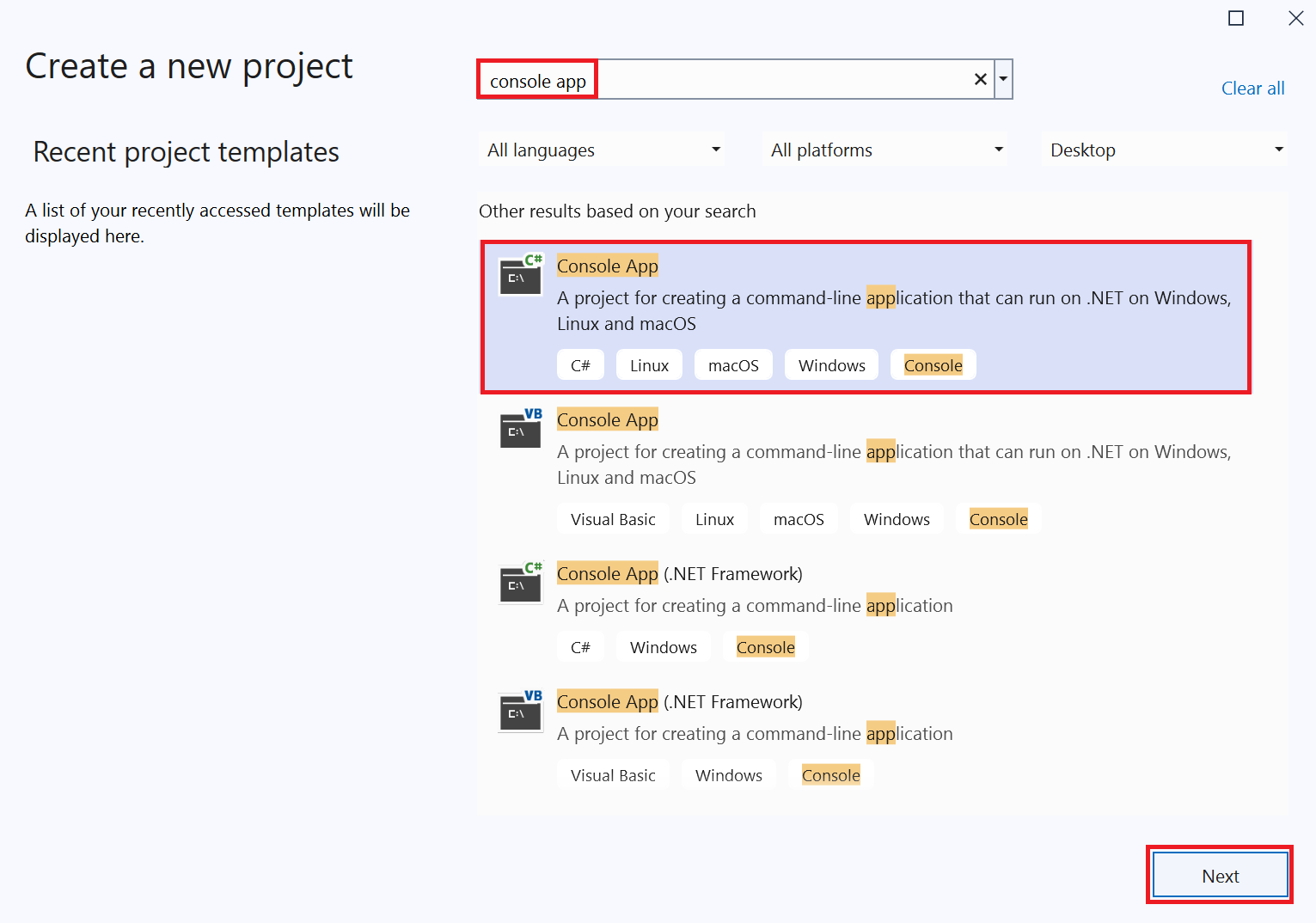
For the Project Name, enter StorageTaskQuickstart. Leave the default values for the rest of the fields and select Next.
For the Framework, ensure the latest installed version of .NET is selected. Then choose Create. The new project opens inside the Visual Studio environment.
Install the packages
In Solution Explorer, right-click the Dependencies node of your project. Select Manage NuGet Packages.
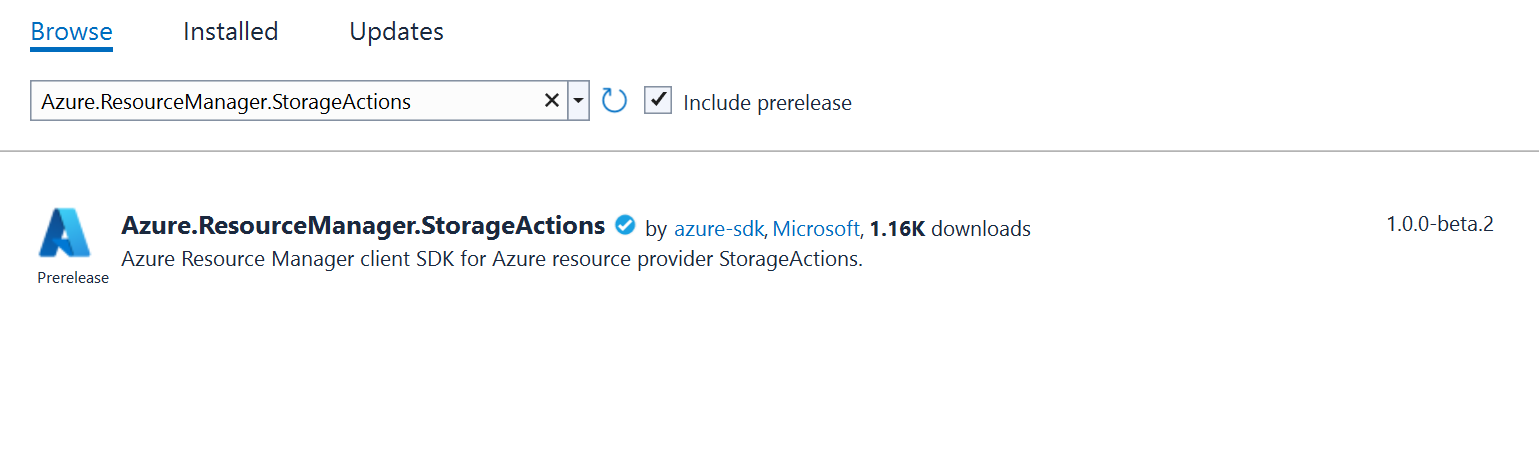
In the resulting window, select the Include prerelease checkbox, and then search for Azure.ResourceManager.StorageActions. Select the appropriate result, and select Install.
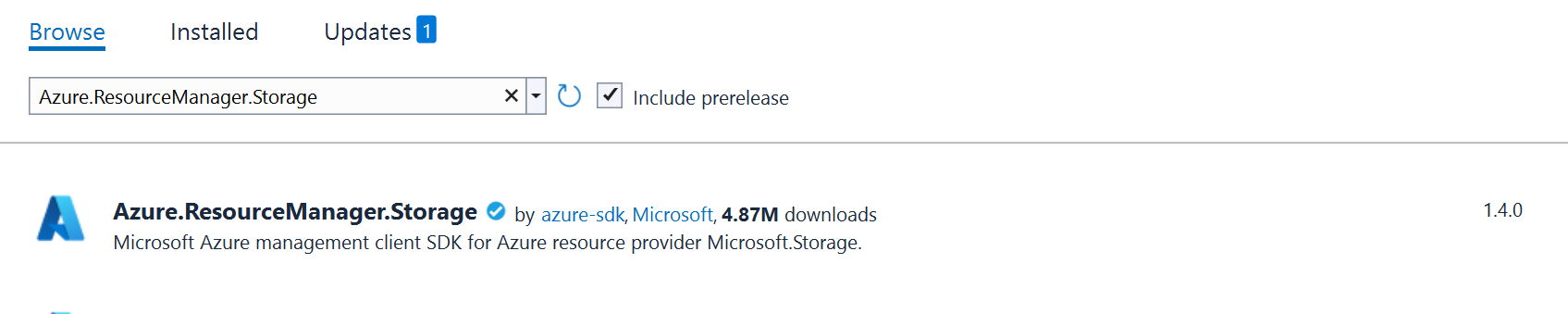
Next, search for Azure.ResourceManager.Storage. Select the appropriate result, and select Install.
Search for Azure.ResourceManager.Authorization*. Select the appropriate result, and select Install.

Set up the app code
Replace the starting code in the Program.cs file so that it matches the following example, which includes the necessary using statements for this QuickStart.
using Azure;
using Azure.Core;
using Azure.ResourceManager;
using Azure.ResourceManager.Models;
using Azure.ResourceManager.Resources;
using Azure.ResourceManager.StorageActions;
using Azure.ResourceManager.StorageActions.Models;
using Azure.ResourceManager.Storage.Models;
using Azure.ResourceManager.Storage;
using Azure.ResourceManager.Authorization;
using Azure.ResourceManager.Authorization.Models;
Sign in and connect your app code to Azure using DefaultAzureCredential
-
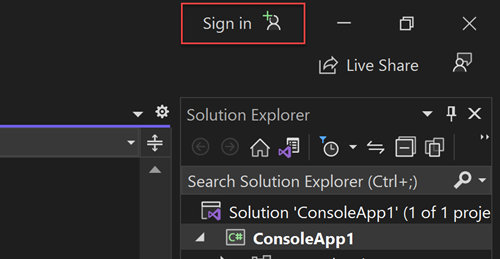
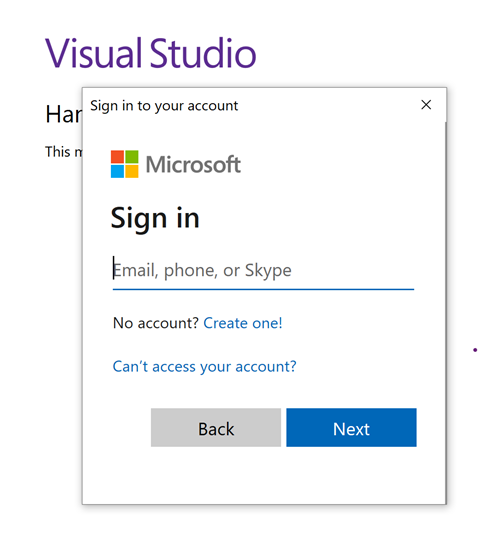
For local development, make sure you're authenticated with the same Microsoft Entra account you assigned the role to. You can authenticate via popular development tools, such as the Azure CLI or Azure PowerShell. The development tools with which you can authenticate vary across languages.
Sign-in to Azure through the Azure CLI using the following command:
az login -
To use
DefaultAzureCredential, add the Azure.Identity package to your application.In Solution Explorer, right-click the Dependencies node of your project. Select Manage NuGet Packages.
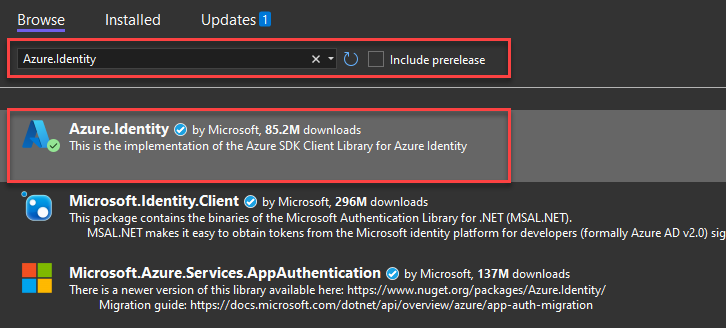
In the resulting window, search for Azure.Identity. Select the appropriate result, and select Install.
Add the following using statement to the Program.cs* file:
using Azure.Identity;Add the following code to the Program.cs file. When the code is run on your local workstation during development, it will use the developer credentials of the prioritized tool you're logged into to authenticate to Azure, such as the Azure CLI or Visual Studio.
TokenCredential cred = new DefaultAzureCredential();
ArmClient client = new ArmClient(cred);
Create a storage task
Pick a resource group in your subscription where you'd like to create a storage task. Then, get the storage task collection of that resource group.
Replace the
<subscription-id>placeholder value in this example with the ID of your subscription.Replace the
<resource-group>placeholder value in this example with the name of your resource group.
 string subscriptionId = "<subscription-id>";
 string resourceGroupName = "<resource-group>";

 ResourceIdentifier resourceGroupResourceId =
     ResourceGroupResource.CreateResourceIdentifier(subscriptionId, resourceGroupName);

 ResourceGroupResource resourceGroupResource =
     client.GetResourceGroupResource(resourceGroupResourceId);

 StorageTaskCollection storageTaskcollection = resourceGroupResource.GetStorageTasks();
Define a condition clause by using JSON. A condition has a collection of one or more clauses. A clause contains a property, a value, and an operator. In the following JSON, the property is
Name, the value is.docx, and the operator isendsWith. This clause allows operations only on Microsoft Word documents.string clause = "[[endsWith(Name, '.docx')]]"For a complete list of properties and operators, see Storage task conditions.
Tip
You can add multiple conditions to the same string and separate them with a comma.
Define the complete condition by including the clause that you previously defined along with two operations. The first operation in this definition sets an immutability policy. The second operation sets a blob index tag in the metadata of the Word document.
 StorageTaskIfCondition condition = new(clause, new StorageTaskOperationInfo[]
 {
     new StorageTaskOperationInfo(StorageTaskOperationName.SetBlobImmutabilityPolicy)
     {
         Parameters =
         {
             ["untilDate"] = "2025-10-20T22:30:40",
             ["mode"] = "locked"
         },
         OnSuccess = OnSuccessAction.Continue,
         OnFailure = OnFailureAction.Break,
     },
     new StorageTaskOperationInfo(StorageTaskOperationName.SetBlobTags)
     {
         Parameters =
         {
             ["tagsetImmutabilityUpdatedBy"] = "StorageTaskQuickstart"
         },
         OnSuccess = OnSuccessAction.Continue,
         OnFailure = OnFailureAction.Break,
     }

 });
Create the storage task and then add it to the storage task collection.
 StorageTaskProperties storageTaskProperties =
     new(true, "My storage task", new StorageTaskAction(condition));

 StorageTaskData storageTaskData = new(
     new AzureLocation("westus"),
     new ManagedServiceIdentity("SystemAssigned"),
     storageTaskProperties);

 var storageTaskResult = (storageTaskcollection.CreateOrUpdate
     (WaitUntil.Completed, "mystoragetask", storageTaskData)).Value;

 Console.WriteLine($"Succeeded on id: {storageTaskResult.Data.Id}");
Create an assignment
To use a storage task, you must create a storage task assignment. The assignment is saved as part of the storage account resource instance, and defines among other settings, a subset of objects to target, when and how often a task runs against those objects, and where the execution reports are stored.
Specify prefix filters, run frequency, start times by creating an execution context. The following example targets the
mycontainercontainer and is scheduled to run10minutes from the present time.ExecutionTriggerParameters executionTriggerParameters = new() { StartOn = DateTime.Now.AddMinutes(10).ToUniversalTime() }; ExecutionTrigger executionTrigger = new(ExecutionTriggerType.RunOnce, executionTriggerParameters); StorageTaskAssignmentExecutionContext storageTaskAssignmentExecutionContext = new(executionTrigger) { Target = new ExecutionTarget { Prefix = { "mycontainer/" }, ExcludePrefix = { }, } };Create the storage task assignment and then add it to the storage task assignment collection. The following assignment includes the execution context that you created in the previous step. It also specifies the target storage account and is configured to save execution reports to a folder named
storage-tasks-report.string accountName = "mystorageaccount"; ResourceIdentifier storageAccountResourceId = StorageAccountResource.CreateResourceIdentifier (subscriptionId, resourceGroupName, accountName); StorageAccountResource storageAccount = client.GetStorageAccountResource(storageAccountResourceId); StorageTaskAssignmentCollection storageTaskAssignmentcollection = storageAccount.GetStorageTaskAssignments(); StorageTaskAssignmentProperties storageTaskAssignmentProperties = new( new ResourceIdentifier(storageTaskResult.Data.Id.ToString()), true, "My Storage task assignment", storageTaskAssignmentExecutionContext, new("storage-tasks-report")); // Create and execute the storage task assignment storageTaskAssignmentcollection.CreateOrUpdate( WaitUntil.Started, "myStorageTaskAssignment", new StorageTaskAssignmentData(storageTaskAssignmentProperties));Give the storage task permission to perform operations on the target storage account. Assign the role of
Storage Blob Data Ownerto the system-assigned managed identity of the storage task.var roleDefId = $"/subscriptions/" + subscriptionId + "/providers/Microsoft.Authorization/roleDefinitions/<b7e6dc6d-f1e8-4753-8033-0f276bb0955b>"; var operationContent = new RoleAssignmentCreateOrUpdateContent( new ResourceIdentifier(roleDefId), storageTaskResult.Data.Identity.PrincipalId ?? throw new InvalidOperationException("PrincipalId is null")) { PrincipalType = RoleManagementPrincipalType.ServicePrincipal }; ResourceIdentifier roleAssignmentResourceId = RoleAssignmentResource.CreateResourceIdentifier(storageAccount.Id, Guid.NewGuid().ToString()); RoleAssignmentResource roleAssignment = client.GetRoleAssignmentResource(roleAssignmentResourceId); ArmOperation <RoleAssignmentResource> lro = await roleAssignment.UpdateAsync(WaitUntil.Completed, operationContent); RoleAssignmentResource result = lro.Value; RoleAssignmentData resourceData = result.Data; Console.WriteLine($"Succeeded on id: {resourceData.Id}");
Run the code
If you're using Visual Studio, press F5 to build and run the code and interact with the console app. If you're using the .NET CLI, navigate to your application directory, then build and run the application.
dotnet build
dotnet run
View the results of a task run
After the task completes running, get a run report summary for each assignment.
    ResourceIdentifier storageTaskResourceId = StorageTaskResource.CreateResourceIdentifier
        (subscriptionId, resourceGroupName, "mystoragetask");
    StorageTaskResource storageTask = client.GetStorageTaskResource(storageTaskResourceId);
    // invoke the operation and iterate over the result
    await foreach (Azure.ResourceManager.StorageActions.Models.StorageTaskReportInstance item in storageTask.GetStorageTasksReportsAsync())
    {
        Console.WriteLine($"Succeeded: {item.Properties.SummaryReportPath}");
    }
The SummaryReportPath field of each report summary contains a path to a detailed report. That report contains comma-separated list of the container, the blob, and the operation performed along with a status.
Clean up resources
Remove all of the assets you've created. The easiest way to remove the assets is to delete the resource group. Removing the resource group also deletes all resources included within the group. In the following example, removing the resource group removes the storage account and the resource group itself.
Remove-AzResourceGroup -Name $ResourceGroup