Share via

How can I fix this issue with .net framework on Windows 11?

Rjanlyen 20 Reputation points
2026-05-13T15:10:53.09+00:00

Hi,

Recently I noticed that every time i turn on my pc (Windows 11 Home v25H2), I keep getting this error message from Microsoft .NET framework usually followed by a notification by my Avira Antivirus (Suspicious Behavior Blocked).I noticed also that my pc keeps overheating although i have only the browser open and i saw in the task manager that memory used by active processes is often over 90% even though my pc has 16gb RAM.

Screenshot 2026-05-13 160605.pngScreenshot 2026-05-13 162902

Item Name : memorybuffer.ca79c338076ba172424c8894c0510136552da7297c150a0450d09e0a3d54a2b7

How can I resolve this issue?

Windows for home | Windows 11 | Security and privacy

Answer accepted by question author

Ramesh Srinivasan 81,170 Reputation points Independent Advisor
2026-05-13T17:54:07.04+00:00

Please run the fixlist below to clear the infection.

  • Download fixlist.txt
  • Save Fixlist.txt to the same folder as FRST64English.exe.
  • Close all programs.
  • Launch the Farbar Scanner tool and click "Fix".
  • Restart Windows if prompted.
  • Upload the output log file (FixLog.txt) in your next reply.

NOTE: The fixlist.txt script was written specifically for this user and for use on that particular machine. It is not recommended to run it on another machine, and don't run the same fixlist.txt more than once.


Was this answer helpful?

1 person found this answer helpful.

2 additional answers

Sort by: Most helpful
  1. Ramesh Srinivasan 81,170 Reputation points Independent Advisor
    2026-05-13T16:08:31.0433333+00:00

    Hi,

    The seems to be infected by a miner which might be running as a scheduled task. Please share your Farbar scan logs for analysis.

    • Download Farbar Recovery Scan Tool 64-bit FRST64.exe
    • If the OS language is not English, rename FRST64.exe to FRST64English.exe.
    • Run the program. Don't check or uncheck any options. Click "Scan".
    • Add the two logs, FRST.txt and Addition.txt, to a zip archive.
    • Share the zip file on OneDrive or GoFile.io, and post the link here.

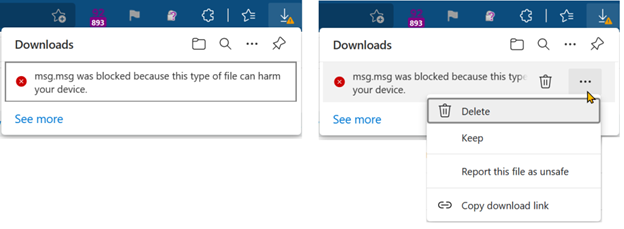
    Note: If Microsoft Edge or Chrome mislabels the Farbar Scanner executable as PUA/malware, choose to keep it by tapping … in the bottom bar, choosing Keep, and then choosing Keep anyway in the dialog that appears. See this screenshot. It's a safe tool used in most antimalware forums.


    Standard Disclaimer: There is a link to a non-Microsoft website. The page appears to provide accurate, safe information. Watch out for ads on the site that may advertise products frequently classified as PUPs (Potentially Unwanted Products). Thoroughly research any product advertised on the site before you decide to download and install it.


    Was this answer helpful?


  2. AI answer

    2026-05-13T15:11:19.25+00:00

    The symptoms described (repeated .NET Framework error, Avira detecting a backdoor, very high memory usage and overheating) indicate a likely malware infection and resulting system damage, not a normal .NET Framework issue.

    Follow these steps in order:

    1. Run full malware scans
      1. Open Settings > Privacy & security > Windows Security > Virus & threat protection.
      2. Run a Quick scan first, then a Full scan to check all files and running processes.
      3. Let the scan complete and remove or quarantine everything it finds.
      4. Run a full scan with Avira as well and ensure all detections are quarantined or deleted.
    2. Install all Windows and driver updates
      1. Go to Start > Settings > Windows Update > Check for updates and install everything offered.
      2. Then go to Settings > Windows Update > Advanced options > Optional updates and install any available driver/optional updates.
      3. Restart when prompted and repeat Check for updates until no further updates are offered.
    3. Improve performance and check for remaining issues High memory and CPU usage can persist after an infection. Use the built‑in tools to clean up and tune the system:
      1. Install and run Microsoft PC Manager (from the Microsoft Store) to clean temporary files, manage startup apps, and optimize performance.
      2. Open Task Manager (Ctrl+Shift+Esc) and on the Processes tab close apps and background processes that are using a lot of memory or CPU but are not needed.
      3. If Task Manager itself shows multiple instances or behaves abnormally after recent updates, close extra instances from within Task Manager or by using an elevated command line as a temporary workaround until future updates address it.
    4. Repair system files Since malware and repeated crashes can corrupt system components, run system repair commands (as already shown effective in a similar case):
      1. Open Command Prompt as administrator.
      2. Run sfc /scannow and wait for it to complete.
      3. If it reports repairs, restart and run it again until it reports no integrity violations.
    5. If problems persist, reset Windows while keeping personal files If the .NET error and high resource usage continue after cleaning malware, updating, and repairing system files, perform a repair reinstall of Windows 11 while preserving data:
      1. Go to Settings > System > Recovery.
      2. Under Recovery options, select Reset PC.
      3. Choose Keep my files so personal files remain but apps and settings are reset.
      4. Prefer Cloud download for the freshest system files, or Local reinstall if bandwidth is limited.
      5. Let the process complete and then reinstall only trusted applications.

    If even a reset with “Keep my files” does not stop the warnings or performance issues, a full factory reset (removing everything) is the remaining option to guarantee a clean system.


    References:

    AI-generated content may be incorrect. Read our transparency notes for more information.

    Was this answer helpful?

Your answer

Answers can be marked as 'Accepted' by the question author and 'Recommended' by moderators, which helps users know the answer solved the author's problem.