Hi Ringo Günther,
The new error code seems to point to a Windows Update issue.
You mentioned that you tried SFC and DISM methods, please note that generally speaking, SFC and DISM commands are used in combination.
Since I don't know the completeness of your previous solutions, the following content will include some of the methods you mentioned earlier.
Method 1: Manually set Startup type of Windows Update related services.
In the search box on the taskbar, type cmd.
Find Command Prompt in the search results and select Run as administrator. (Select Yesor Continue, when prompted by the User Account Control.)
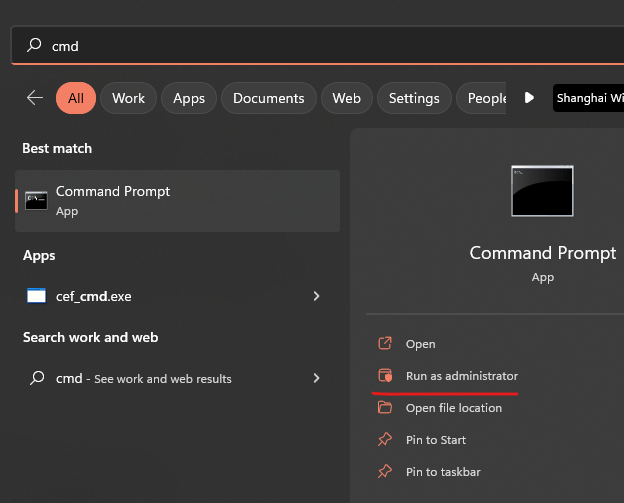
In the Administrator: Command Prompt window, type the following commands and then press Enterkey after each one:
SC config wuauserv start= auto
SC config bits start= auto
SC config cryptsvc start= auto
SC config trustedinstaller start= auto
Restart your computer and try to update again.
Method 2: Rename software distribution folders
In the search box on the taskbar, type command prompt , then select Run as administrator from the list of options. Select Yes . Next, in the window that appears, type the following commands one at a time, including the spaces as shown. After you type each command, press Enter. Then let each command complete before you type the next command.
net stop bits
net stop wuauserv
ren %systemroot%\softwaredistribution softwaredistribution.bak
ren %systemroot%\system32\catroot2 catroot2.bak
net start bits
net start wuauserv
After all these commands are completed, close the Command Prompt window and restart your computer.
Method 3: Use System File Checker.
- In the search box on the taskbar, type command prompt, and right-click or press and hold Command Prompt (Desktop app) from the list of results. Select Run as administrator, and then selectYes.
- Type DISM.exe /Online /Cleanup-image /Restorehealth (note the space before each "/"), and then press Enter. (Note: This step may take a few minutes to start and complete.)
- After you see a message that says "The operation completed successfully," type sfc /scannow (note the space between "sfc" and "/") and press Enter.
- After you see a message that says, "Verification 100% complete," type exit and press Enter.
Method 4: Try to see if the issue recurs under the new user profile.
Method 5: Perform an in-place upgrade or repair upgrade.
I can understand your idea that you don't want to perform a clean installation of Windows, and I've found other ways to fix Windows for you.
Disclaimer: Please back up all your important data before performing it.
If there is anything not clear, please do not hesitate to let me know.
Best Regards,
Kyo - MSFT | Microsoft Community Support Specialist
' cx='32' cy='32' r='32' /%3E%3Ctext x='50%25' y='55%25' dominant-baseline='middle' text-anchor='middle' fill='%23FFF' %3EA%3C/text%3E%3C/svg%3E)
