Developer technologies | ASP.NET | ASP.NET Core
A set of technologies in the .NET Framework for building web applications and XML web services.
This browser is no longer supported.
Upgrade to Microsoft Edge to take advantage of the latest features, security updates, and technical support.

I'm knew in dependency injection, so I was testing it. I tested constructor injection in Console Application and it went good.
So I decide to test in AspNet Core. I realized it already had something built in for that, so I don't need to install and additional package.
So, my first code was running okay and I understood it what it happend.
This is my first code:
public interface ITea
    {
        string Flavour();
    }

    public class LemonTea : ITea
    {

        public string Flavour()
        {
            return "Lemon";
        }

    }

    public class TamarindoTea : ITea
    {
        public string Flavour()
        {
            return "Tamarindo";
        }
    }
public class Tea
    {
        private ITea _tea;

        //ctor injection
        public Tea(ITea tea)
        {
            this._tea = tea;

        }
        public string GetFlavour()
        {
            return _tea.Flavour();
        }


    }
now in Startup.cs
    public void ConfigureServices(IServiceCollection services)
        {
            services.AddControllersWithViews();

            services.AddScoped<ITea, TamarindoTea>();
            services.AddScoped<ITea, LemonTea>();

        }
in HomeController
 public IActionResult Index()
        {
var tea = new Tea(_tea);
            ViewBag.Test = tea.GetFlavour();


            return View();
        }
as a result I had
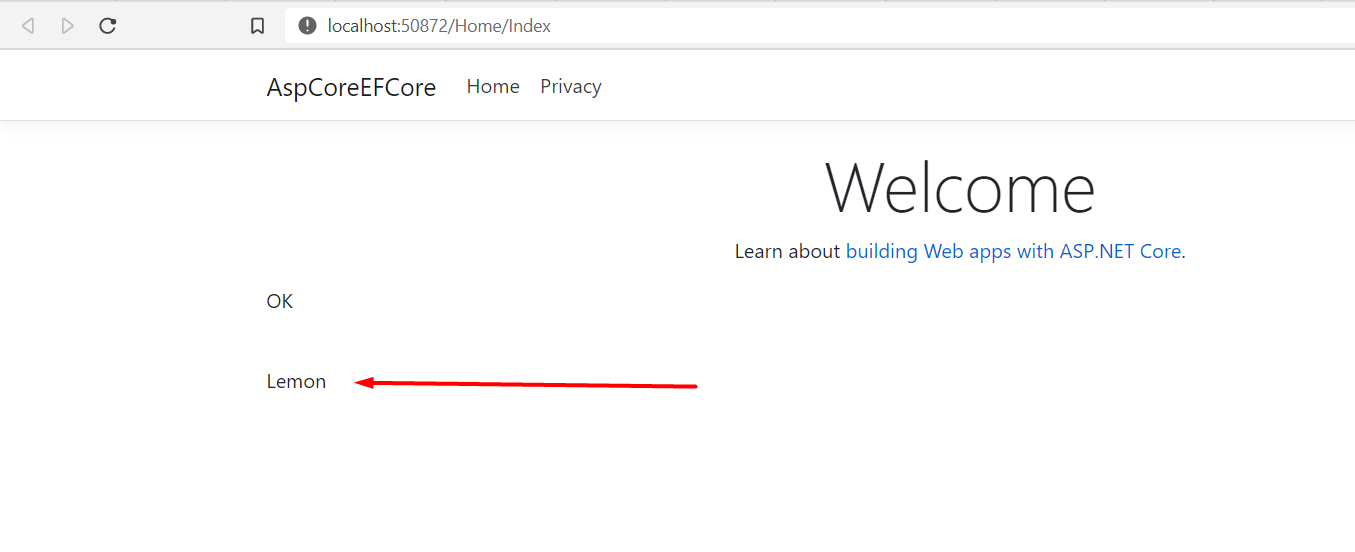
I've realized that the "type of flavour" I was having was according the last Added code in ConfigureServices.
So I decide to find I way to get a result similar to this code (I also wrote it)
In index...
ITea lemon = new LemonTea();
            ITea tamarindo = new TamarindoTea();

            var tea = new Tea(tamarindo);
            ViewBag.Test = tea.GetFlavour();
The output here would depend on the type of ITea I inject in the constructor.
I don't know where I read, but something got me thinking that I was having too much dependencies in the second code
I was using ITea, Tea, LemonTea and TamarindoTea
So I excluded Tea, and added constructor dependency on the two other
public class LemonTea : ITea
    {

        private ITea _tea;
        public LemonTea(ITea tea)
        {
            _tea = tea;

        }

        public string Flavour()
        {
            return "Lemon";
        }

    }
But for that to work, I would have to remove the code for ConfigureServices or else I had this error
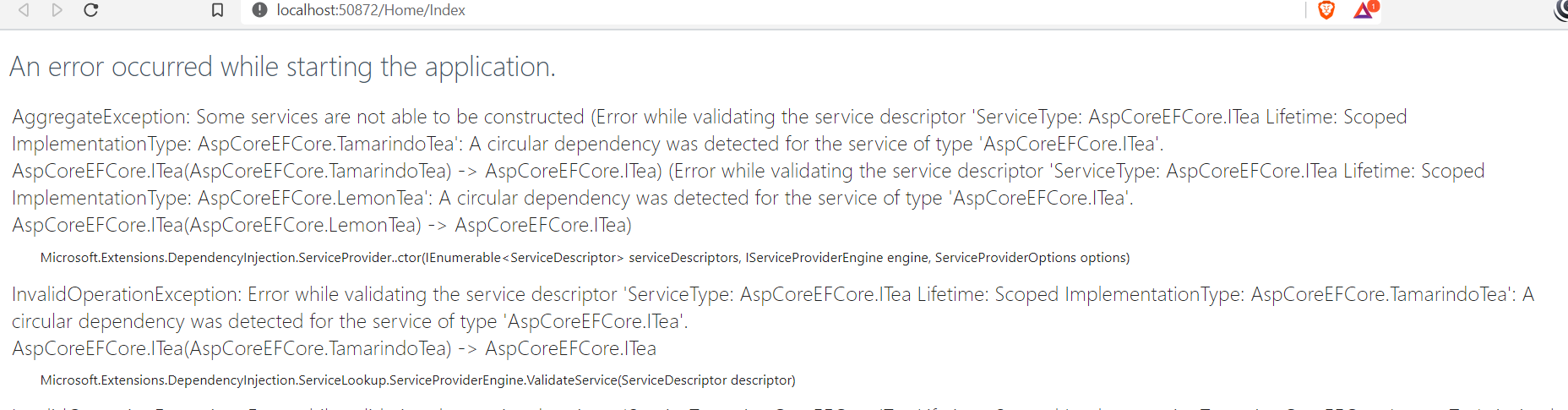
Then I thought that something was wrong (that what I think), I mean can choose the type of tea at runtime, but I now I have to instatiate the class. It was the same as I do without caring about dependency injection (besides the fact that my class don't depend on other concrete classes)
Since I'm thinking that my code is wrong, I Google to how to inject different implementations in Aspnet core
I found this code from StackOverFlow and refactor it, I also had to refactor my code because of some errors
my refactor ended up like this:
  public class LemonTea : ITea
    {

             public string Flavour()
        {
            return "Lemon";
        }

    }

    public class TamarindoTea : ITea
    {

        public string Flavour()
        {
            return "Tamarindo";
        }
    }

--------------------Startup.cs
 public void ConfigureServices(IServiceCollection services)
        {
            services.AddControllersWithViews();
            services.AddTransient<LemonTea>();
            services.AddTransient<TamarindoTea>();

        }

--------------------HomeController
 private readonly IServiceProvider _serviceProvider;

        public HomeController(ILogger<HomeController> logger, IServiceProvider serviceProvider)
        {
            _logger = logger;
                        _serviceProvider = serviceProvider;

        }


        public string GetTeaFlavour(string name)
        {
            if (name.ToLower() == nameof(LemonTea).ToLower())
                return _serviceProvider.GetService<LemonTea>().Flavour();

            else
                return _serviceProvider.GetService<TamarindoTea>().Flavour();
        }

  public IActionResult Index()
        {


            ViewBag.Test =  GetTeaFlavour(nameof(TamarindoTea));

       }
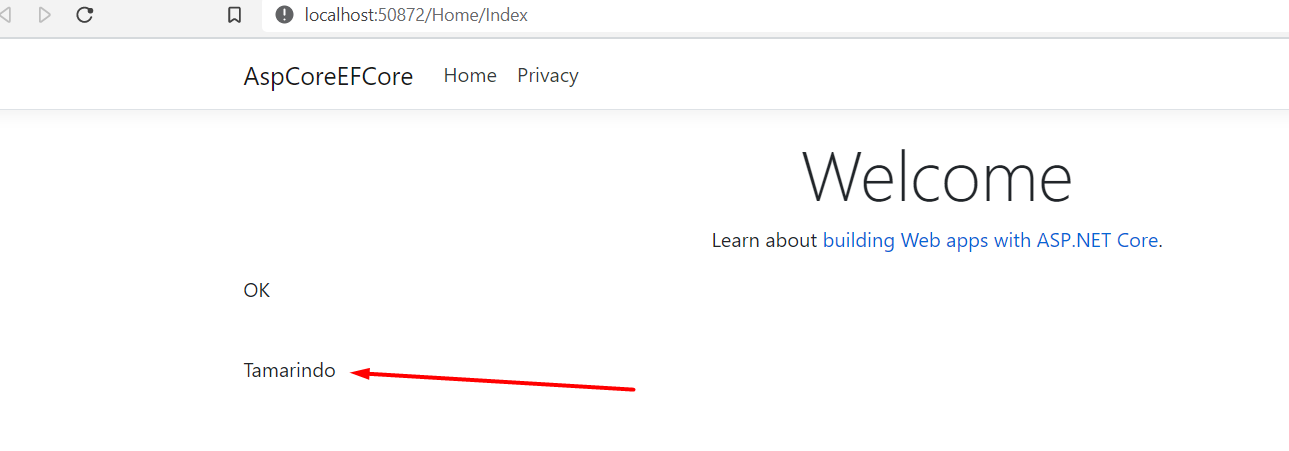
I've archieved what I want, I just need to type the name of the class, and since I'm using nameof, I can refactor
So I was having some error so I've refactor my code in other to work.
In this case I didn't refactor because I knew what I was doing, I just knew how to find the solution. At some point I was understanding
what I was doing, then I got lost.
It's working, but I can't understand my code, I know how it works, but I don't know why. IFAIK that's very common for programmers
But I would like to have someone to explain to me what I've done and using my code (if possible, what would be the best implementation)

DI is about what is talked about in the link.
https://ardalis.com/new-is-glue/
DI is about writing clean code
Github ASP.NET Core solution using DI.
https://github.com/darnold924/PublishingCompany
https://www.c-sharpcorner.com/blogs/understanding-interfaces-via-loose-coupling-and-tight-coupling
HTH
Why is there a ServiceProject and this service project CRUD methods doesn't connect to database data?
And also they seems to do the same as IDAOs.
PS: **I can't run the project, says that
can't connect to IIS
I know how to fix, but they way I know I would have to delete some json config files and I don't know the impact on this project since it wasn't created by me**.
PS2: New is glue, I understood perfectly. Thanks :)
The service layer is used on the MVC client side using HTTPClient() to connect to an restful ASP.NET WebAPI Web service. The WebAPI has reference to the data access layer (DAL) and does CRUD with the database using EF on the behalf of the ASP.NET MVC client project. The DAL objects DAO(s) data access object are doing the CRUD that are DI into a WebAPI controller.
https://en.wikipedia.org/wiki/Data_access_object
You would have to configure IIS. I believe the project should be working with IIS Express but maybe some parts want to use IIS, and no appsettings.json files should be removed, becuase the whole solution is an ASP.NET Core solution and it uses the appsettings.jsonjson files for configuration information. The solution would never work for you becuase you don't have the database it uses.
With the models creating the DB is easy :)
Thanks I understood it.
A couple of other things with classname suffix you have seen in the example solution.
VM = viewmodel and DM = domain model.
https://deviq.com/terms/kinds-of-models
https://www.dotnettricks.com/learn/mvc/understanding-viewmodel-in-aspnet-mvc
https://en.wikipedia.org/wiki/Separation_of_concerns
https://learn.microsoft.com/en-us/dotnet/architecture/modern-web-apps-azure/architectural-principles
https://www.c-sharpcorner.com/UploadFile/56fb14/understanding-separation-of-concern-and-Asp-Net-mvc/
continued...
Keep the controllers thin.
DTO travels between layers, tiers and client/service programs.
https://www.codeproject.com/Articles/1050468/Data-Transfer-Object-Design-Pattern-in-Csharp
https://tech.trailmax.info/2013/12/asp-net-mvc-viewbag-is-bad/
You may have to copy the link below to a new browser page.
Layered or n-tier?
https://learn.microsoft.com/en-us/previous-versions/msp-n-p/ee658117(v=pandp.10)
HTH