Note
Access to this page requires authorization. You can try signing in or changing directories.
Access to this page requires authorization. You can try changing directories.
This article provides an executive overview of a unified data platform and answers the key questions decision makers need to make an informed adoption decision.
Every organization wants its data to drive confident business decisions. Data must be trusted, easy to reuse for analytics and AI, and secure by default. For most organizations, this goal is hard to achieve. Data is spread across systems and teams. Standards vary. Governance is inconsistent. These issues make analytics and AI difficult to use with confidence.
Many organizations are addressing this challenge by unifying their data platform with Microsoft Fabric. Fabric enables teams to create trusted data products that can be governed and securely used for analytics and AI across the organization. This guidance provides decision makers with the framework they need to make that shift and establish a unified data foundation.
Solutions and decision tree
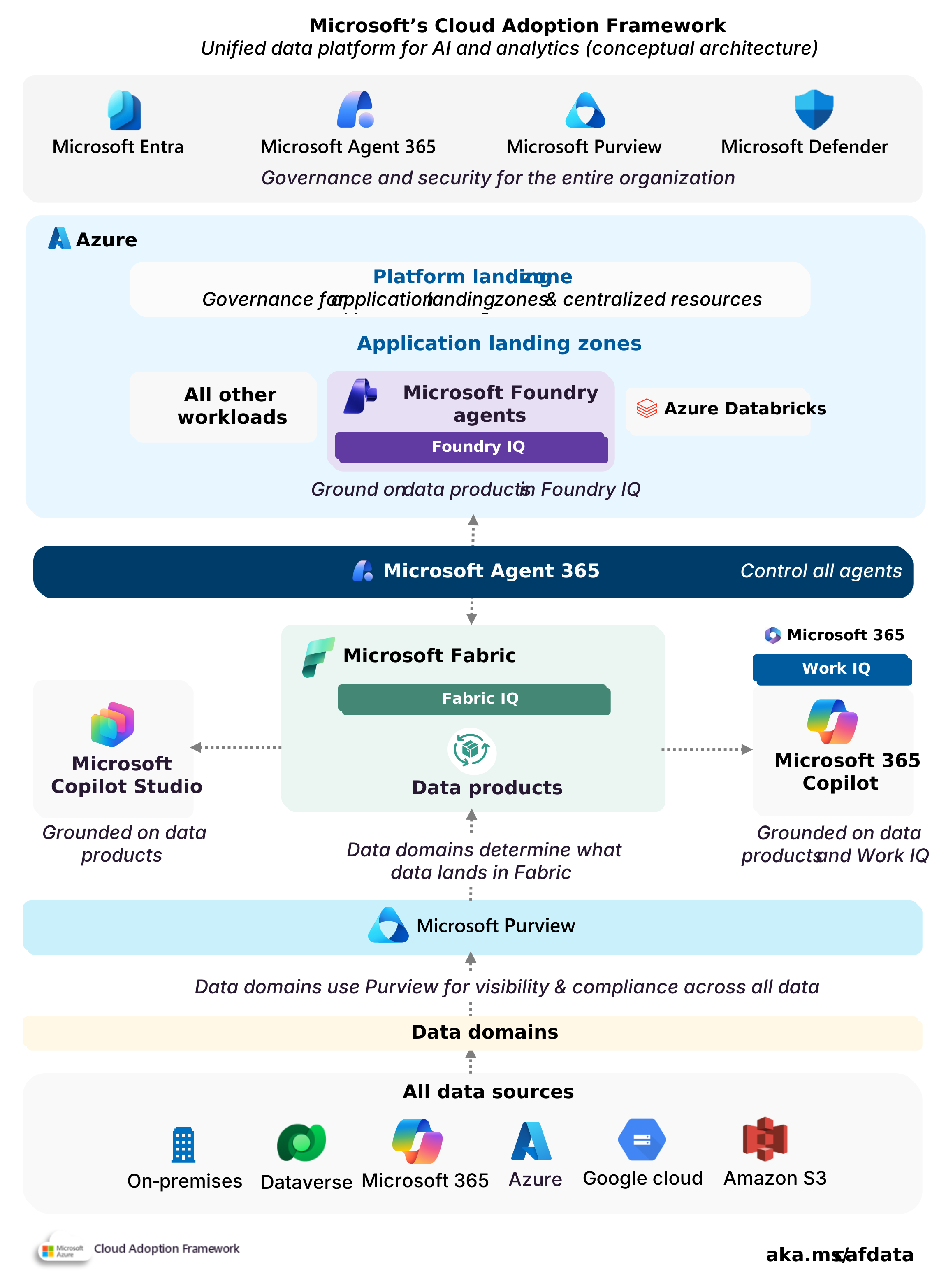
Conceptual architecture of a unified data platform for AI and analytics.
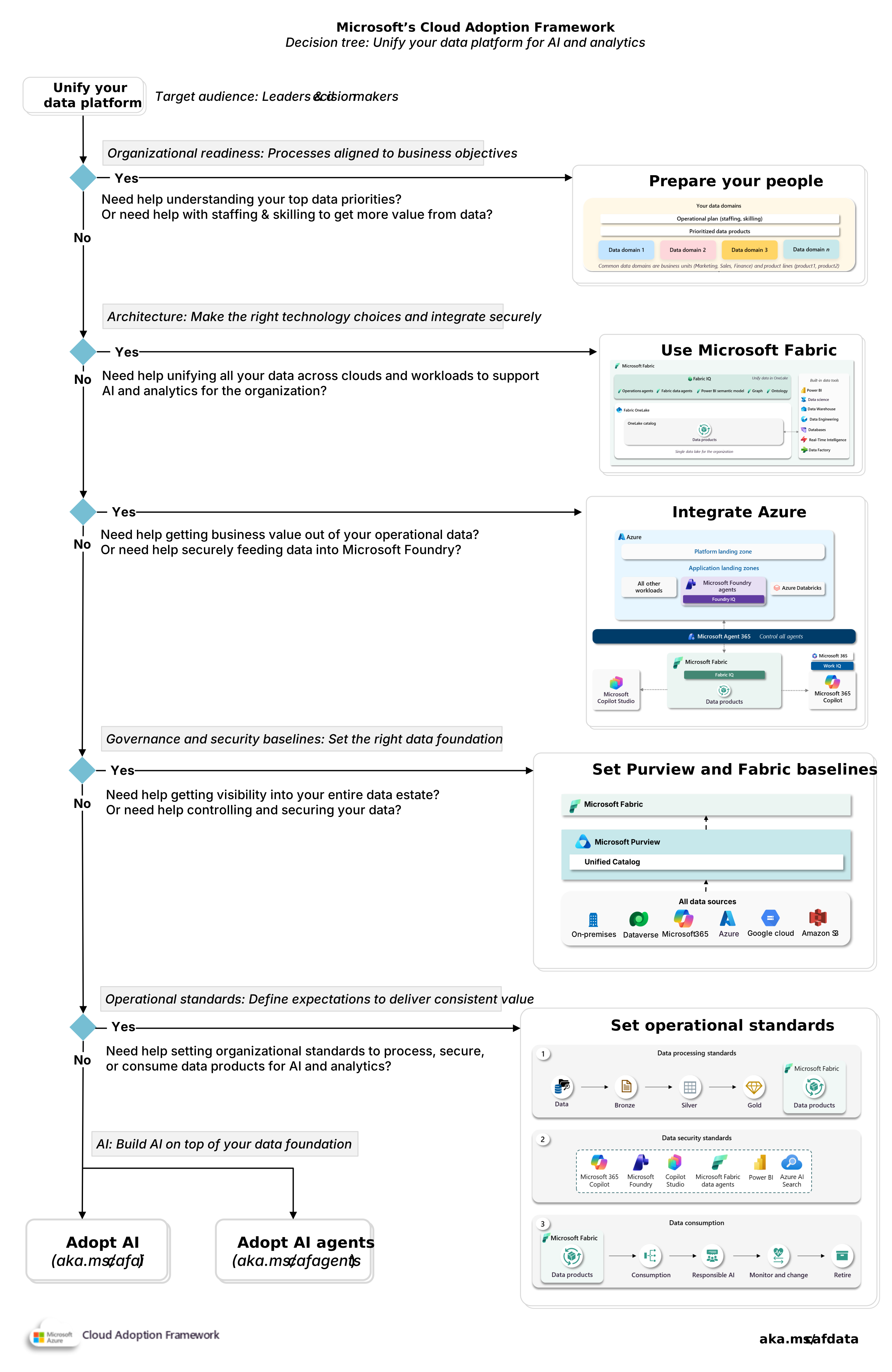
Why a unified data platform?
Most business and technology leaders understand the cost of fragmented data. What often holds them back is the belief that fixing it requires large, risky migrations. Microsoft Fabric takes a different approach and delivers value without disruption. Key benefits include:
Minimal business disruption: Fabric connects to existing systems by using virtualization (shortcuts) and selective replication (mirroring). Teams can unify access to data without interrupting current operations.
Built‑in governance: Fabric brings data engineering, analytics, and BI into a single platform. Security and governance policies are defined once and applied consistently, instead of being recreated and enforced differently across multiple tools.
Foundation for AI and analytics: Fabric enables organizations to produce reusable, high‑quality data products. These trusted products speed up analytics and AI initiatives. Fabric IQ helps unify and contextualize data. Foundry IQ allows Microsoft Foundry agents to reason over governed, trusted data.
What level of investment is required?
Unifying the data platform is an investment in capability, not a wholesale replacement of every system. The goal is to keep using your existing data systems and build a shared foundation that can grow over time. Key cost factors include:
Microsoft Fabric cost factors: Primary cost factors include (see Figure 2):
Compute: The compute capacity you create (Fabric capacities).
Storage: The storage you use in OneLake.
Replication: The data replication you perform (Mirroring).
Power BI: Ensure that users have either sufficient Microsoft Fabric capacity that includes Power BI access or separate Power BI licenses, as summarized in the licensing guidance.
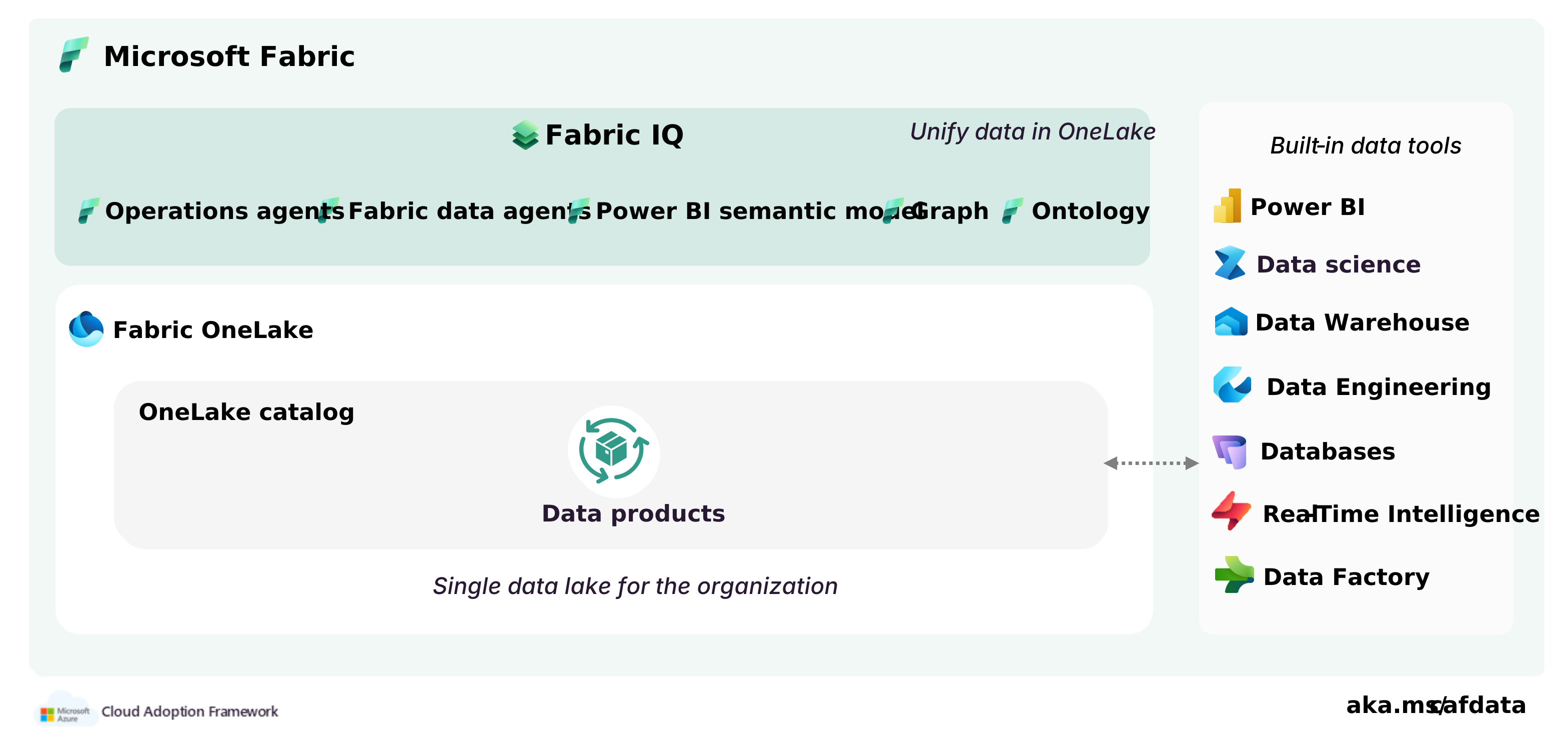 Figure 2. Microsoft Fabric capabilities to create business value from data.
Microsoft Purview cost factors: Use Microsoft Purview for unified data governance and compliance. Purview provides a centralized data catalog, data classification, and policy enforcement across your entire data estate. The data can be in OneLake, Azure, on-premises, third-party SaaS, or other cloud platforms. Key Purview cost factors include subscription-based licensing and consumption-based capabilities. Budget for both ongoing licensing and the volume of data and services you govern with Purview.
Azure cost factors: You use Azure subscriptions to host Fabric compute (capacities) and your Microsoft Purview account. There's no extra cost for Azure subscriptions. If you integrate other Azure services, such as Azure Databricks or Azure Machine Learning, into your unified platform, remember these services have their own pricing models. Plan for those costs. See cost factors for Azure Databricks and Azure Machine Learning.
How long until you see value?
Microsoft Fabric is designed to deliver value quickly. Time to value is short because unification doesn't depend on full migration. Teams can start with a small set of high‑value data products. Each step adds value while limiting risk. In practice, many organizations see value within weeks for initial analytics or AI scenarios. As Fabric becomes the standard foundation for data products, analytics, and AI, value grows through reuse and consistent standards across the organization.
How to create a unified data platform?
Microsoft's Cloud Adoption Framework outlines a four-step framework for unifying your data platform. The process spans planning and organizing your data strategy. It covers architecture decisions. It also helps you set governance and security baselines and define operational standards.
Planning: Learn how to establish data ownership and prioritize the resources needed to create and sustain valuable data products.
Architecture: Learn how to design a unified data platform architecture across Azure, Microsoft Fabric, and Microsoft Purview.
Data governance: Learn how to establish organization-wide governance and security requirements for data across your data estate.
Fabric governance: Learn how to govern Microsoft Fabric so data domains can operate securely and reliably within organization-wide requirements.
Operational standards: Learn how to establish consistent standards for creating and using trusted data products across your organization.