Note
Access to this page requires authorization. You can try signing in or changing directories.
Access to this page requires authorization. You can try changing directories.
Auto-Reconnect helps maintain user productivity during temporary network interruptions by automatically restoring an existing remote session when connectivity returns. Instead of requiring users to sign in again, Auto-Reconnect preserves the session state, open applications, and in-memory work so users can continue where they left off.
Current Auto-Reconnect behavior
Today, Auto-Reconnect uses a retry-based recovery model that starts after the client detects a connection loss.
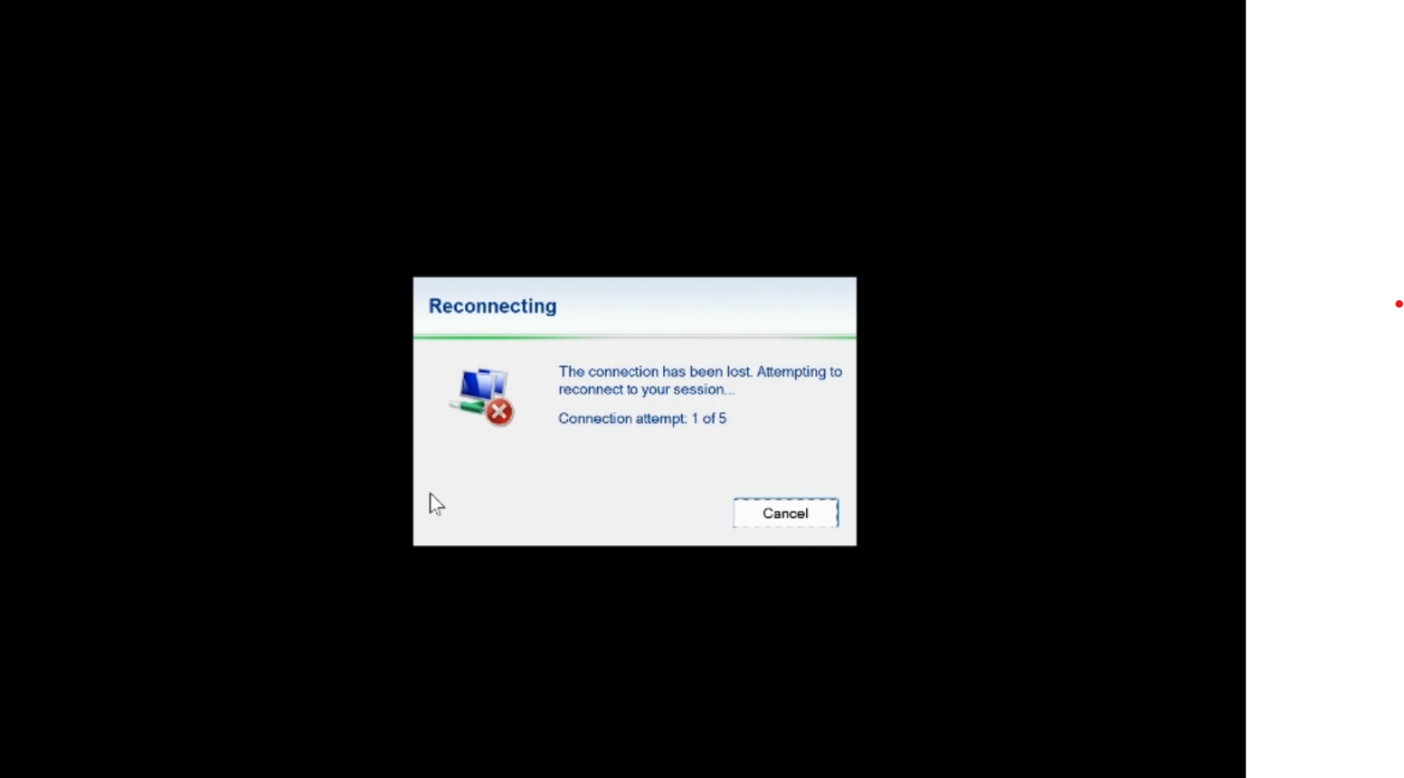
When a disruption occurs, the client first detects transport failure through signals such as a TCP disconnect, keep-alive timeout, or loss of the underlying network interface. If the device has no active network connectivity, the client waits until the operating system indicates that connectivity has been restored. Once the network becomes available, the client enters a reconnect loop where it repeatedly attempts to re-establish the session.
Each reconnect attempt is a full end-to-end operation that can include broker orchestration to acquire a new connection token, gateway selection, TLS negotiation, transport re-establishment, and remote user logon. Because of this, every attempt incurs non-trivial latency.
The retry behavior follows an exponential backoff algorithm with jitter, where the delay between attempts increases (starting from approximately one second and doubling with each attempt, up to a capped maximum). This reconnect process continues for an overall window of approximately 30 seconds. If the client is unable to restore the connection within this window, the reconnect attempt is considered unsuccessful and the user is prompted to either retry or cancel the session.
From a user experience perspective, the screen is effectively frozen during this process. A modal “Reconnecting” dialog is displayed, user input is blocked, and the session appears unresponsive until reconnection succeeds or the retry window expires. This can result in noticeable disruption and recovery times ranging from several seconds to longer depending on network conditions.
Modern Auto-Reconnect behavior
Modern Auto-Reconnect replaces the retry-driven model with a connection preservation model that avoids repeated reconnect attempts and instead focuses on quickly restoring connectivity as soon as any viable network path becomes available.
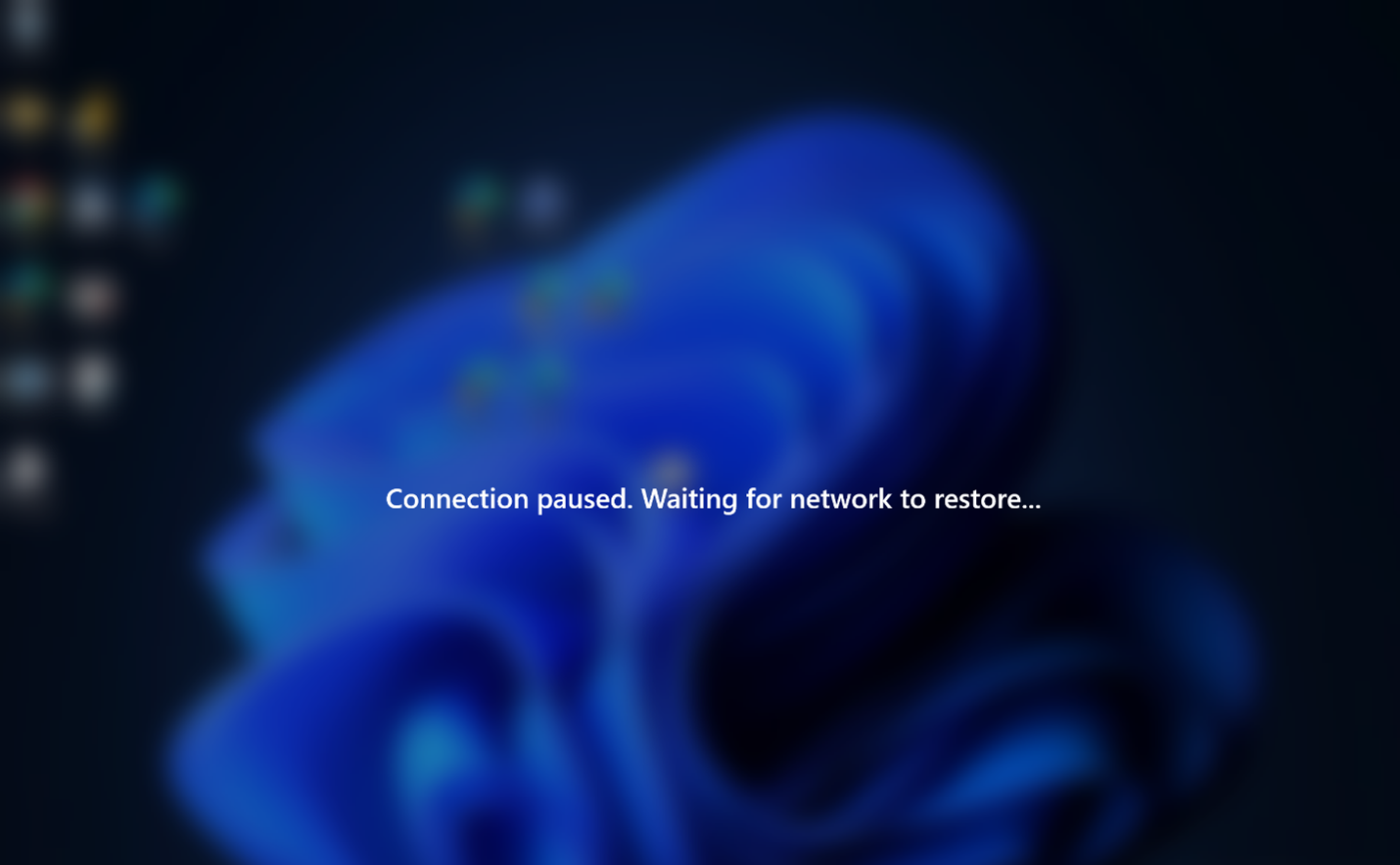
When a network interruption occurs, the client enters a connection paused state instead of repeatedly reconnecting. The session remains active on the host while the client waits for network connectivity to be restored.
This experience is enabled by RDP Multipath, which maintains multiple transport paths and allows the connection to recover without rebuilding the entire connection state.
As soon as a network path becomes available, the client resumes the existing session. Because the connection context is preserved, recovery is significantly faster and can often occur almost immediately after connectivity is restored.
If connectivity isn't restored within the allowed waiting period, the user is prompted to continue waiting or close the session.
User experience improvements
Modern Auto-Reconnect provides a more resilient and less disruptive experience during temporary network interruptions.
Compared to the current reconnect model, users benefit from:
Faster recovery after connectivity is restored
Fewer visible interruptions during network transitions
Preservation of session state and application context
Reduced dependence on repeated reconnect attempts
Improved experience when switching between networks or recovering from brief connectivity drops
Instead of displaying a blocking reconnect experience, the client shows a lightweight Connection paused notification that indicates the session is temporarily waiting for connectivity to return.
In many scenarios, such as moving between wireless networks or recovering from a brief loss of connectivity, the interruption is short enough that users may experience little or no disruption.
Availability and Requirements
Modern Auto-Reconnect requires support for the updated connection model and RDP Multipath. To use this experience, install Windows App for Windows version 2.0.1069.0 or later. The feature is currently available through the Azure Virtual Desktop validation ring. Organizations can access the experience by moving their Azure Virtual Desktop host pools to the validation ring. A phased General Availability (GA) rollout will begin soon, expanding availability to Azure Virtual Desktop deployments more broadly.