Introduction
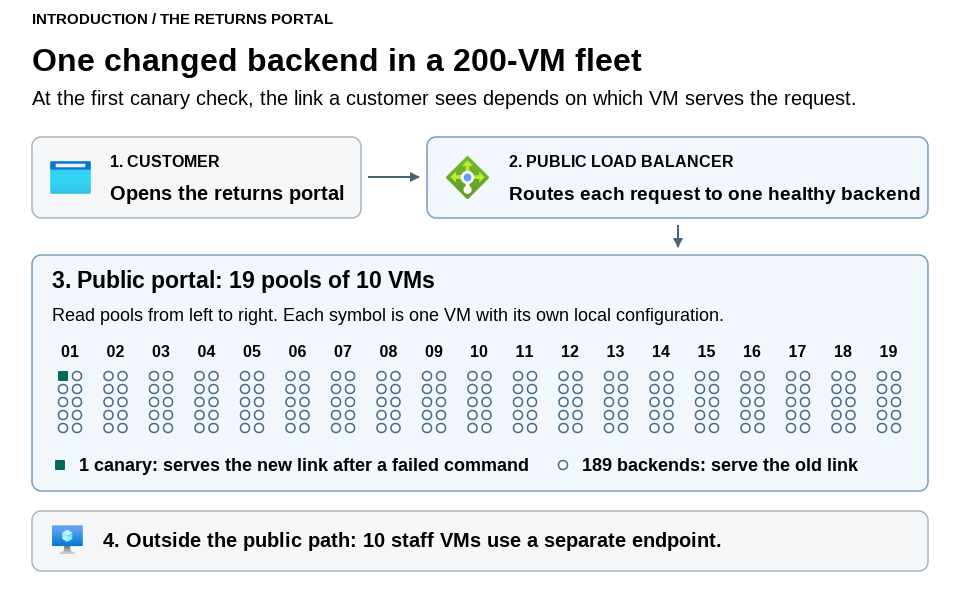
You operate 200 Windows virtual machines (VMs) for a retailer. Of those, 190 serve the public returns portal in load-balanced pools and 10 serve a separate staff application. Each public backend reads its support link from a local file. Your first update reports failure, yet a direct request to that VM returns the new link. Most customers still see the old one. You run the change; the portal workload owner, who is accountable for the returns service, decides whether to release the next wave. What evidence would you present before exposing another pool?
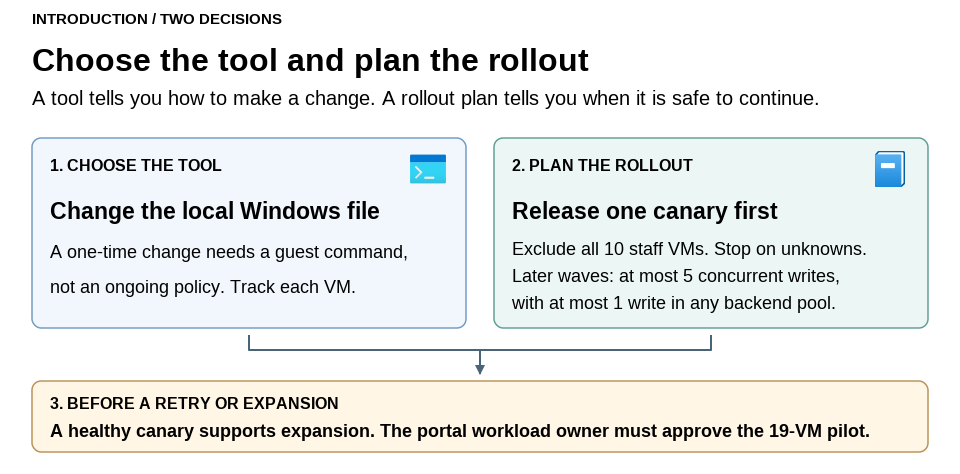
Before you review the portal change, separate two decisions. Which tool changes the setting? That depends on where the setting lives and how long it should stay in effect. How will you change a fleet that's already serving users? That takes an agreed list of VMs, a way to detect failure on the first one, and a way to recover without putting the others at risk.