Write the brief and check the work
Priya decides the launch is worth delegating. From here, the same three things matter as they would with a person. She has to explain the work clearly, decide how much Autopilot can settle on its own, and check what comes back.
Write the brief
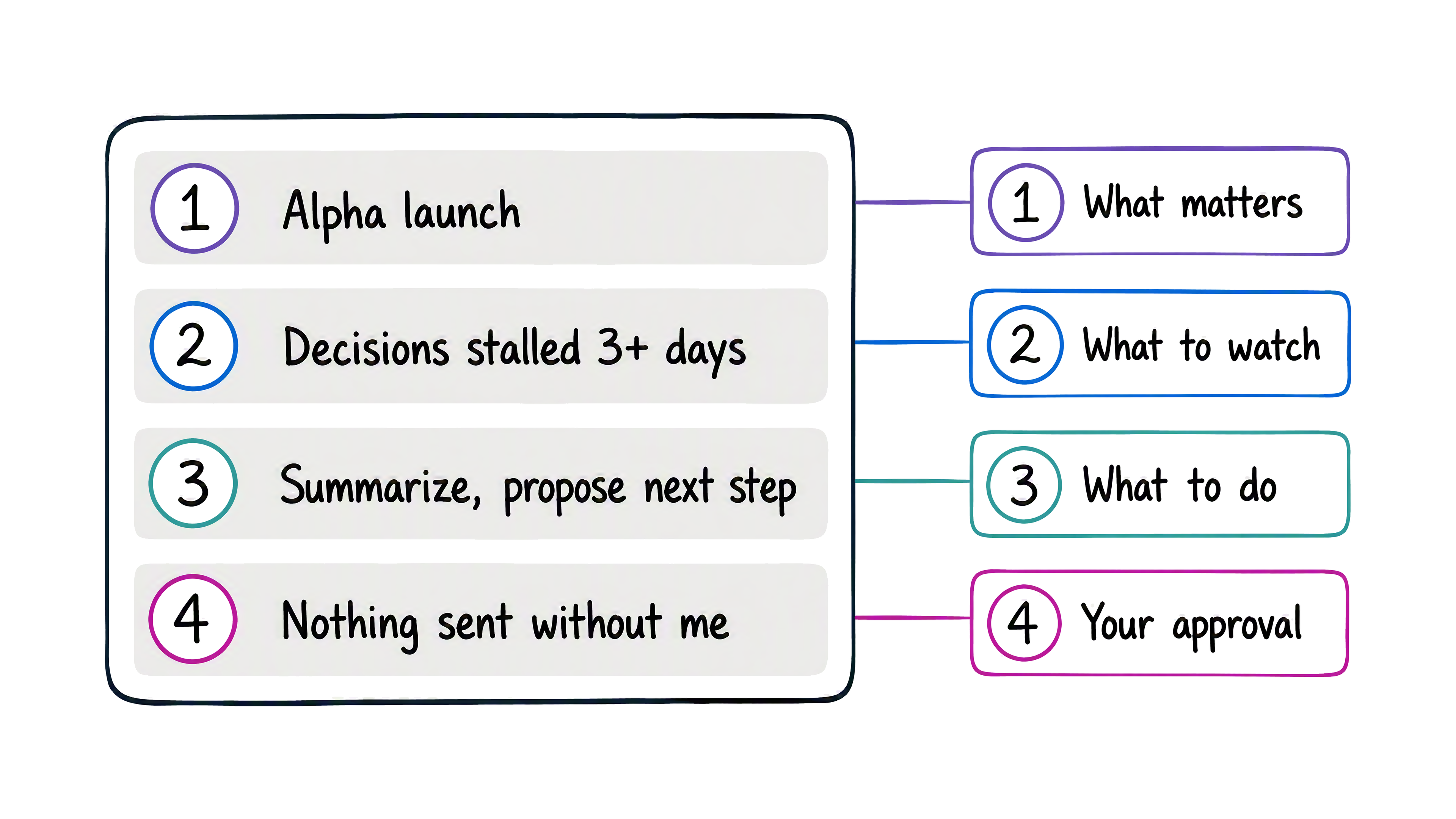
Delegate badly and you describe a task. Delegate well and you describe a responsibility. A task is a to-do item, finished and crossed off. A responsibility is closer to a job description. It sets out what good looks like for as long as the work lasts. A good brief covers four things:
- What matters - the project, account, or risk area to stay across.
- What deserves your attention - the specific movement you don't want to miss.
- What to do about it - summarize, draft a response, propose next steps, or flag it.
- What needs your approval - anything that reaches other people.
Compare the two. A task sounds like this: "What's the status of the launch checklist?" You get an answer, and you ask again on Thursday.
A responsibility sounds like this: "Stay across the Alpha launch. Tell me when an open decision goes three business days without a reply, when a checklist date moves, or when a risk is raised in the launch channel. Summarize what changed and propose a next step. Don't message anyone without my approval."
The second one keeps working. It names what matters, defines what's worth surfacing, says what to do, and draws a line at anything outbound.
Tip
Be specific about what deserves attention. A brief that surfaces everything becomes a car alarm that nobody hears anymore. A brief that surfaces nothing teaches you it isn't working.
Grant the right amount of authority
Delegating to a person means deciding what they can settle themselves and what they bring to you. A new colleague often gets a spending limit. They approve what falls under it and bring you anything above. Delegating to Autopilot is the same decision, made before the work starts rather than after.
| Decision | Question to answer |
|---|---|
| Reach | Which projects, conversations, and files should it draw on? |
| Authority | What can it settle on its own, and what should it bring you first? |
| People | Can it work with colleagues on your behalf, and which ones? |
| Escalation | What should make it stop and ask rather than decide? |
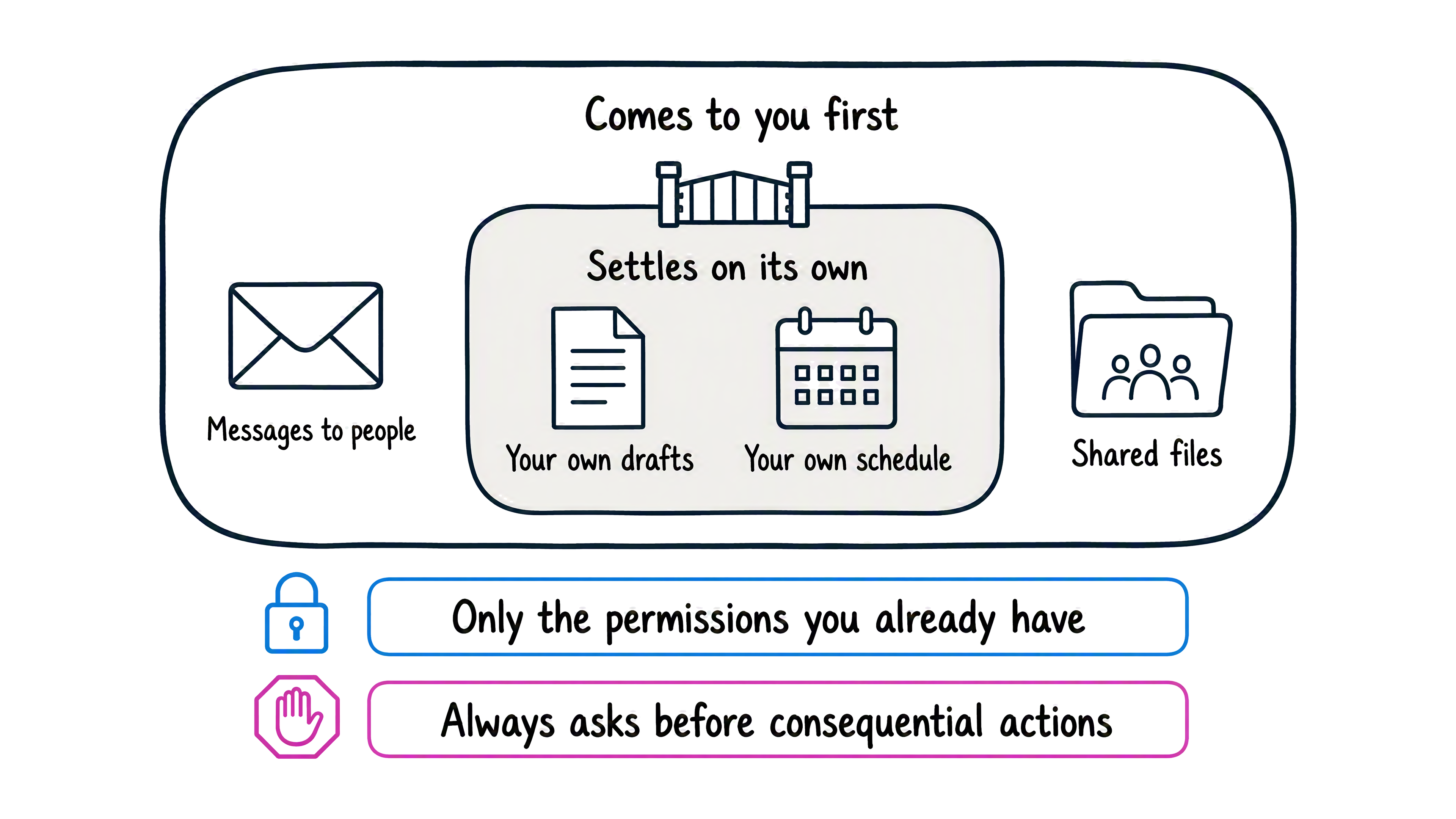
A practical starting point is to let it act freely on your own drafts and your own schedule. Require your approval for anything others will see. Reorganizing your week is low risk. Messaging a customer isn't.
Important
Two protections hold no matter how much authority you grant. Autopilot works within the permissions you already have, so it can't reach anything you can't reach yourself. It also asks before consequential actions, such as sending a message or sharing a file, regardless of the latitude you've given it.
Check the work
Work comes back continuously rather than all at once, so reviewing is ongoing. When Autopilot brings you something, you can approve it, redirect it with more context, or decline it.
Match the depth of your review to what a mistake would cost. The useful question is how easily you could undo it. Some work is a whiteboard you can wipe clean and redo. Other work is wet cement that sets and stays.
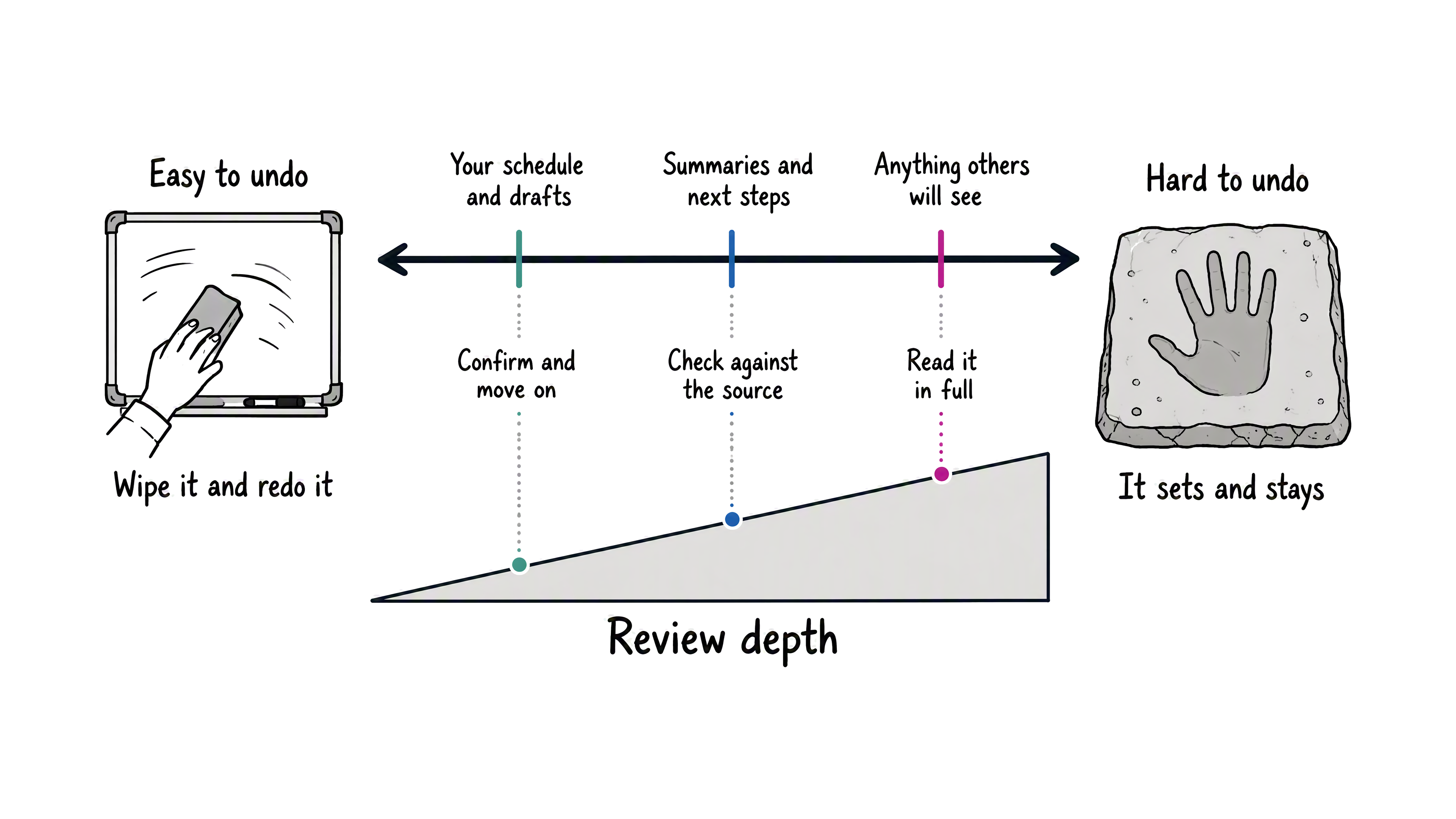
- Anything others will see. For messages, invitations, and shared files, read the draft in full. Check the recipients, the tone, and the facts before you approve.
- Changes to your own schedule or drafts. Confirm the change matches your intent and move on. These are easy to undo.
- Summaries and proposed next steps. Check the summary against the source before you act on it. A summary reflects what the agent read, and it can miss context you have.
Important
Treat what Autopilot produces as a draft for your review. Always review AI-generated content before you approve an action that sends, posts, or shares information with other people.
Adjust the arrangement over time
What you delegate isn't fixed. The work changes, and your brief should change with it.
- Narrow it when it surfaces too much. A smoke detector that goes off every time you make toast gets unplugged.
- Broaden it when something you expected it to catch slips through.
- Pause it during leave or a project freeze, when its activity would only add noise.
- Retire it when the work ends. An agent still watching something that no longer matters costs you attention and budget for nothing.
Adjusting is a conversation. Tell Autopilot what to change and it adapts. It remembers your decisions, so you don't have to make the same correction twice. Over time the arrangement should need less of your attention, not more.