Describe forecasting in Dynamics 365 Sales
To understand your organization's health and make informed strategic decisions, you need to be able to accurately forecast sales targets. Sales forecasts estimate how much your organization expects to sell within a specific period—and getting that right matters far beyond the sales team. Consider Contoso Coffee: the CEO needs to foresee demand for every product they sell to undertake strategic transformation. The COO needs to understand the scope of the business to allocate resources efficiently. The CFO needs visibility into upcoming cash flows to craft financial plans as Contoso expands into new markets. Accurate forecasting touches every part of the business.
With Dynamics 365 Sales forecasting, organizations can create and manage bottom-up sales forecast processes directly in the application. Here's what accurate forecasting gives everyone on the team:
Sellers: Manage their time and pipeline more effectively by identifying which deals they need to close to meet their quota.
Sales managers and leaders: Plan sales execution strategies more confidently, with a clearer view into bottom-up projections and a deeper understanding of the opportunities that impact the business most.
Sales enablement managers: Offer more granular and meaningful guidance that accurately reflects how sales execution is going.
Organizational leaders: Use projected estimates to adjust product strategy or communicate updated projections to investors and stakeholders.
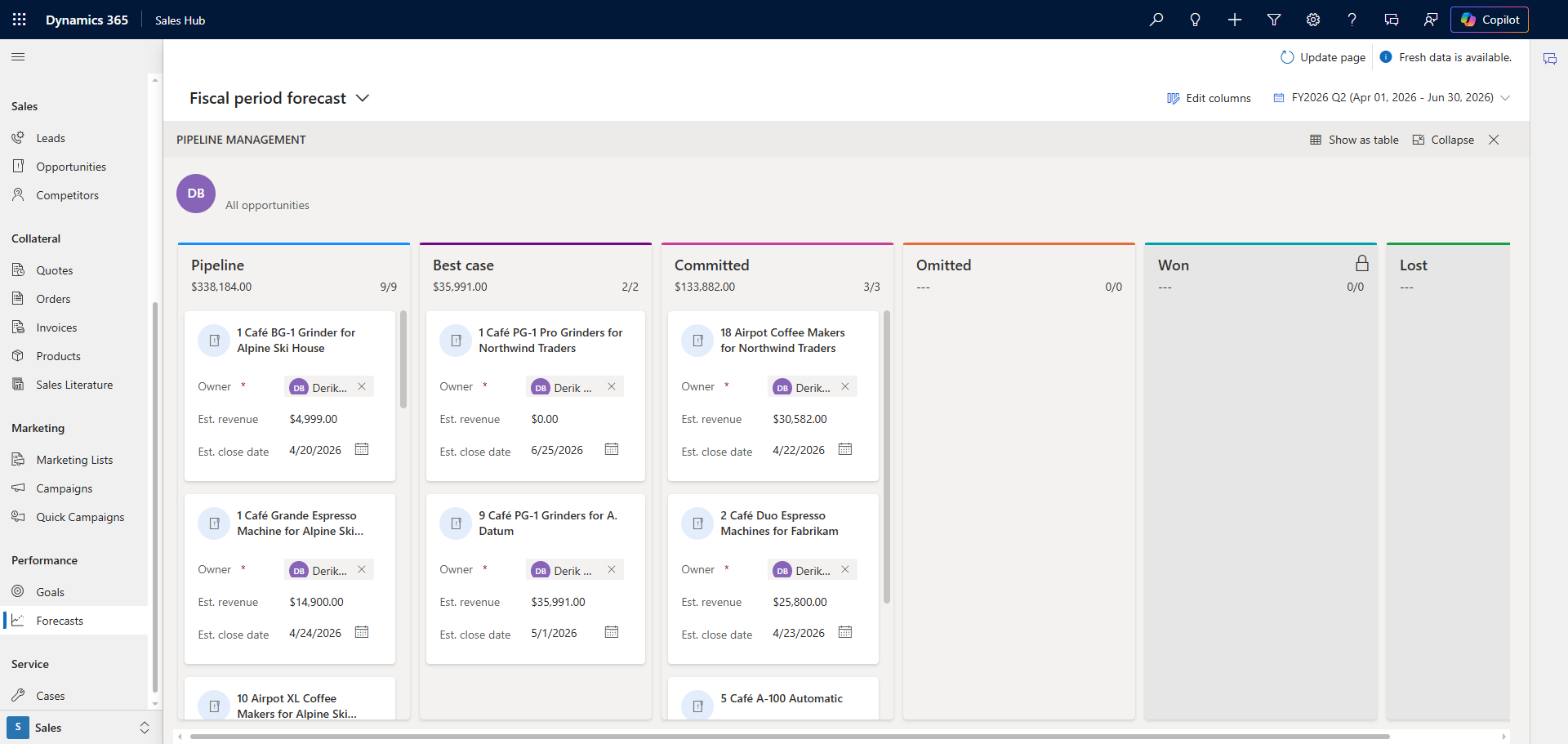
To help organizations get started quickly, Dynamics 365 Sales includes an out-of-the-box forecast available to all users. This default forecast uses the sales team hierarchy, so it reflects your team's structure and provides insights aligned with your organization. It uses the opportunity table as the rollup entity and is available for the current month.
Forecasting in Dynamics 365 Sales gives sales managers and revenue operations teams a structured, data-driven way to understand what is likely to close, identify gaps against targets, and decide where to focus resources. Sellers manually set a forecast category on each opportunity based on their confidence. Managers can then review the rollup of committed and best case revenue across the team and compare it against their quota.
Select the following image to launch a guided simulation that walks you through the forecasting experience in Dynamics 365 Sales.

Scenario: Forecasting at Contoso Coffee
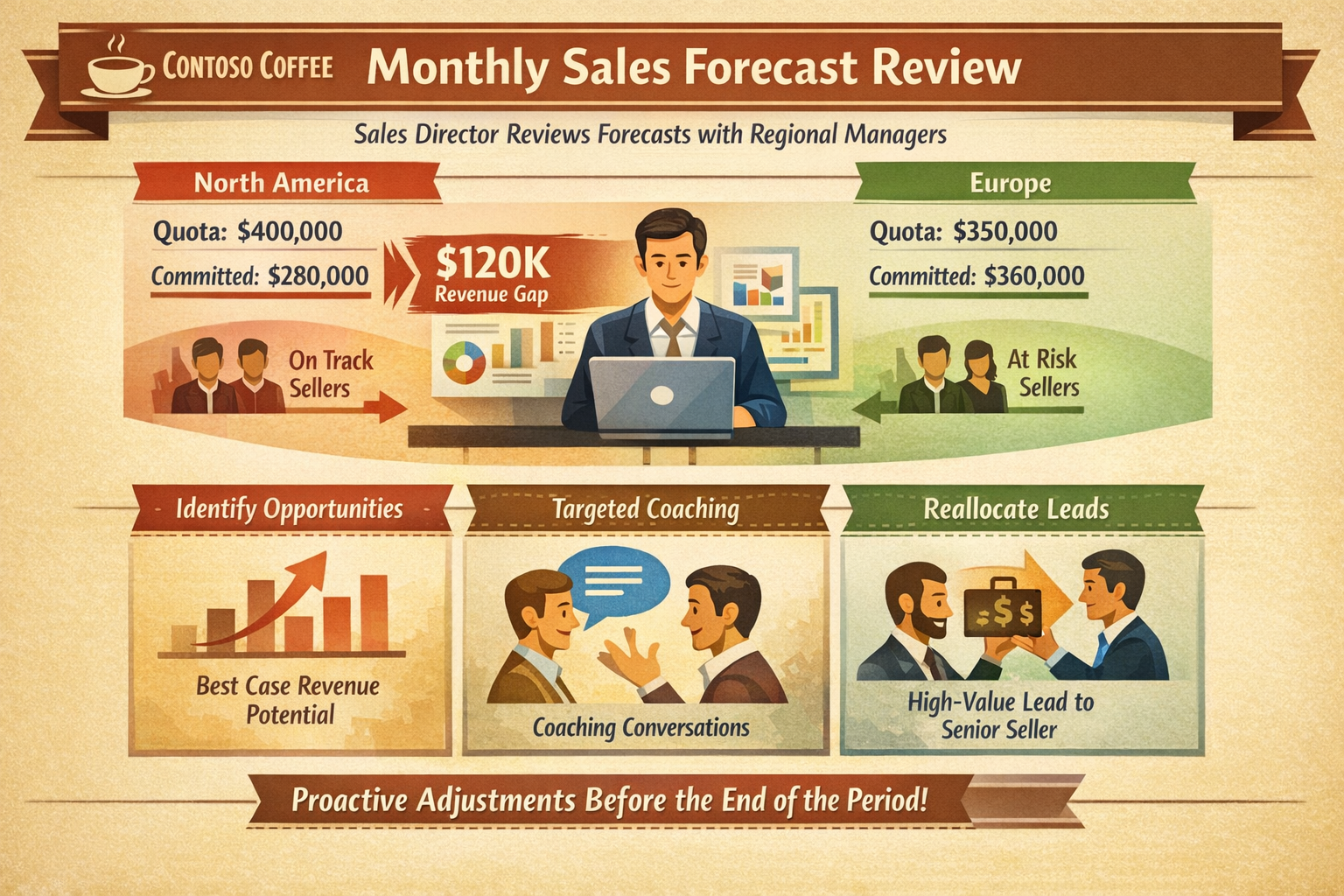
At Contoso Coffee, the sales director runs a monthly forecast review with regional sales managers across two regions: North America and Europe. Each month, managers review committed revenue against their quota and identify which sellers are on track.
During a recent review, the North America forecast showed a $120,000 gap between committed revenue and the monthly quota of $400,000. The director could immediately see which sellers had enough best case revenue to move to committed. The view also showed which sellers had gaps too large to fill from their current pipeline. That visibility made it possible to set up targeted coaching conversations and reallocate a high-value lead to a senior seller with more capacity—all before the end of the period.