Describe the lead to opportunity process
Sales begins with leads. A lead represents a potential customer who shows some level of interest in your product or service but isn't yet confirmed as a genuine sales opportunity. A lead is a starting point — a signal worth investigating.
Leads in Dynamics 365 Sales contain basic information such as the contact's name, company, email address, phone number, and the source of the lead. They also have a status that reflects where they are in the qualification process, from new and open, to working, disqualified, or qualified.
Qualify a lead
Qualifying a lead means determining whether it meets the criteria to be pursued as a real sales opportunity. Organizations define these criteria in various ways, but they often center on a set of questions sellers ask about each lead:
- Is this person in a role with purchasing authority?
- Does their company fit the profile of a typical customer?
- Is there a genuine business need that the seller's product or service can address?
- Is there a realistic timeline and budget involved?
In Dynamics 365 Sales, sellers work through the qualification process by reviewing and enriching the lead record, reaching out to the contact, and gathering the information needed to make an informed decision. When organizations enable AI features, AI can assist with or automate much of this work, letting sellers focus on higher-value tasks such as developing deals and creating long-term relationships.
Not every lead meets the criteria for conversion. When a lead doesn't qualify, sellers can disqualify it for reasons such as the contact being unreachable or the client not matching the organization's ideal customer profile. AI can also disqualify leads during the qualification process. Dynamics 365 Sales retains disqualified leads for historical reference, and sellers can reactivate them later if circumstances change.
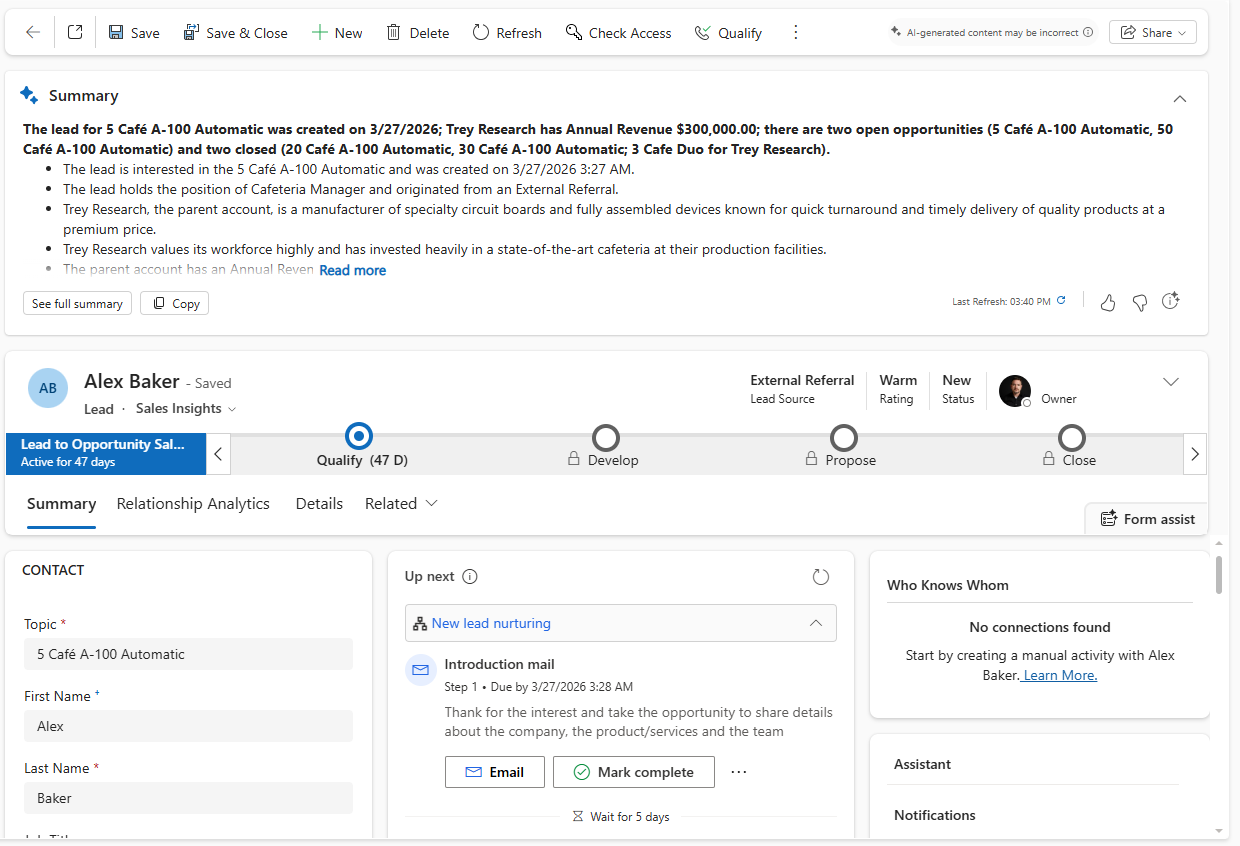
When a lead meets the qualification criteria, sellers convert it into an opportunity. This conversion creates a new opportunity record and links the opportunity to the original lead. The opportunity record represents a qualified potential sale and tracks key details such as the estimated close date, expected revenue, and the products or services being considered. From this point, the seller's goal shifts from qualifying to winning.
Why this process matters
The lead-to-opportunity process provides structure for activities that might otherwise be disorganized and inconsistent. Without a defined process, sellers might spend equal time on leads that have vastly different probabilities of converting. Some might skip qualification and move directly into opportunity work for leads that were never going to close. Others might disqualify leads too quickly without giving them adequate attention.
Dynamics 365 Sales addresses this by providing a shared framework that all sellers follow. AI tools that assist with research and scoring make the process faster and more consistent. They help focus seller time where it generates the most return.