Describe the work list and sequences
Even the most capable sellers struggle when their day is unstructured. Without a clear plan for who to contact, what to say, and when to follow up, leads fall through the cracks. Outreach becomes inconsistent, and pipeline quality suffers. Dynamics 365 Sales provides two features that give sellers a guided, organized approach to daily prospecting and follow-up: the work list and sequences.
The work list
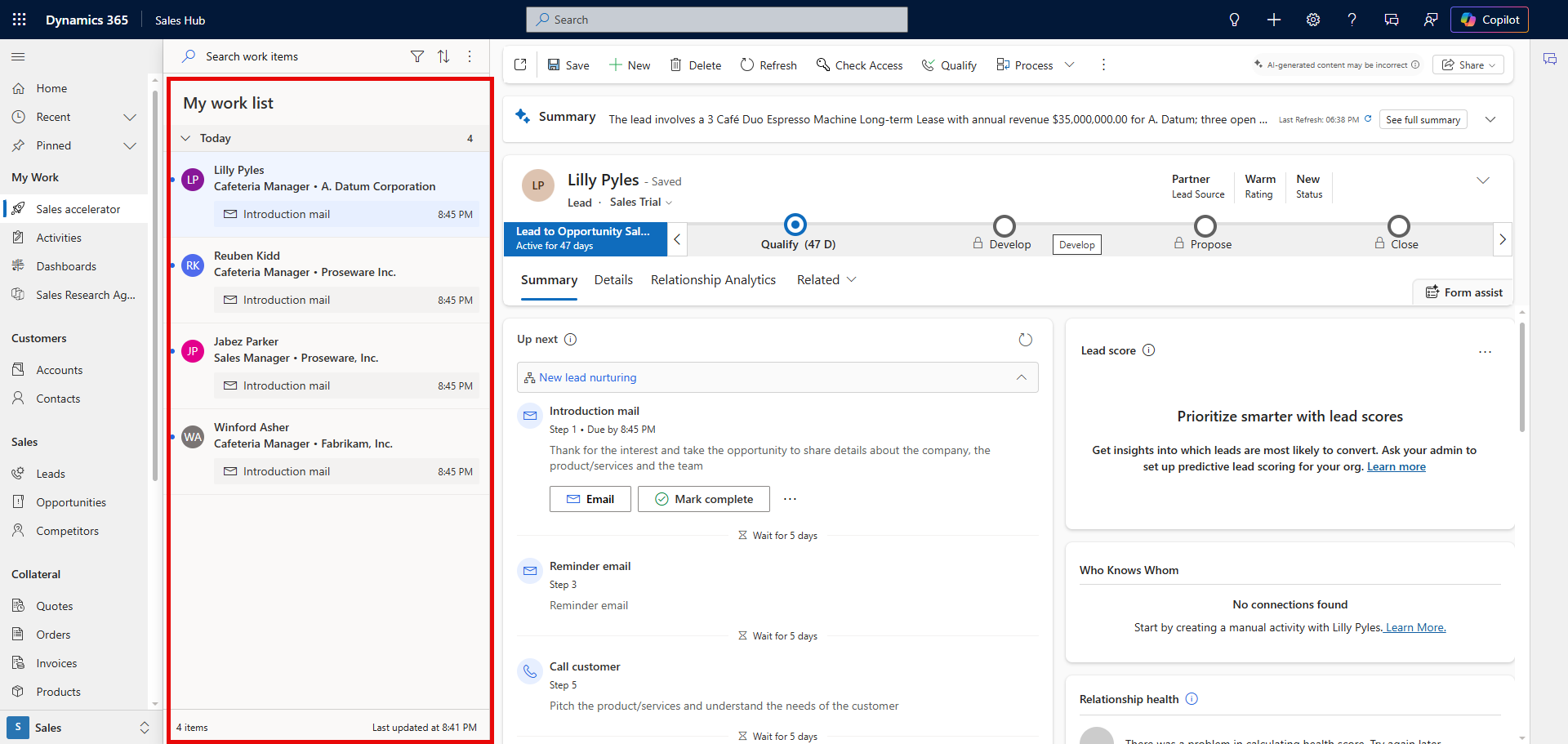
The work list in Dynamics 365 Sales is a prioritized view of all the leads and opportunities that require your attention on a given day. Rather than scrolling through a flat list of records and deciding for yourself what to work on, the work list applies AI-driven prioritization to surface the most important items first.
Each item in the work list is associated with a specific next step, such as sending an email, making a phone call, or completing a task assigned by a sequence. A clear next step removes ambiguity about what action to take. You open the work list in the morning and move from one action to the next in a structured, efficient manner.
The work list also gives you quick access to key details about each record without requiring you to open the full record every time. Quick access keeps the review and action process fast, particularly when you're moving through a large number of contacts in a single session.
Sequences
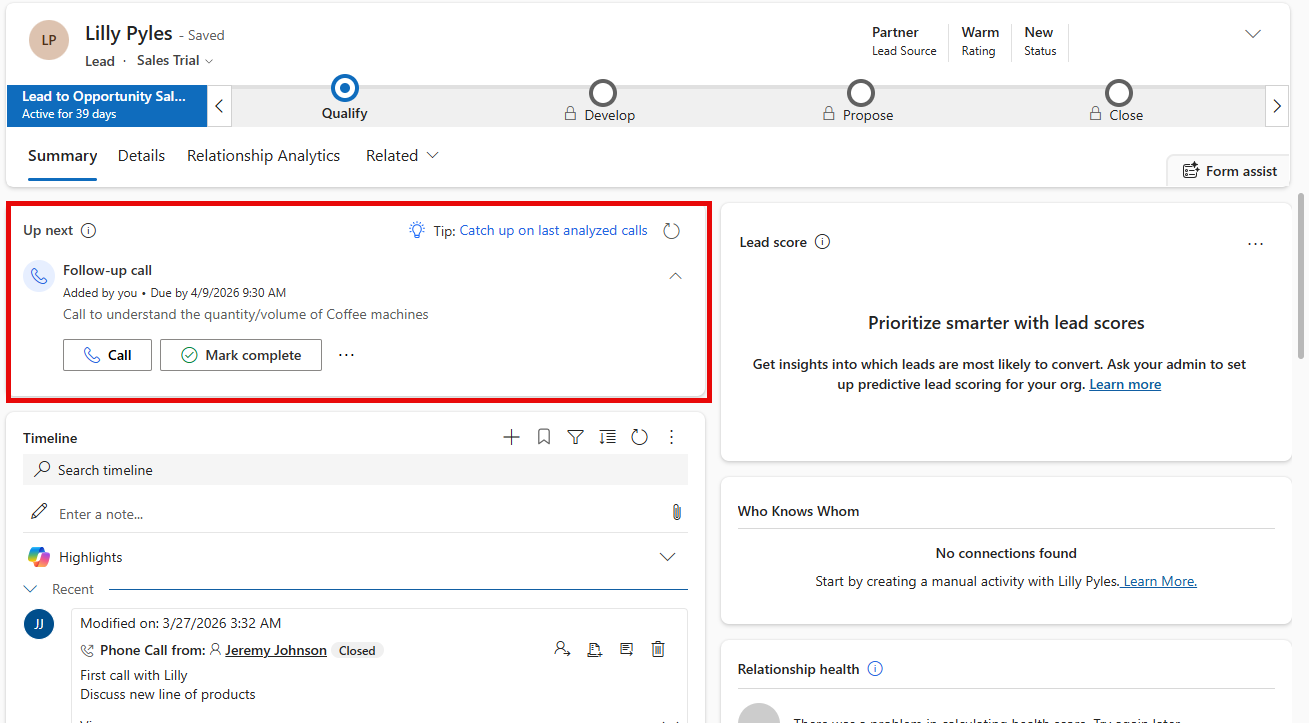
Sequences are predefined sets of sales activities arranged in a specific order and timeline. For example, a sequence might start with an introductory email on day one, followed by a phone call on day three. It then schedules a follow-up email on day seven and a LinkedIn connection request on day 10.
These activities connect and flow automatically from one to the next as you complete each step. After you apply a sequence, the defined activities automatically appear in your work list on the appropriate days. Your job is to execute the activities, not to design the schedule.
For sellers learning outreach best practices, sequences provide a structured framework to follow. You can execute the sequence with confidence that it reflects the sales organization's proven approach. For experienced sellers, sequences free up mental energy by handling the scheduling logistics so that you can focus on the quality of each interaction.
How the work list and sequences work together
Imagine Avery, a seller at Contoso Coffee, who is responsible for winning new wholesale accounts (local grocery stores, hotels, and restaurants). After Contoso sponsors a regional food expo, dozens of new leads are added to Dynamics 365 Sales.
- Start the day in the work list. Avery opens the work list and immediately sees the highest-priority items at the top—leads with high predictive scores, recent website activity, or overdue follow-ups.
- Open the top lead and review context. Avery selects the first lead (for example, "Northwind Grocery") and reviews key context such as lead source, product interest, and any recent interactions.
- Enroll the lead in a sequence. Avery starts the "New Wholesale Lead" sequence so the next actions are automatically scheduled and appear in the work list on the right days.
- Complete the recommended step. The first step is "Send intro email." Avery uses the provided guidance, personalizes two sentences mentioning the expo conversation and a relevant product, and sends it.
- Let the sequence drive follow-up timing. Two days later, the work list surfaces "Call the contact." Avery calls, logs notes, and marks the step complete. The sequence automatically moves the lead to the next step.
- Handle exceptions without losing structure. If the prospect replies with a request for pricing, Avery pauses the sequence, creates an opportunity, and schedules a meeting. If there's no response after multiple touches, the sequence completes and Avery can disqualify or place the lead into a longer-term nurture approach.
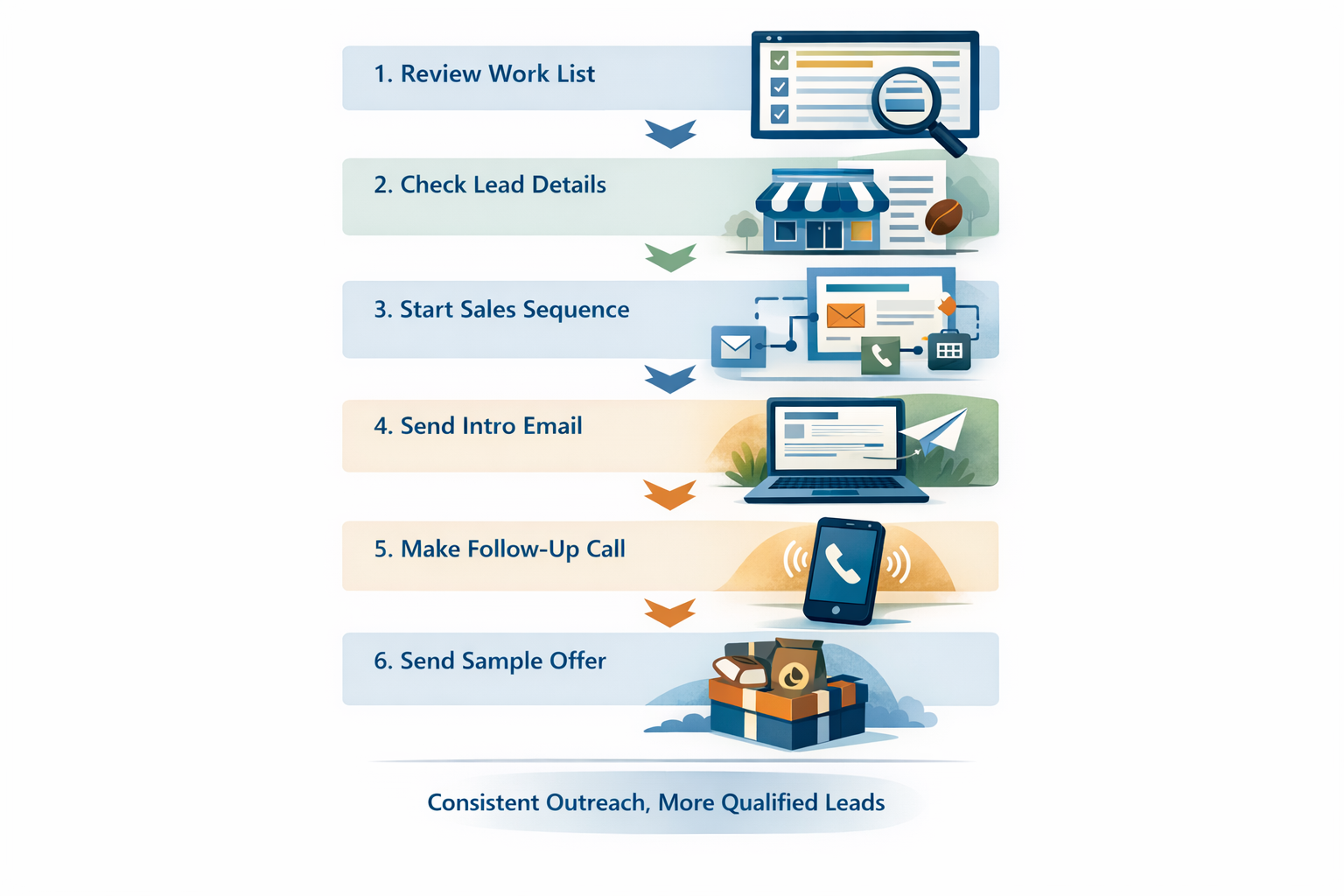
In this example, the work list helps Avery decide what to do today, while the sequence ensures every lead gets a consistent, on-time set of touches. Together, they reduce missed follow-ups, improve activity consistency across the team, and help Contoso Coffee convert more expo leads into qualified opportunities.