Understand configuration drift
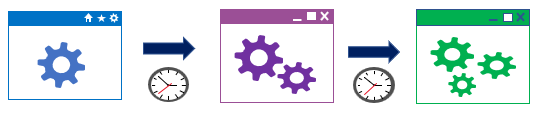
Configuration drift is the process of a set of resources changing over time from their original deployment state. It can occur because of changes made manually by people or automatically by processes or programs.
What is a snowflake configuration?
Eventually, an environment can become a snowflake. A snowflake is a unique configuration that cannot be reproduced automatically and is typically a result of configuration drift. With snowflakes, infrastructure administration and maintenance invariably involve manual processes, which can be hard to track and prone to human error.
Impact of configuration drift
The more an environment drifts from its original state, the more likely it is for an application to encounter issues. The greater the degree of configuration drift, the longer it takes to troubleshoot and rectify problems.
Security considerations
Configuration drift can also introduce security vulnerabilities into your environment. Examples include:
- Open ports: Ports might be opened that should be kept closed, exposing your systems to unauthorized access.
- Inconsistent patching: Updates and security patches might not be applied across environments consistently, leaving some systems vulnerable.
- Non-compliant software: Software might be installed that doesn't meet compliance requirements, violating security policies.
Solutions for managing configuration drift
While eliminating configuration drift can be difficult, there are many ways you can manage it in your environments using configuration management tools and products:
Windows PowerShell Desired State Configuration
Windows PowerShell Desired State Configuration (DSC) is a management platform in PowerShell that enables you to manage and enforce resource configurations. For more information about Windows PowerShell Desired State Configuration, go to Windows PowerShell Desired State Configuration Overview.
Azure Policy
Azure Policy allows you to enforce policies and compliance standards for Azure resources. Use Azure Policy to prevent configuration changes that would cause drift from your desired state. For more information about Azure Policy, go to Azure Policy.
Third-party solutions
There are also other third-party configuration management solutions that you can integrate with Azure, such as Chef, Puppet, and Ansible.