Explore multi-configuration and multi-agent builds
Modern software development often requires testing across multiple configurations or distributing work across several agents to improve efficiency. Azure Pipelines supports different job execution strategies to meet these needs.
Types of job execution
Azure Pipelines offers three job execution strategies:
Single agent jobs: Tasks run sequentially on a single agent. This is the default behavior and works well for simple workflows.
Multi-configuration jobs: Run the same tasks across multiple configurations simultaneously. Each configuration runs on a separate agent in parallel. Common use cases include:
- Testing different application configurations (Debug/Release, different frameworks)
- Deploying to multiple geographic regions
- Building for different target platforms
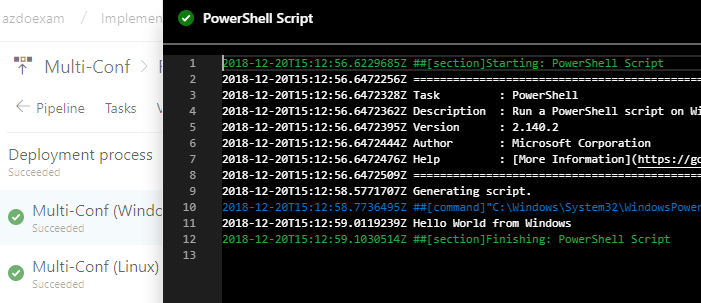
Multi-agent jobs: Distribute the same set of tasks across multiple agents to reduce execution time. For example:
- Running a large test suite (1,000 tests) across 4 agents (250 tests each)
- Parallel processing of large datasets
- Concurrent builds of different components
Planning your job strategy
When designing your pipeline job strategy, consider:
Artifacts and dependencies:
- Do you have artifacts from multiple sources that need coordination?
- Are there dependencies between different deployment targets?
Deployment requirements:
- Can deployments run simultaneously across different servers?
- Do you need to support multiple platforms or environments?
Performance considerations:
- How long does your current pipeline take?
- Can tasks run in parallel, or must they execute sequentially?
- Would parallel execution reduce overall build time?
For more information, see Specify jobs in your pipeline.