Maximize AI business value
Managing usage-based AI is not only about reducing spending. The goal is to maximize the business value that AI delivers: to plan budgets with confidence, control spending with visibility and accountability, and optimize to get more value from every investment. Three practices support this goal: plan, control, and optimize.
The following table outlines each practice's focus and the key question it helps you answer:
| Practice | Focus | Key question |
|---|---|---|
| 1. Plan | Make AI spending predictable. Evaluate what is worth funding, forecast cost and value, and align purchases with expected demand. | What should we fund, what value do we expect, and what will it cost? |
| 2. Control | Keep AI costs visible and accountable. Observe what drives consumption, set clear ownership and guardrails, and report on the value delivered. | Can we track what is consumed, do the right controls apply, and what are we getting for what we spend? |
| 3. Optimize | Get more value from every AI investment. Match each task to the right model and tool, design requests and processes for efficiency, and refine as usage changes. | Where should we invest more, and what should we change or stop? |
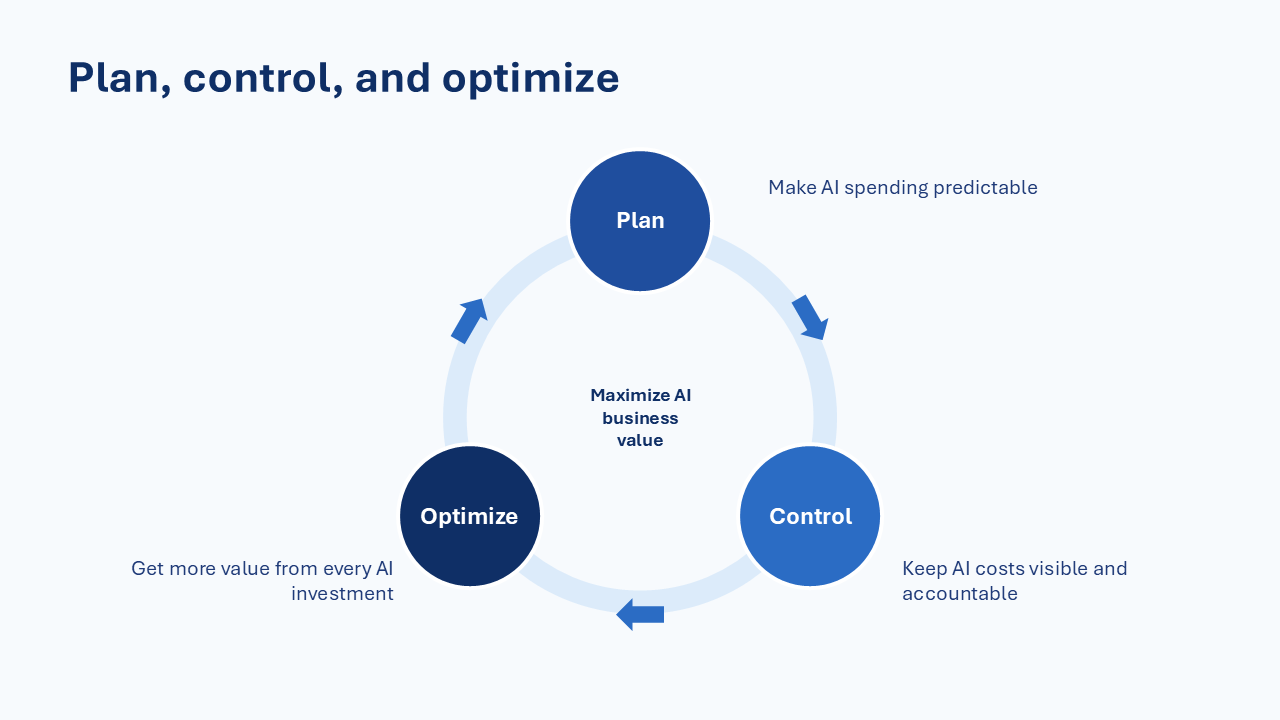
Each practice builds on the one before it. A plan sets the budget and expectations that controls enforce, and the evidence from controls shows where to optimize. The cycle then repeats as usage grows. This module focuses on planning: understanding what drives cost, choosing how to pay and estimating a pilot before the first credit is spent.
Everyone has a role
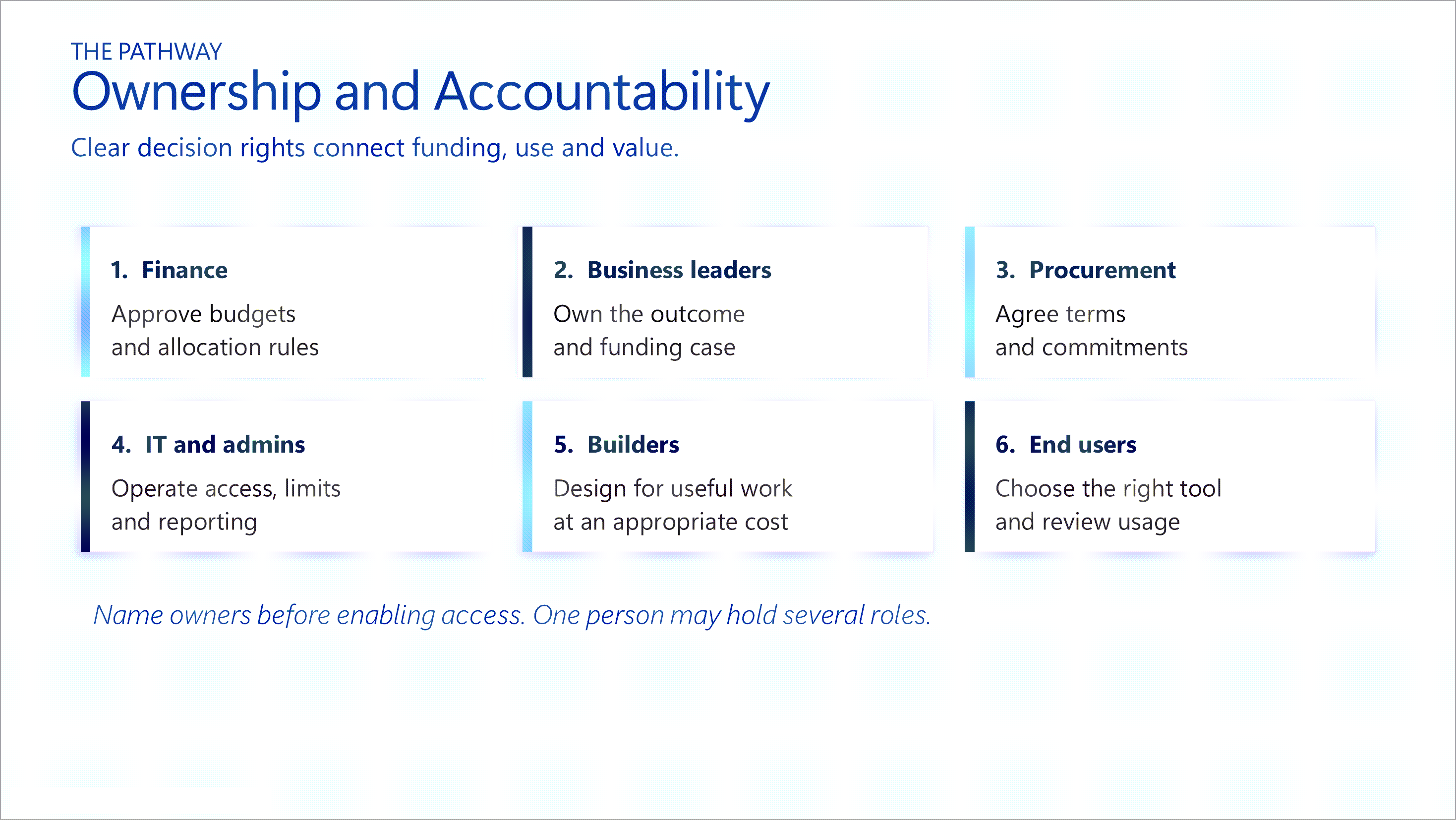
Managing usage-based AI is not the job of IT or finance alone. Each role makes decisions that affect cost and value:
| Role | Responsibility |
|---|---|
| Finance | Approves budgets and the rules for allocating cost |
| Business leaders | Own the outcome and the funding case |
| Procurement | Agrees terms and commitments |
| IT and admins | Operate access, limits and reporting |
| Builders | Design agents and workflows for useful work at an appropriate cost |
| End users | Choose the right tool for each task and review their own usage |
In a smaller organization, one person can hold several roles. Before you turn on usage-based AI, name the owners. A simple test: if consumption rises unexpectedly, do you already know who can investigate it, approve more funding or restrict access? If the answer is unclear, assign owners before you expand.
Note
If consumption at your organization rose unexpectedly next week, who would investigate it, who would approve more funding and who could restrict access? If any answer is unclear, what would you put in place before you turn on usage-based AI?
Caldova decision
Caldova names its owners. The department lead owns the outcome and the funding case. The finance manager approves the pilot budget. The IT admin configures access and limits. Pilot users agree to review their own usage.