Note
Access to this page requires authorization. You can try signing in or changing directories.
Access to this page requires authorization. You can try changing directories.
The command palette shows you which actions you can run inside Windows Terminal. For more information on how actions are defined, see the Actions page.
Invoking the command palette
Type Ctrl+Shift+P to open the command palette. You can customize this shortcut by adding the commandPalette command to your key bindings.
{ "command": "commandPalette", "keys": "ctrl+shift+p" }
Command line mode
If you want to enter a wt command into the command palette, delete the > character in the text box. This action runs the wt command in the current window. For more information on wt commands, see the Command line arguments page.
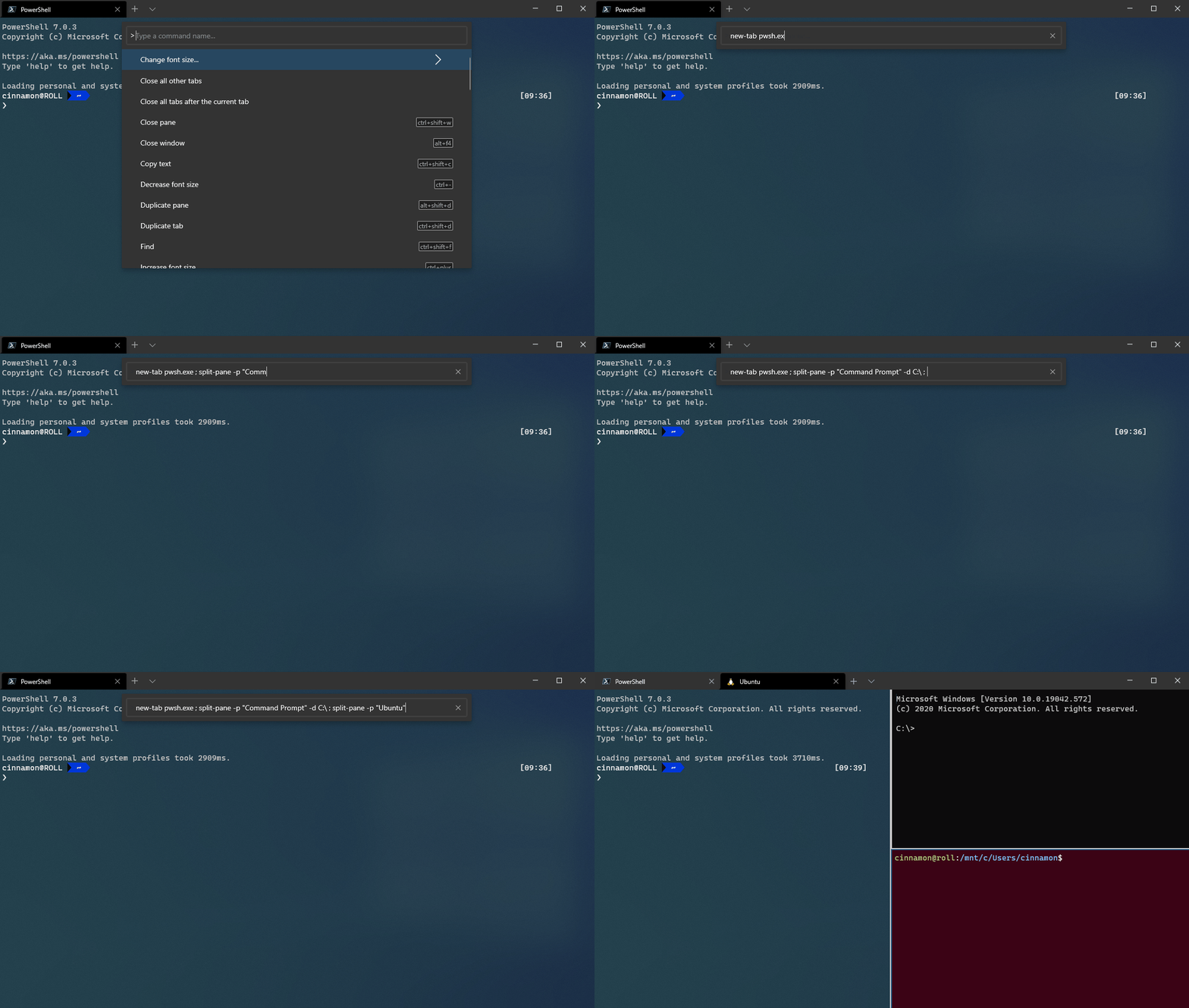
You can add a custom key binding for invoking the command palette in the command line mode directly.
{ "command": "commandPalette", "launchMode": "commandLine", "keys": "" }
Adding an icon to a command
You can add an icon to a command defined in your settings.json that appears in the command palette. Add the icon property to the action. Icons can be a path to an image, a symbol from Segoe MDL2 Assets, or any character, including emojis.
{ "icon": "C:\\Images\\my-icon.png", "name": "New tab", "command": "newTab", "keys": "ctrl+shift+t" },
{ "icon": "\uE756", "name": "New tab", "command": "newTab", "keys": "ctrl+shift+t" },
{ "icon": "⚡", "name": "New tab", "command": "newTab", "keys": "ctrl+shift+t" }
Note
As of Windows Terminal 1.24, icon may refer to content adjacent to the settings.json file.
Nested commands
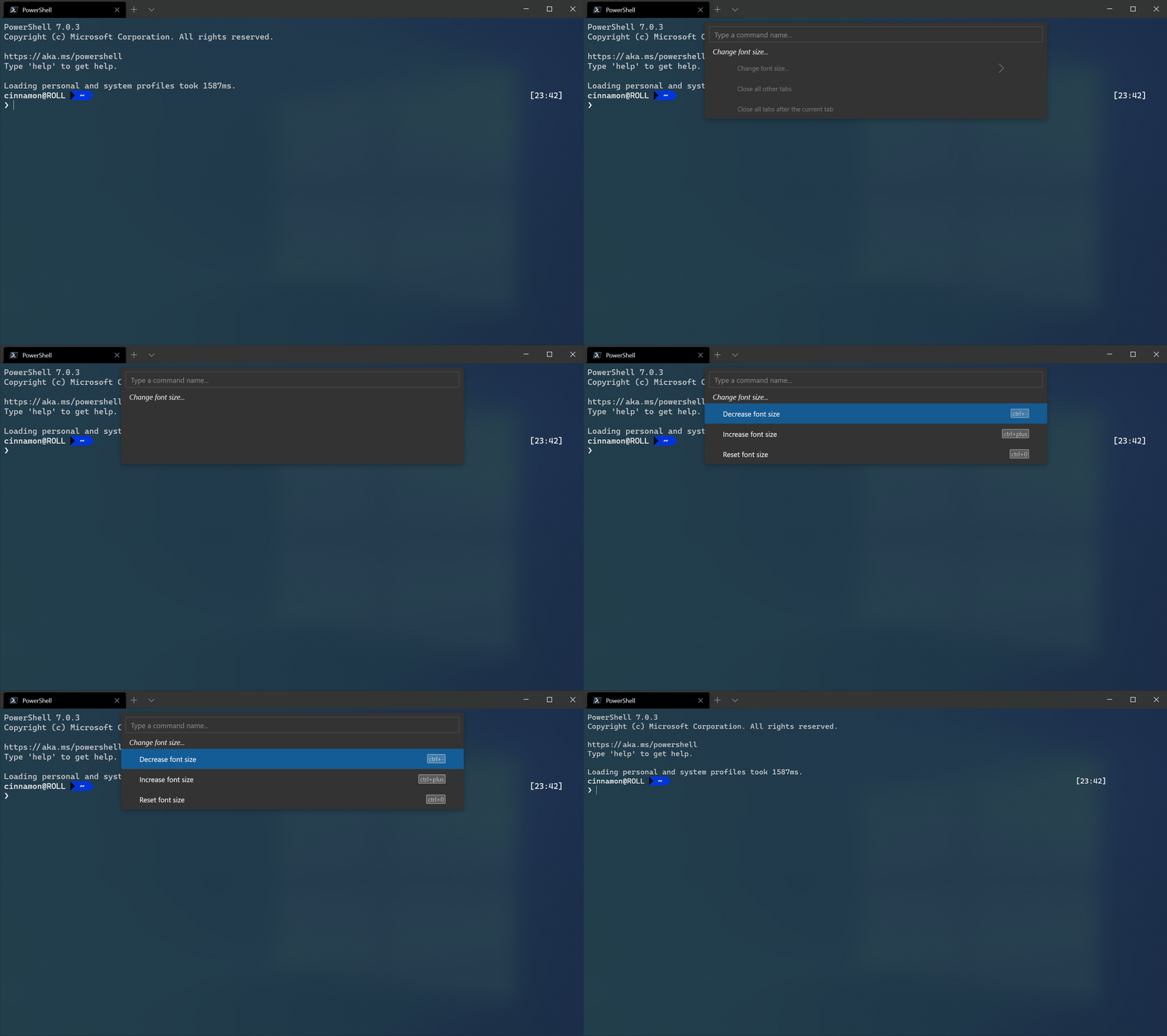
Nested commands let you group multiple commands under one item in the command palette. The following example groups the font resize commands under one command palette item called Change font size....
{
    "name": "Change font size...",
    "commands": [
        { "command": { "action": "adjustFontSize", "delta": 1 } },
        { "command": { "action": "adjustFontSize", "delta": -1 } },
        { "command": "resetFontSize" },
    ]
}
Iterable commands
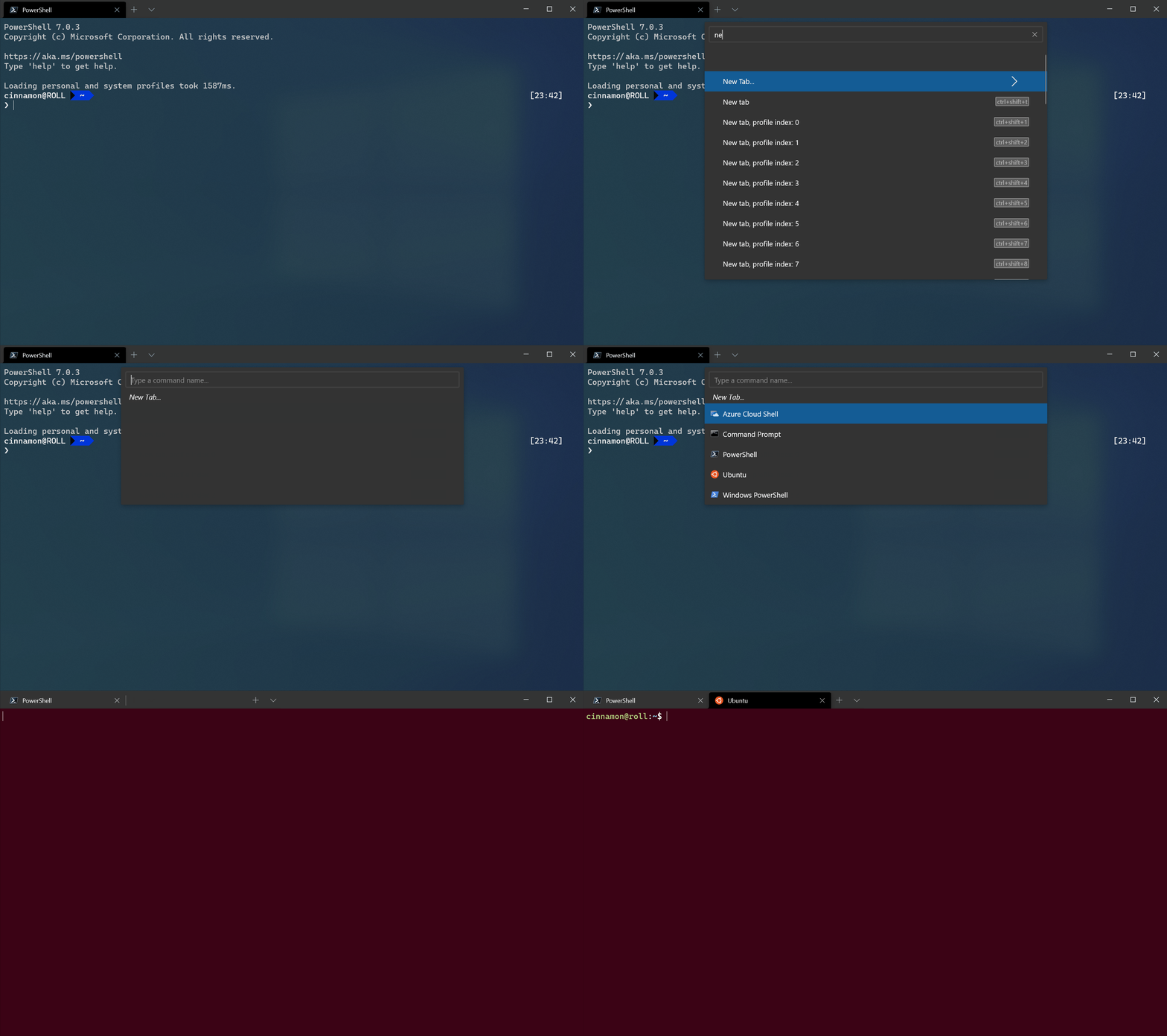
Iterable commands let you create multiple commands at the same time, generated from other objects defined in your settings. Currently, you can create iterable commands for your profiles and color schemes. At runtime, these commands expand to one command for each of the objects of the given type.
You can currently iterate over the following properties:
iterateOn |
Property | Property syntax |
|---|---|---|
profiles |
name |
"name": "${profile.name}" |
profiles |
icon |
"icon": "${profile.icon}" |
schemes |
name |
"name": "${scheme.name}" |
Example
Create a new tab command for each profile.
{
    "iterateOn": "profiles",
    "icon": "${profile.icon}",
    "name": "${profile.name}",
    "command": { "action": "newTab", "profile": "${profile.name}" }
}
In the preceding example:
"iterateOn": "profiles"generates a command for each profile.- At runtime, the terminal replaces
${profile.icon}with each profile's icon and${profile.name}with each profile's name.
If you have three profiles:
"profiles": [
	{ "name": "Command Prompt", "icon": null },
	{ "name": "PowerShell", "icon": "C:\\path\\to\\icon.png" },
	{ "name": "Ubuntu", "icon": null },
]
The preceding command behaves like the following three commands:
{
    "icon": null,
    "name": "Command Prompt",
    "command": { "action": "newTab", "profile": "Command Prompt" }
},
{
    "icon": "C:\\path\\to\\icon",
    "name": "PowerShell",
    "command": { "action": "newTab", "profile": "PowerShell" }
},
{
    "icon": null,
    "name": "Ubuntu",
    "command": { "action": "newTab", "profile": "Ubuntu" }
}
You can also combine nested and iterable commands. For example, you can combine the three "new tab" commands in the preceding example under a single "New tab" entry in the command palette, as shown in the preceding image:
{
    "name": "New tab",
    "commands": [
        {
            "iterateOn": "profiles",
            "icon": "${profile.icon}",
            "name": "${profile.name}",
            "command": { "action": "newTab", "profile": "${profile.name}" }
        }
    ]
}
Hiding a command
If you want to keep a command in your key bindings list but don't want it to appear in the command palette, set its name to null. The following example hides the "New tab" action from the command palette.
{ "name": null, "command": "newTab", "keys": "ctrl+shift+t" }
Collaborate with us on GitHub
The source for this content can be found on GitHub, where you can also create and review issues and pull requests. For more information, see our contributor guide.

Windows Terminal