Configure connector tools and inputs
A connector tool gives an agent access to a specific action from a Power Platform connector. Connectors support hundreds of services, including SharePoint, Outlook, Dataverse, Salesforce, and ServiceNow. Use an existing connector action when it already provides the operation that your agent needs.
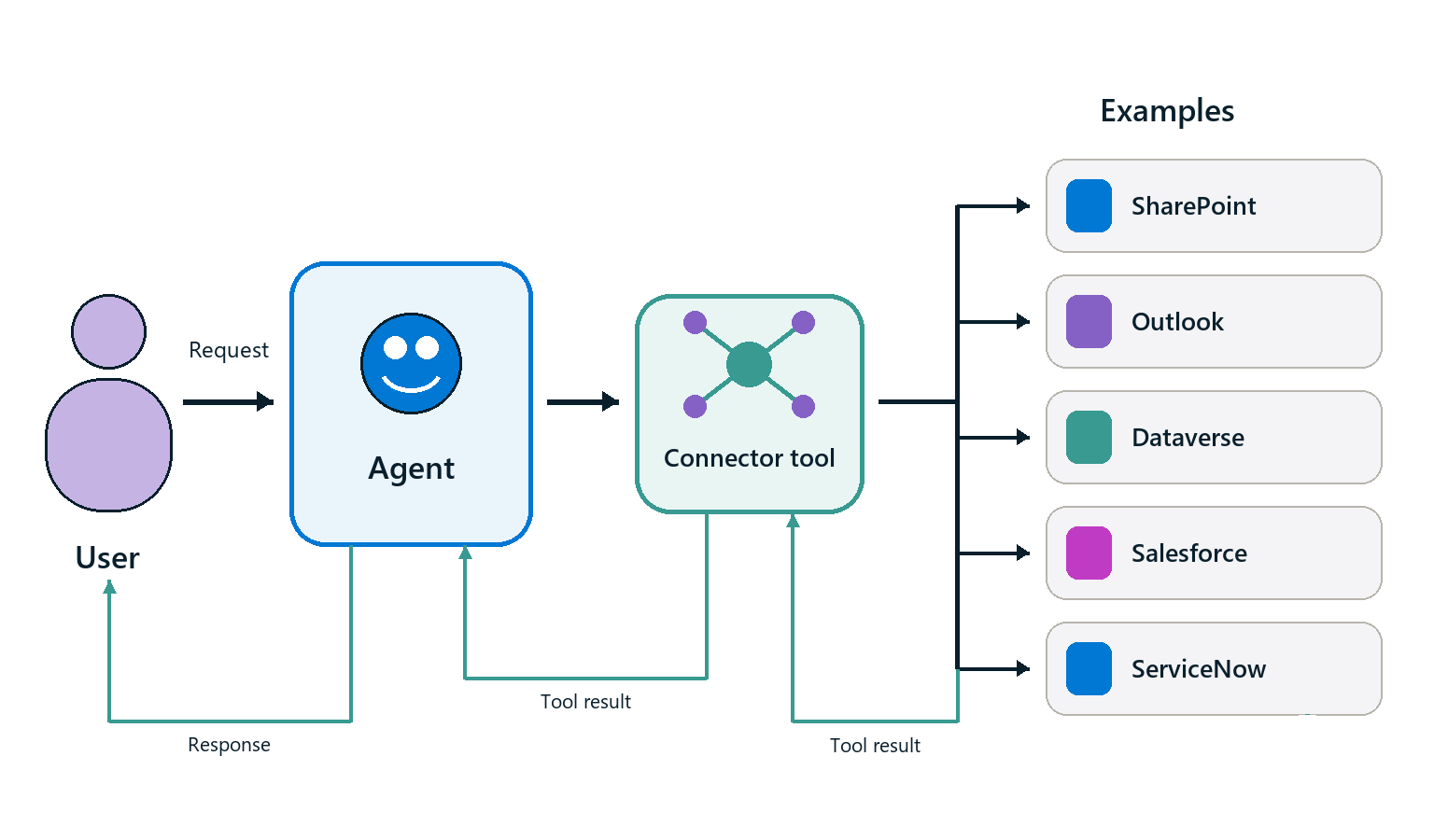
The service returns data or an action result through the connector tool to the agent. The agent uses that result to respond to the user.
Add an existing connector action
In Copilot Studio, open the agent's Build tab, select Tools, and then add a connector. Select the service, action, and connection that the agent should use. The action becomes a tool that the agent can select when a request matches its purpose.
Your organization's data policies can block a connector or tool. If a tool is unavailable, review its policy explanation in Add a tool and contact your administrator. Don't try to work around the restriction. A blocked tool can also prevent an agent from publishing or running.
Review these areas before testing the tool:
- Name: State what the tool returns or does. For example,
Get equipment inventoryis clearer thanGet items. - Description: Explain what the tool does, when to use it, and important limits. The agent uses this description to decide whether the tool fits a request.
- Authentication: Confirm whose credentials the connection uses and whether that choice fits the intended channel and data permissions.
- Inputs: Define how the tool gets each required value.
- Outputs: Review the information returned by the tool so you can check how the agent uses it in its response.
Configure connector inputs
The following input settings apply to connector actions that you configure for an agent. Connector inputs usually fall into two groups:
- Fixed configuration: Values that stay the same for every call, such as a SharePoint site, list name, environment, or region. Set these values directly rather than asking the agent to infer them.
- Request-specific information: Values that vary with the user or conversation, such as an item name, date, location, or email address. Configure these inputs so the agent can fill them from the conversation, and instruct it to ask when required information is missing.
For an input filled by AI, use a clear name and explain what information it needs. Add an example if users might not know the expected format. If the value must follow a rule, such as using a valid email address, configure the tool to check the value or ask again.
Use a fixed value for settings that don't change, such as the SharePoint site address. Let AI fill information that changes with each request, such as a location or item name.
Review input configuration in the tool's Inputs panel. The available controls depend on the tool and experience. For an MCP tool, the server owner defines the inputs. For a workflow tool, the workflow author defines them. In every case, clear names and descriptions help the agent provide the right values.
Check the connector tool
Before moving on, test the connector connection and action with known values. Then use Preview to submit a request that should select the tool. Verify that the agent:
- Selects the intended tool.
- Uses fixed inputs without asking the user for them.
- Extracts or asks for request-specific inputs.
- Returns current data without inventing missing results.
This quick check confirms that the connector works. Later, you learn how to test tool selection and diagnose problems across all tool types.
For more information, see Add a tool to an agent.