Bemærk
Adgang til denne side kræver godkendelse. Du kan prøve at logge på eller ændre mapper.
Adgang til denne side kræver godkendelse. Du kan prøve at ændre mapper.
Generates TypeSpec files from the intercepted requests and responses.
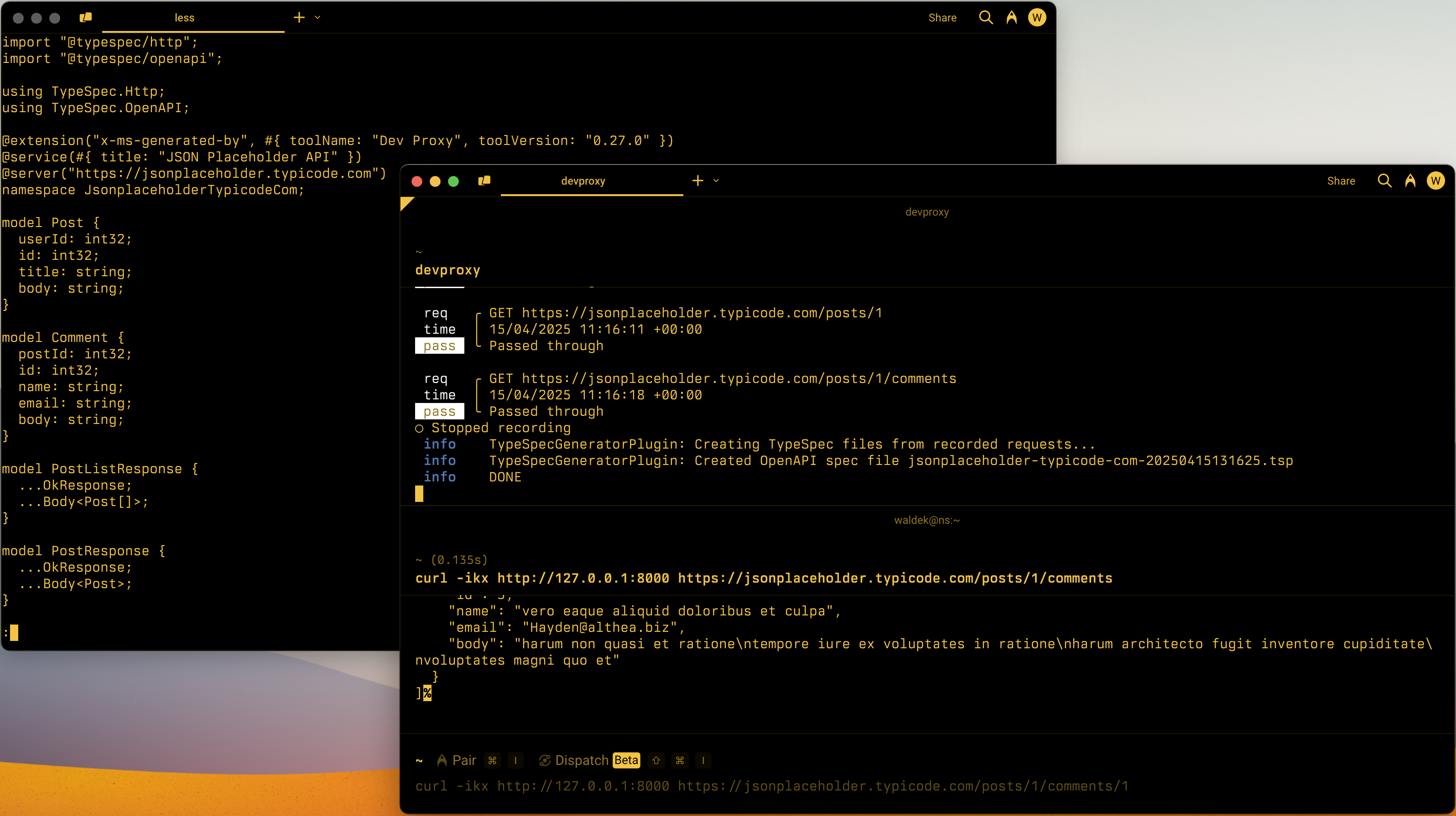
Configuration example
{
  "$schema": "https://raw.githubusercontent.com/dotnet/dev-proxy/main/schemas/v3.3.1/rc.schema.json",
  "plugins": [
    {
      "name": "TypeSpecGeneratorPlugin",
      "enabled": true,
      "pluginPath": "~appFolder/plugins/DevProxy.Plugins.dll",
      "configSection": "typeSpecGeneratorPlugin"
    }
  ],
  "typeSpecGeneratorPlugin": {
    "$schema": "https://raw.githubusercontent.com/dotnet/dev-proxy/main/schemas/v3.3.1/typespecgeneratorplugin.schema.json",
    "ignoreResponseTypes": false
  }
}
Configuration properties
| Property | Description | Default |
|---|---|---|
ignoreResponseTypes |
Determines whether to generate types for API responses (false) or to set them to string (true). |
false |
Command line options
None
Remarks
To create better TypeSpec files, consider using a local language model with Dev Proxy. Using a local language model, the TypeSpecGeneratorPlugin generates clearer operation IDs and descriptions, giving you a better starting point for your TypeSpec file. To use a local language model with the TypeSpecGeneratorPlugin, enable the language model in the configuration file. For more information, see Use a local language model.
Samarbejd med os på GitHub
Kilden til dette indhold kan findes på GitHub, hvor du også kan oprette og gennemse problemer og pullanmodninger. Du kan få flere oplysninger i vores vejledning til bidragydere.

Dev Proxy