Note
Access to this page requires authorization. You can try signing in or changing directories.
Access to this page requires authorization. You can try changing directories.
This article provides an executive overview of Microsoft Sovereign Cloud and answers the key questions decision makers need to make an informed adoption decision.
Sovereignty has become an increasingly important business priority for organizations. The challenge with sovereignty is meeting the requirements without creating unnecessary barriers to innovation, agility, and scale. Organizations that use a patchwork of products and manual controls often see higher costs and slower delivery without increased confidence that they can demonstrate compliance.
The Microsoft Sovereign Cloud helps solve these challenges. It provides sovereign capabilities across sovereign public, private, and partner clouds. This continuum of deployment options reduces the need for isolated solutions and helps organizations maintain a consistent approach to governance, security, and operations as requirements evolve.
Outcome: This guidance helps decision makers understand how to meet sovereignty requirements for Azure workloads in Microsoft Sovereign Cloud and establish the policies and standards needed to sustain them over time.
Sovereignty solutions and decision tree
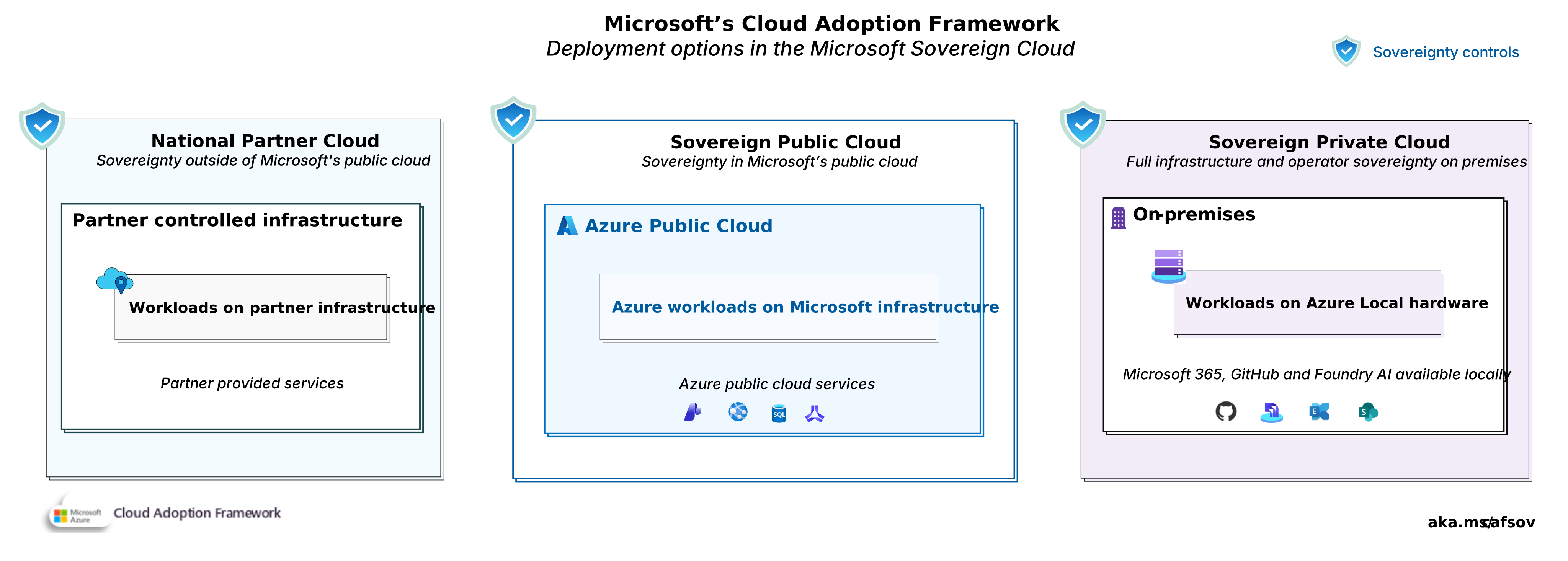
Overview of Microsoft Sovereign Cloud deployment options. Download a PowerPoint file of this architecture.
1. What is digital sovereignty?
Digital sovereignty is the ability for organizations to exercise control over their data, technology, and operational governance in accordance with their legal, regulatory, and business requirements. A combination of technical, operational, and contractual sovereign controls enables it.
Sovereignty is a subset of your broader compliance obligations. Compliance encompasses all legal, regulatory, contractual, and organizational requirements. Sovereignty focuses on the specific requirements that govern control, jurisdiction, data residency, administrative access, and operational governance.
Digital sovereignty isn't achieved through isolation or concentration alone. The goal is to apply proportionate controls and maximize the availability and resilience of systems and data. Designs should mitigate jurisdictional and operational risk without creating unnecessary dependencies, single points of failure, or concentrations of data and infrastructure that increase risk.
2. Do you need sovereignty?
Most organizations have some sovereignty requirements. The question is usually not whether you need sovereignty, but which workloads require extra sovereignty controls and how much control those workloads need. Common drivers include:
- National or regional regulations
- Industry regulations, such as finance or healthcare rules
- Government, defense, or critical infrastructure obligations
- Contracts that require local control or operation
If your existing Azure security, compliance, and regional deployment capabilities satisfy your requirements, standard Azure deployments might be sufficient. If you require greater control over where data is stored, who can access systems, how infrastructure is operated, or which jurisdiction governs those operations, evaluate Microsoft Sovereign Cloud capabilities.
3. Why Microsoft Sovereign Cloud?
Most sovereignty strategies fail when organizations are forced to choose between control and innovation. Microsoft Sovereign Cloud provides sovereign controls across a continuum of deployment options. Key benefits include:
Consistent platform: Use consistent management, services, APIs, governance, and developer tooling across sovereign deployment models. This approach reduces operational complexity and allows teams to reuse skills, processes, and investments.
Innovation and control: Workloads can continue to benefit from the hyperscale cloud's broad service portfolio, elastic capacity, global infrastructure, rapid platform updates, and advanced AI capabilities.
Adapt over time: As regulations, geopolitical conditions, or business requirements change, workloads can move along the sovereignty continuum.
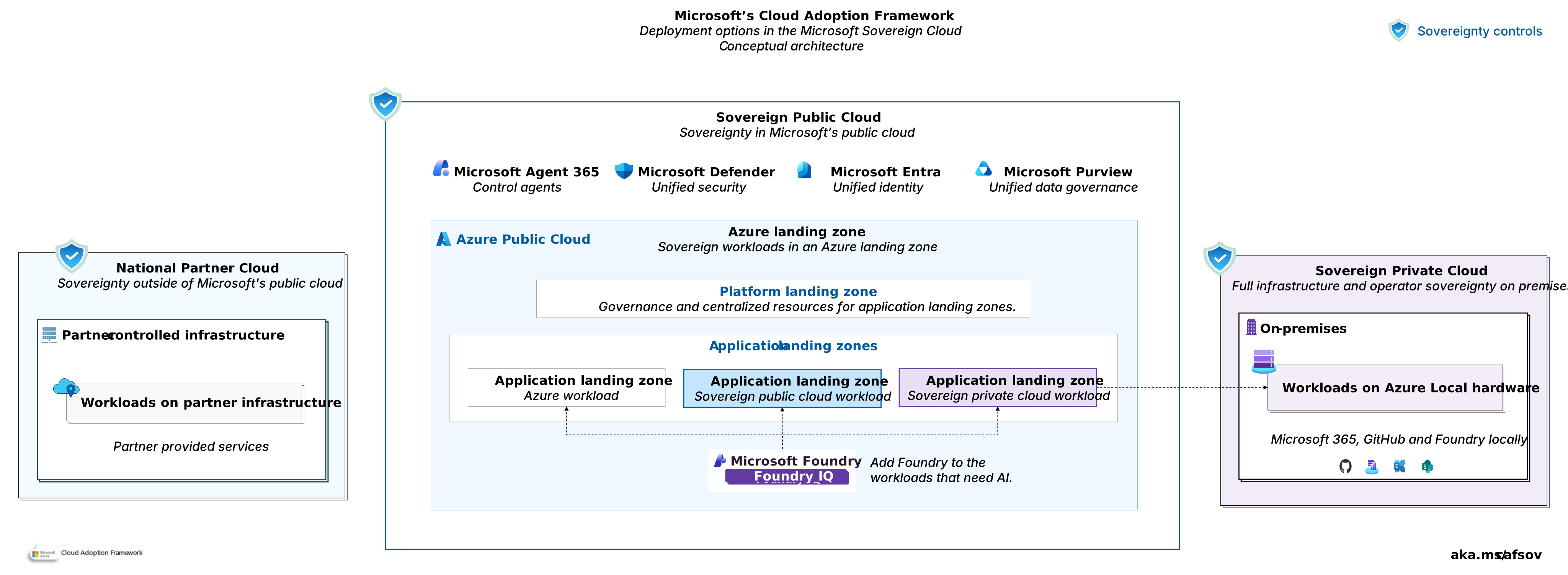
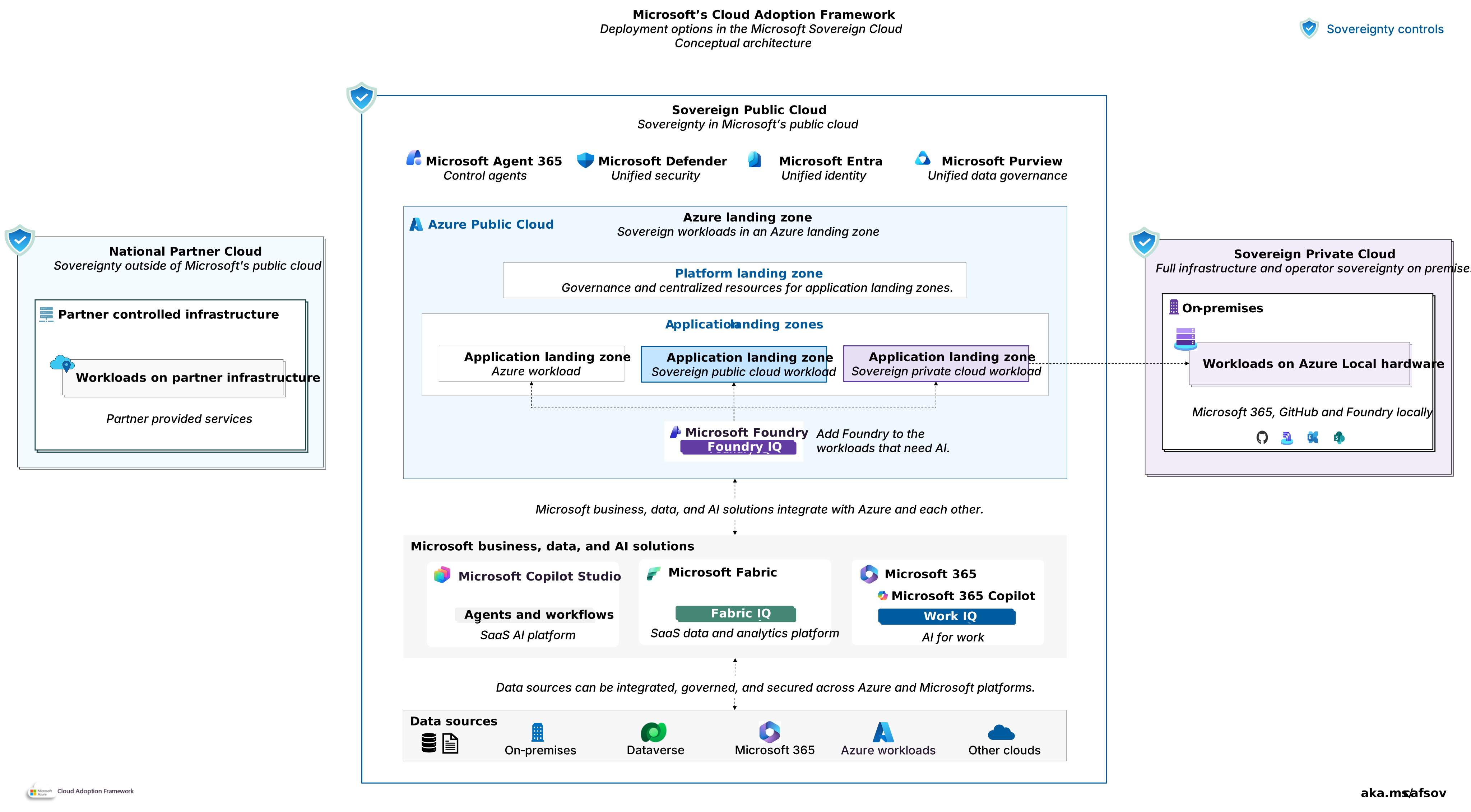
Sovereign AI: Sovereign Public Cloud provides access to AI services in Azure with sovereign controls. For workloads that can't leave your premises, you can run AI locally on Azure Local.
4. Which Microsoft sovereign solution do I choose?
Microsoft Sovereign Cloud provides three deployment models with different levels of sovereignty. Choose the model that meets your requirements with the fewest restrictions and the highest practical levels of innovation, availability, and resilience. Most organizations use Sovereign Public Cloud as the default and adopt other models only for workloads that require additional controls. Here are the current options:
Sovereign Public Cloud: Sovereign controls are available in the Azure public cloud. This option is best when you need data residency, data confidentiality, and operational oversight but want the innovation capabilities of the Azure public cloud. See Sovereign Public Cloud
Sovereign Private Cloud: Runs on Azure Local in facilities you control or designate. Best when workloads must stay on your premises with connectivity to Azure or run fully disconnected from Microsoft. You can run Microsoft 365, Foundry, and GitHub locally. See Sovereign Private Cloud.
National Partner Clouds: This option is restricted to eligible customers in a limited number of geographies, such as Germany and France. Each cloud is operated by a local partner under national governance, independent of Microsoft operations. Best when law or policy requires operational independence from Microsoft. See National Partner Clouds.
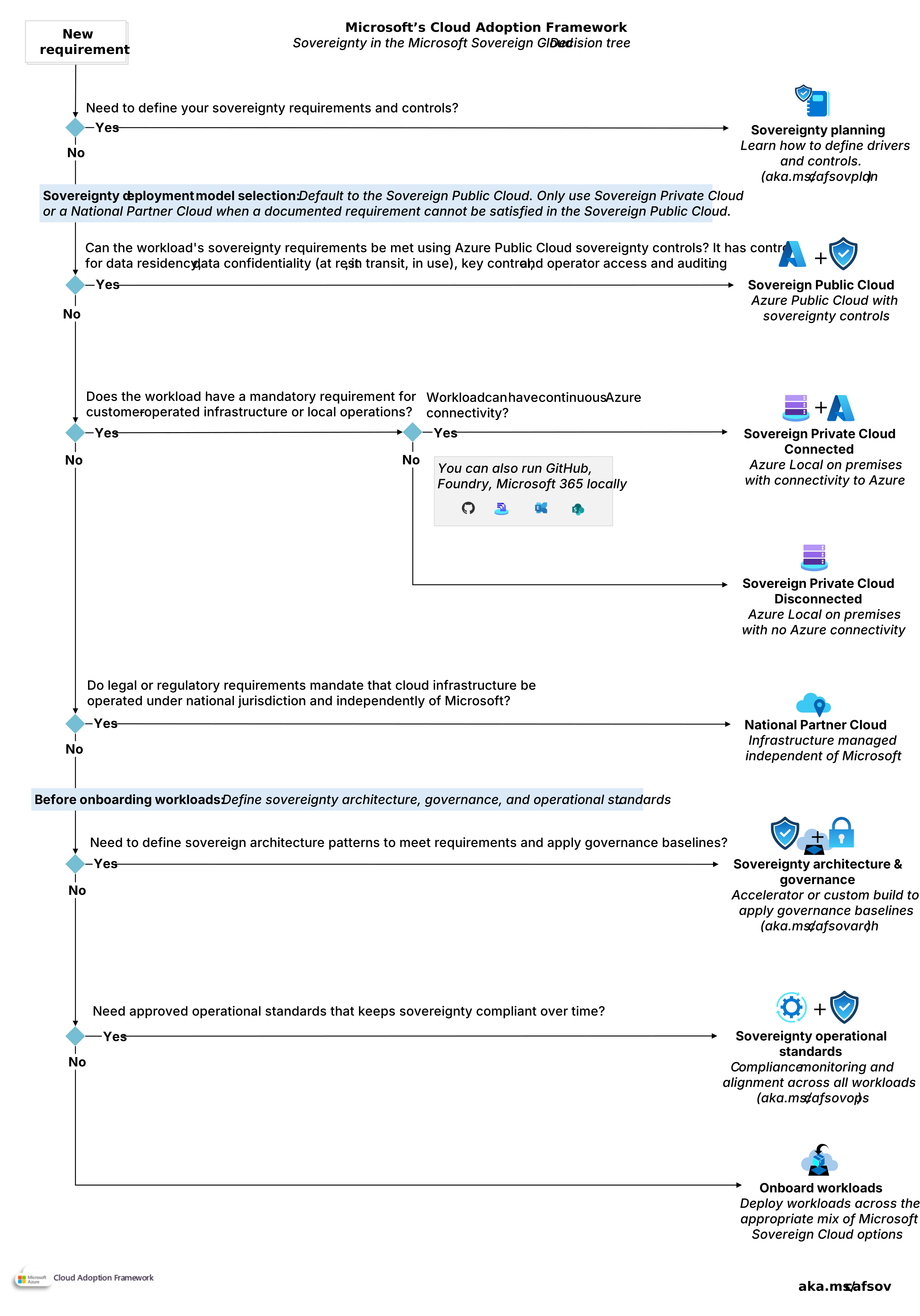
For help choosing between the different solutions, see the Sovereignty decision tree.
5. What does sovereignty cost?
Sovereignty involves tradeoffs between risk, flexibility, and cost. As organizations adopt more restrictive sovereignty controls, costs increase because greater isolation and operational responsibility require additional infrastructure and supporting capabilities. The goal is to apply only the controls each workload requires. Here's an overview of the main cost factors:
Sovereign Public Cloud cost factors: You pay standard Azure prices. Added cost comes from the specific services, SKUs, or regions you select to get the controls you need, such as confidential computing or customer-managed keys in Azure Key Vault. For standard pricing, see Azure pricing.
Sovereign Private Cloud cost factors: This model adds both infrastructure and operational cost. You buy validated Azure Local hardware and software licenses and take responsibility for operating and securing the environment. Greater infrastructure control means higher upfront investment and operating expense. Depending on your deployment type (hyperconverged only), you might be eligible for a Hybrid Benefit.
National Partner Clouds cost factors: The partner sets pricing, service availability, and support, and these differ from global Azure. Evaluate both price and available services before you choose.
For workload-specific estimates, use the Azure pricing calculator, though the sovereignty controls available in the calculator might be incomplete.
6. How are sovereignty responsibilities shared?
Sovereignty is a shared responsibility. The balance of responsibilities depends on the deployment model you choose. Greater infrastructure control and operational ownership come with greater operational responsibility. Here's an overview of the main responsibilities:
Sovereign Public Cloud: Microsoft operates the infrastructure and provides sovereignty capabilities. You decide which controls apply, configure them, and keep the evidence that proves compliance and sovereignty. You also manage encryption keys when required.
Sovereign Private Cloud: You operate the infrastructure and local environment. Microsoft provides the software platform. The exact division of responsibilities depends on whether the deployment remains connected to Azure services or operates independently after deployment.
Azure Local Connected: Microsoft is responsible for operating and maintaining the Azure public cloud services that support Azure Local connected capabilities.
Azure Local Disconnected: The deployment doesn't rely on Microsoft cloud services after deployment. Microsoft has fewer operational responsibilities and you assume greater responsibility for operating the environment.
National Partner Clouds: A designated sovereign cloud operator, headquartered and operating within the country or region, owns and operates the cloud under local governance and jurisdiction. The operator manages the environment independently of Microsoft operations. Work with the operator to define an operating model that meets your sovereignty requirements. Verify that the operator's certifications, controls, and compliance capabilities satisfy your sovereignty needs.
7. Sovereignty time to value
How fast you reach production depends on how much infrastructure you must deploy and operate yourself. The more you control, the longer the path.
Sovereign Public Cloud: This option provides the fastest path to value. You have no hardware to procure or facilities to prepare. A Sovereign Landing Zone helps you stand up a compliant environment quickly and deploy with standard Azure patterns.
Sovereign Private Cloud: Plan for a longer cycle. Azure Local requires validated hardware, facility readiness, and local operational capabilities. Timelines depend on hardware availability and deployment readiness.
National Partner Clouds: Timelines vary based on customer onboarding requirements, eligibility verification, and regulatory approvals. Service availability and operating models vary by provider and region. Validate requirements early in the planning process.
8. How to adopt sovereign controls
Microsoft's Cloud Adoption Framework gives you a structured path, and you can distill it into steps for sovereignty. Each step builds on the one before it.

Sovereignty planning and organizational readiness: Learn how to identify sovereignty requirements and apply controls in the Microsoft Sovereign Cloud. Learn how to define your deployment model, operating model, skilling, and cost management and FinOps.
Sovereignty architecture and governance: Learn how to select and standardize the target architecture, governance model, and platform controls for each Microsoft Sovereign Cloud deployment model.
Sovereignty operational standards: Learn how to establish operational standards, compliance processes, and evidence requirements that sustain sovereignty requirements across their lifecycle.
Use the Sovereignty decision tree to determine your next step or start with planning and organizational readiness.