Note
Access to this page requires authorization. You can try signing in or changing directories.
Access to this page requires authorization. You can try changing directories.
You can export Carbon optimization in Azure emissions data using the Azure portal to download a CSV file. Emissions data is available for the previous month by day 19 of the current month.
You can export your emissions data in CSV format from the Emissions Trends, Emissions Details, and Emission Reductions pages in Carbon optimization. The Export to CSV button appears next to the chart or table that you're exporting.
You can export data from either the Subscriptions view or the Billing Accounts view, depending on the level of analysis you need:
- Use the Subscriptions view to export emissions data for selected subscriptions and supported resource-level dimensions.
- Use the Billing Accounts view to export emissions data across subscriptions under an eligible billing account.
To export emissions data
- Sign in to the Azure portal.
- In the search box, type Carbon optimization, and then select Carbon optimization.
- Use the View dropdown to select Subscriptions or Billing Accounts.
- Select the subscriptions or billing account you want to analyze.
- Go to the page that contains the data you want to export.
- Select Export to CSV next to the chart or table.
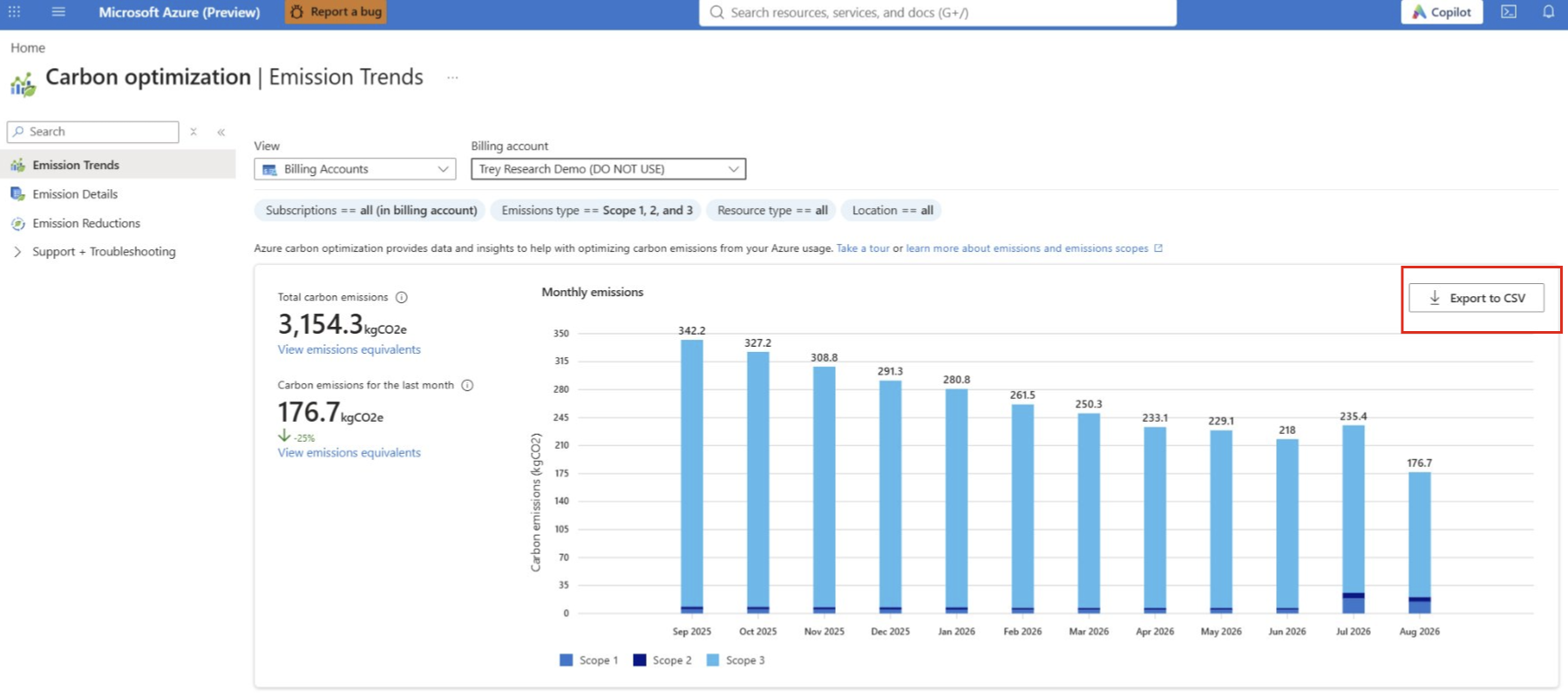
The downloaded CSV file includes:
- Emissions Trends. Data for the past 12 months for the selected filters, including:
- Scope 1, 2, 3 and total emissions
- Carbon intensity
- Emissions Details
- Subscription/Resource Group/Resource/Service/Location
- Latest month emissions
- Previous month emissions
- Emission Reductions
- Recommended actions to reduce emissions
The maximum number of records in the exported CSV file is 5,000.