नोट
इस पेज तक पहुँच के लिए प्रमाणन की आवश्यकता होती है. आप साइन इन करने या निर्देशिकाओं को बदलने का प्रयास कर सकते हैं.
इस पेज तक पहुँच के लिए प्रमाणन की आवश्यकता होती है. आप निर्देशिकाओं को बदलने का प्रयास कर सकते हैं.
Organizations must protect different types of technology assets with controls appropriate to the nature of each technology, including identity, endpoints, applications, data, infrastructure, network, and AI.
Each technology presents different security requirements, risks, and implementation considerations. Security disciplines apply security practices across these technologies, and technical solutions implement controls and capabilities across one or more of them.
Zero Trust principles apply across all of these technology areas. Rather than organizing guidance around individual products or features, the Security Adoption Framework uses technologies as durable areas for understanding and applying security guidance.
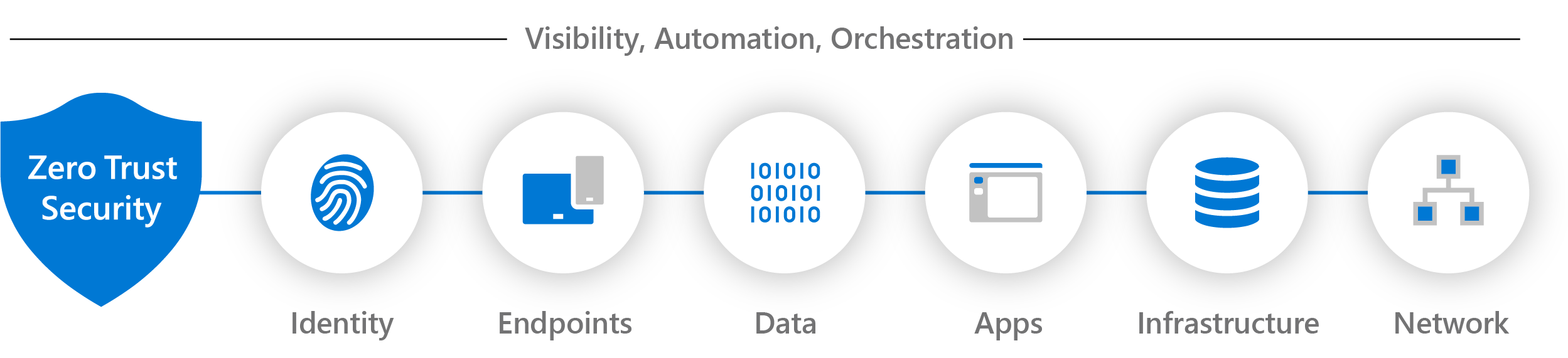
Technologies in SAF
These areas are represented as technologies in the Microsoft Security Adoption Framework (SAF) and are also used as pillars in the Zero Trust Workshop.
SAF connects four complementary components:
- Business scenarios define desired security outcomes based on business priorities and risk.
- Security disciplines describe the security work needed to manage risk, make decisions, and improve security capabilities.
- Technologies identify areas of the environment that must be protected, including identity, endpoints, applications, data, infrastructure, network, and AI.
- Technical solutions provide implementation guidance for security requirements and capabilities that often span multiple technologies.
These components work together rather than forming a sequential process. A business scenario can require work across multiple security disciplines and technologies, while a technical solution can implement security requirements across several technology areas.
Zero Trust principles apply across this model, from business and security decisions through architecture, technology, implementation, and operations.
Technologies
| Technology | Description |
|---|---|
 Identity |
Protect identities and access. Verify identities, manage privileges, and make access decisions based on appropriate context and risk. |
 Endpoints |
Protect devices that access organizational resources. Assess device state and risk and apply appropriate configuration, protection, and access controls. |
 Data |
Protect data throughout its lifecycle using capabilities such as classification, access control, encryption, and monitoring. |
 Applications |
Protect applications, services, and APIs and the identities, permissions, sessions, and data they use. |
 Infrastructure |
Protect compute, platforms, and supporting infrastructure through secure configuration, access control, protection, and monitoring. |
 Network |
Protect connectivity and communications using controls such as segmentation, traffic inspection, secure access, and monitoring. |
 AI |
Protect AI applications, agents, models, data, prompts, context, and tool integrations. Apply appropriate security controls across identity, data, applications, infrastructure, and network technologies. |
How Zero Trust workshop pillars map to SAF
The Zero Trust Workshop uses pillars as its organizing concept for planning and implementation. Most workshop pillars correspond to technologies in SAF, including identity, endpoints, applications, data, infrastructure, network, and AI.
Two workshop pillars map differently in SAF:
- SecOps maps to the SAF SecOps security discipline.
- DevSecOps/Development Security maps to the SAF Development Security security discipline.
This approach allows the Zero Trust Workshop to retain its familiar pillar-based structure while SAF distinguishes between technologies that must be protected and the security disciplines that perform security work across them.
Zero Trust implementation workshops
The Zero Trust Workshop provides practical guidance for applying Zero Trust principles across these areas.
What's next?
- Review Technical solutions for guidance on implementing security requirements and capabilities.
- Learn about the Security Adoption Framework and how its components work together.
- Review business scenarios to connect security improvements to business priorities and risk.