Piezīmes
Lai piekļūtu šai lapai, ir nepieciešama autorizācija. Varat mēģināt pierakstīties vai mainīt direktorijus.
Lai piekļūtu šai lapai, ir nepieciešama autorizācija. Varat mēģināt mainīt direktorijus.
Generates TypeSpec files from the intercepted requests and responses.
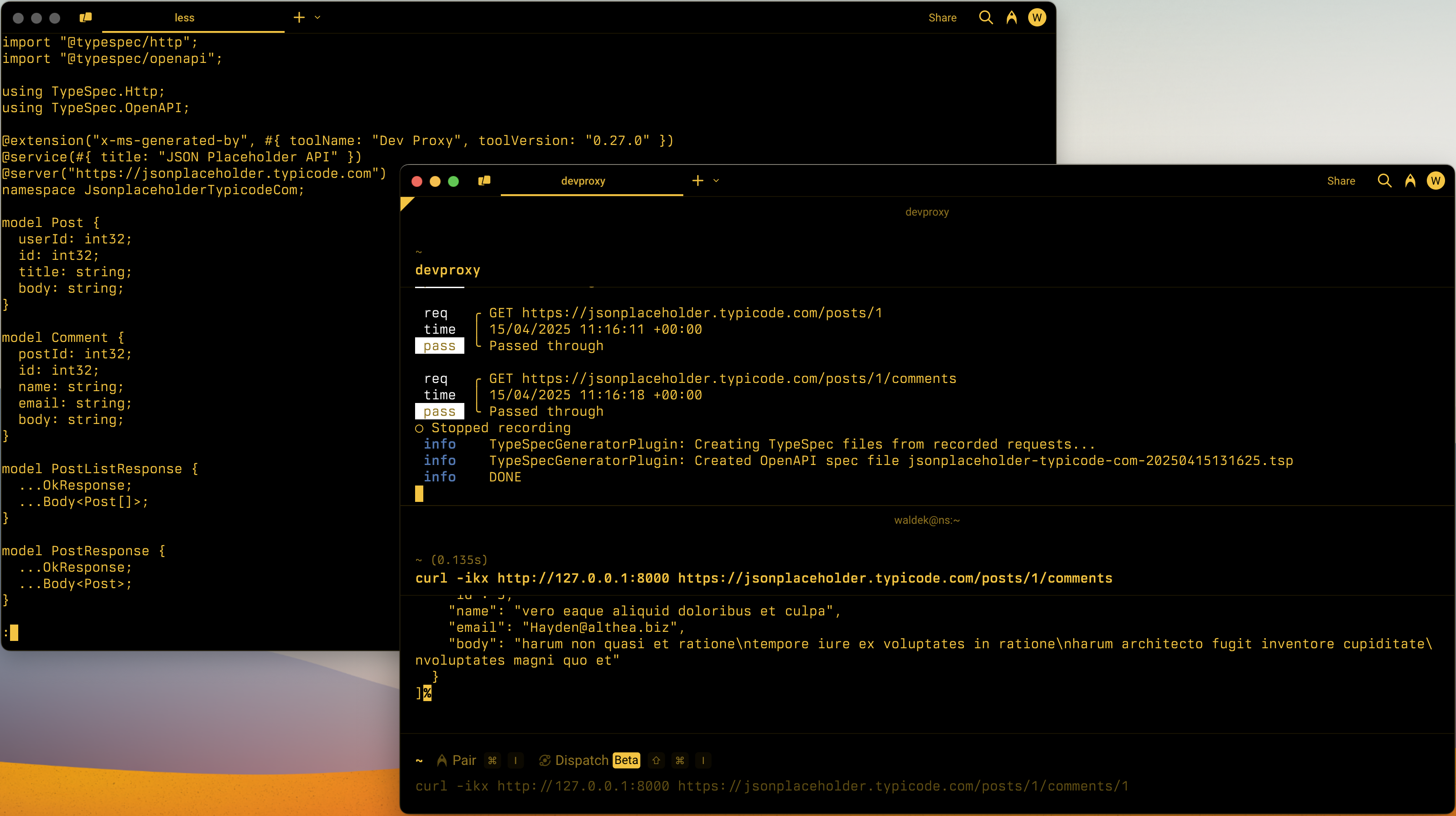
Configuration example
{
  "$schema": "https://raw.githubusercontent.com/dotnet/dev-proxy/main/schemas/v2.0.0/rc.schema.json",
  "plugins": [
    {
      "name": "TypeSpecGeneratorPlugin",
      "enabled": true,
      "pluginPath": "~appFolder/plugins/DevProxy.Plugins.dll",
      "configSection": "typeSpecGeneratorPlugin"
    }
  ],
  "typeSpecGeneratorPlugin": {
    "$schema": "https://raw.githubusercontent.com/dotnet/dev-proxy/main/schemas/v2.0.0/typespecgeneratorplugin.schema.json",
    "ignoreResponseTypes": false
  }
}
Configuration properties
| Property | Description | Default |
|---|---|---|
ignoreResponseTypes |
Determines whether to generate types for API responses (false) or to set them to string (true). |
false |
Command line options
None
Remarks
To create better TypeSpec files, consider using a local language model with Dev Proxy. Using a local language model, the TypeSpecGeneratorPlugin generates clearer operation IDs and descriptions, giving you a better starting point for your TypeSpec file. To use a local language model with the TypeSpecGeneratorPlugin, enable the language model in the configuration file. For more information, see Use a local language model.
Sadarbojieties ar mums vietnē GitHub
Šī satura avotu var atrast vietnē GitHub, kur varat arī izveidot un pārskatīt problēmas un atgādāšanas pieprasījumus. Lai iegūtu papildinformāciju, skatiet mūsu līdzstrādnieku rokasgrāmatu.
