Nota
O acesso a esta página requer autorização. Podes tentar iniciar sessão ou mudar de diretório.
O acesso a esta página requer autorização. Podes tentar mudar de diretório.
Ao usar ligação por linhas, uma aplicação define uma estrutura contendo um ou dois, ou em alguns casos três, elementos para cada coluna para os quais os dados devem ser devolvidos. O primeiro elemento contém o valor dos dados, e o segundo elemento contém o buffer de comprimento/indicador. Indicadores e valores de comprimento podem ser armazenados em buffers separados definindo os campos de descritores SQL_DESC_INDICATOR_PTR e SQL_DESC_OCTET_LENGTH_PTR para valores diferentes; Se isto for feito, a estrutura contém um terceiro elemento. A aplicação aloca então um array destas estruturas, que contém tantos elementos quantas linhas há no conjunto de linhas.
A aplicação declara o tamanho da estrutura ao driver com o atributo de instrução SQL_ATTR_ROW_BIND_TYPE e associa o endereço de cada membro no primeiro elemento do array. Assim, o driver pode efetuar o cálculo do endereço dos dados para uma determinada linha e uma coluna como
Address = Bound Address + ((Row Number - 1) * Structure Size)
onde as linhas são numeradas de 1 até ao tamanho do conjunto de linhas. (É subtraído do número da linha porque a indexação de arrays em C é baseada em zero.) A ilustração seguinte mostra como funciona a associação por linhas. Geralmente, apenas as colunas que serão ligadas são incluídas na estrutura. A estrutura pode conter campos que não estão relacionados com as colunas do conjunto de resultados. As colunas podem ser colocadas na estrutura em qualquer ordem, mas são apresentadas sequencialmente para maior clareza.
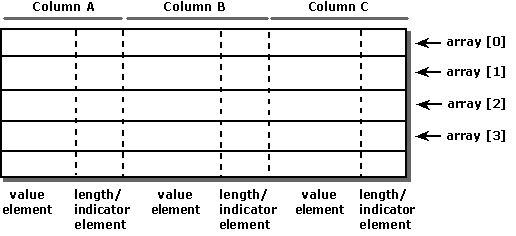
Por exemplo, o código seguinte cria uma estrutura com elementos para devolver dados para as colunas OrderID, SalesPerson e Status, e comprimento/indicadores para as colunas Salesperson e Status. Aloca 10 destas estruturas e liga-as às colunas OrderID, SalesPerson e Status.
#define ROW_ARRAY_SIZE 10

// Define the ORDERINFO struct and allocate an array of 10 structs.
typedef struct {
   SQLUINTEGER   OrderID;
   SQLINTEGER    OrderIDInd;
   SQLCHAR       SalesPerson[11];
   SQLINTEGER    SalesPersonLenOrInd;
   SQLCHAR       Status[7];
   SQLINTEGER    StatusLenOrInd;
} ORDERINFO;
ORDERINFO OrderInfoArray[ROW_ARRAY_SIZE];

SQLULEN    NumRowsFetched;
SQLUSMALLINT   RowStatusArray[ROW_ARRAY_SIZE], i;
SQLRETURN      rc;
SQLHSTMT       hstmt;

// Specify the size of the structure with the SQL_ATTR_ROW_BIND_TYPE
// statement attribute. This also declares that row-wise binding will
// be used. Declare the rowset size with the SQL_ATTR_ROW_ARRAY_SIZE
// statement attribute. Set the SQL_ATTR_ROW_STATUS_PTR statement
// attribute to point to the row status array. Set the
// SQL_ATTR_ROWS_FETCHED_PTR statement attribute to point to
// NumRowsFetched.
SQLSetStmtAttr(hstmt, SQL_ATTR_ROW_BIND_TYPE, sizeof(ORDERINFO), 0);
SQLSetStmtAttr(hstmt, SQL_ATTR_ROW_ARRAY_SIZE, ROW_ARRAY_SIZE, 0);
SQLSetStmtAttr(hstmt, SQL_ATTR_ROW_STATUS_PTR, RowStatusArray, 0);
SQLSetStmtAttr(hstmt, SQL_ATTR_ROWS_FETCHED_PTR, &NumRowsFetched, 0);

// Bind elements of the first structure in the array to the OrderID,
// SalesPerson, and Status columns.
SQLBindCol(hstmt, 1, SQL_C_ULONG, &OrderInfoArray[0].OrderID, 0, &OrderInfoArray[0].OrderIDInd);
SQLBindCol(hstmt, 2, SQL_C_CHAR, OrderInfoArray[0].SalesPerson,
            sizeof(OrderInfoArray[0].SalesPerson),
            &OrderInfoArray[0].SalesPersonLenOrInd);
SQLBindCol(hstmt, 3, SQL_C_CHAR, OrderInfoArray[0].Status,
            sizeof(OrderInfoArray[0].Status), &OrderInfoArray[0].StatusLenOrInd);

// Execute a statement to retrieve rows from the Orders table.
SQLExecDirect(hstmt, "SELECT OrderID, SalesPerson, Status FROM Orders", SQL_NTS);

// Fetch up to the rowset size number of rows at a time. Print the actual
// number of rows fetched; this number is returned in NumRowsFetched.
// Check the row status array to print only those rows successfully
// fetched. Code to check if rc equals SQL_SUCCESS_WITH_INFO or
// SQL_ERRORnot shown.
while ((rc = SQLFetchScroll(hstmt,SQL_FETCH_NEXT,0)) != SQL_NO_DATA) {
   for (i = 0; i < NumRowsFetched; i++) {
      if (RowStatusArray[i] == SQL_ROW_SUCCESS|| RowStatusArray[i] ==
         SQL_ROW_SUCCESS_WITH_INFO) {
         if (OrderInfoArray[i].OrderIDInd == SQL_NULL_DATA)
            printf(" NULL      ");
         else
            printf("%d\t", OrderInfoArray[i].OrderID);
         if (OrderInfoArray[i].SalesPersonLenOrInd == SQL_NULL_DATA)
            printf(" NULL      ");
         else
            printf("%s\t", OrderInfoArray[i].SalesPerson);
         if (OrderInfoArray[i].StatusLenOrInd == SQL_NULL_DATA)
            printf(" NULL\n");
         else
            printf("%s\n", OrderInfoArray[i].Status);
      }
   }
}

// Close the cursor.
SQLCloseCursor(hstmt);