Compliance
Most organizations have compliance considerations. Process mining can help with ongoing monitoring to ensure compliance success. Process mining assists auditors in ensuring better statutory compliance by identifying deviations, improving internal controls, and adhering to industry standards and regulations.
Benefits of using process mining for compliance monitoring include early detection, efficiency, root cause analysis, and process optimization. Process mining helps identify compliance issues promptly. With the efficiency of process mining, auditors can focus on critical areas instead of a manual records review. Auditors can map out entire processes and detect discrepancies, bottlenecks, and irregularities, which leads to faster identification of root causes. Insights from process mining can also lead to overall better data handling practices.
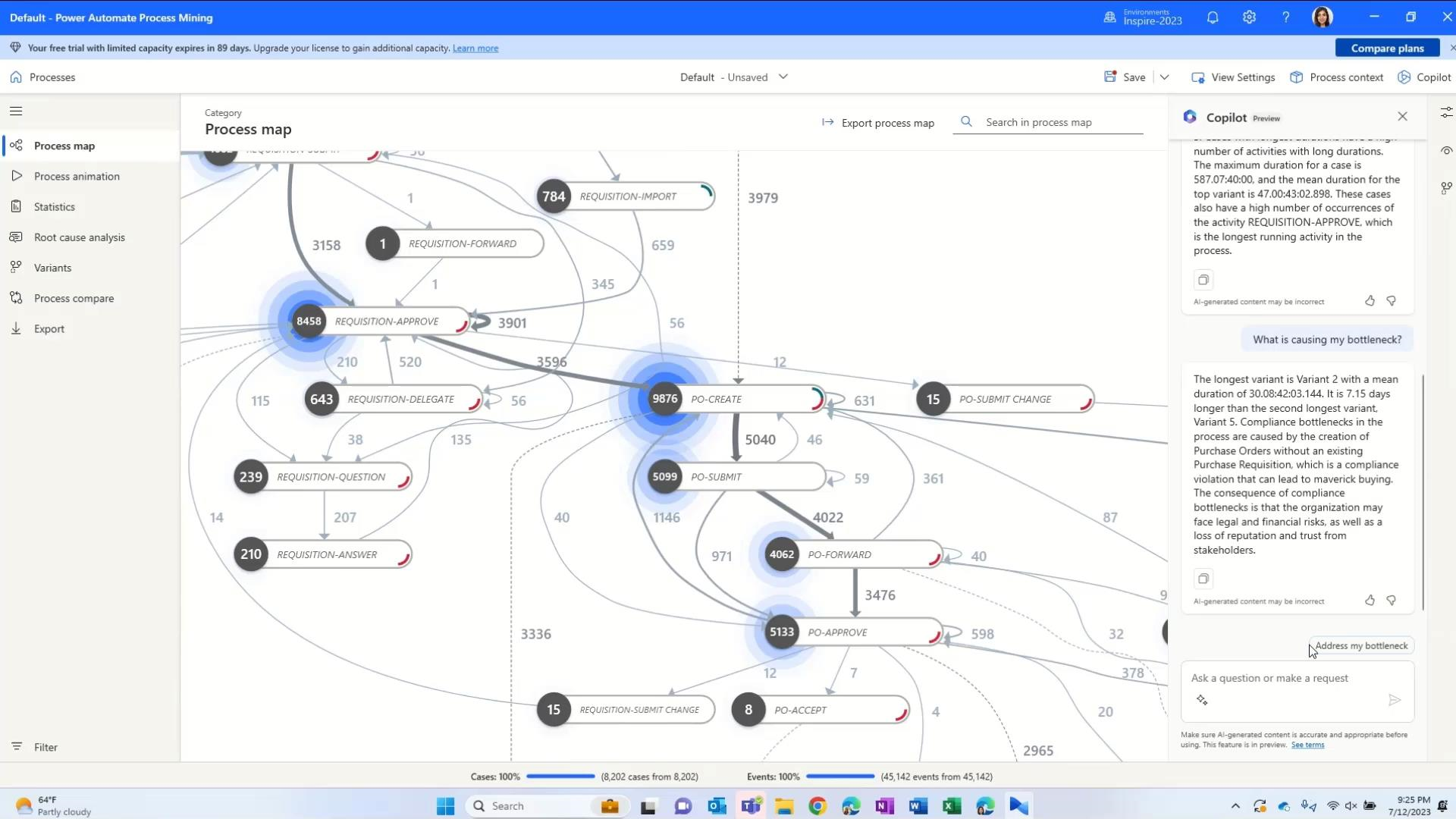
The following image shows a discovered compliance violation. With this discovery, you can now address the bottlenecks that this compliance issue caused.
Other compliance considerations
As you use your event logs for process mining, make sure that you determine whether your organization has other compliance considerations, such as data privacy and regional considerations like General Data Protection Regulation (GDPR). While a full discussion of maintaining data privacy and being fully GDPR compliant is beyond the scope of this module, some basic considerations are available as part of process mining event log data.
Consider a scenario where a healthcare organization uses process mining to evaluate event logs. Those event logs likely contain personal data that's medical and private. If you take steps to include anonymization and pseudonymization, you can still learn from the mining insights and respect patient privacy. Ensuring that patients fully understand how you use and maintain their private medical data also helps keep the data policies in compliance. Additionally, you need to make sure that you establish and follow standard retention policies and keep audit trails and documentation up to date.
To lead your organization toward better compliance standards and practices, you should:
Establish a culture of compliance by default.
Monitor continuously.
Address noncompliance concerns as soon as possible.
Conduct regular reviews and updates of policies and procedures.