Lưu ý
Cần có ủy quyền mới truy nhập được vào trang này. Bạn có thể thử đăng nhập hoặc thay đổi thư mục.
Cần có ủy quyền mới truy nhập được vào trang này. Bạn có thể thử thay đổi thư mục.
Generates TypeSpec files from the intercepted requests and responses.
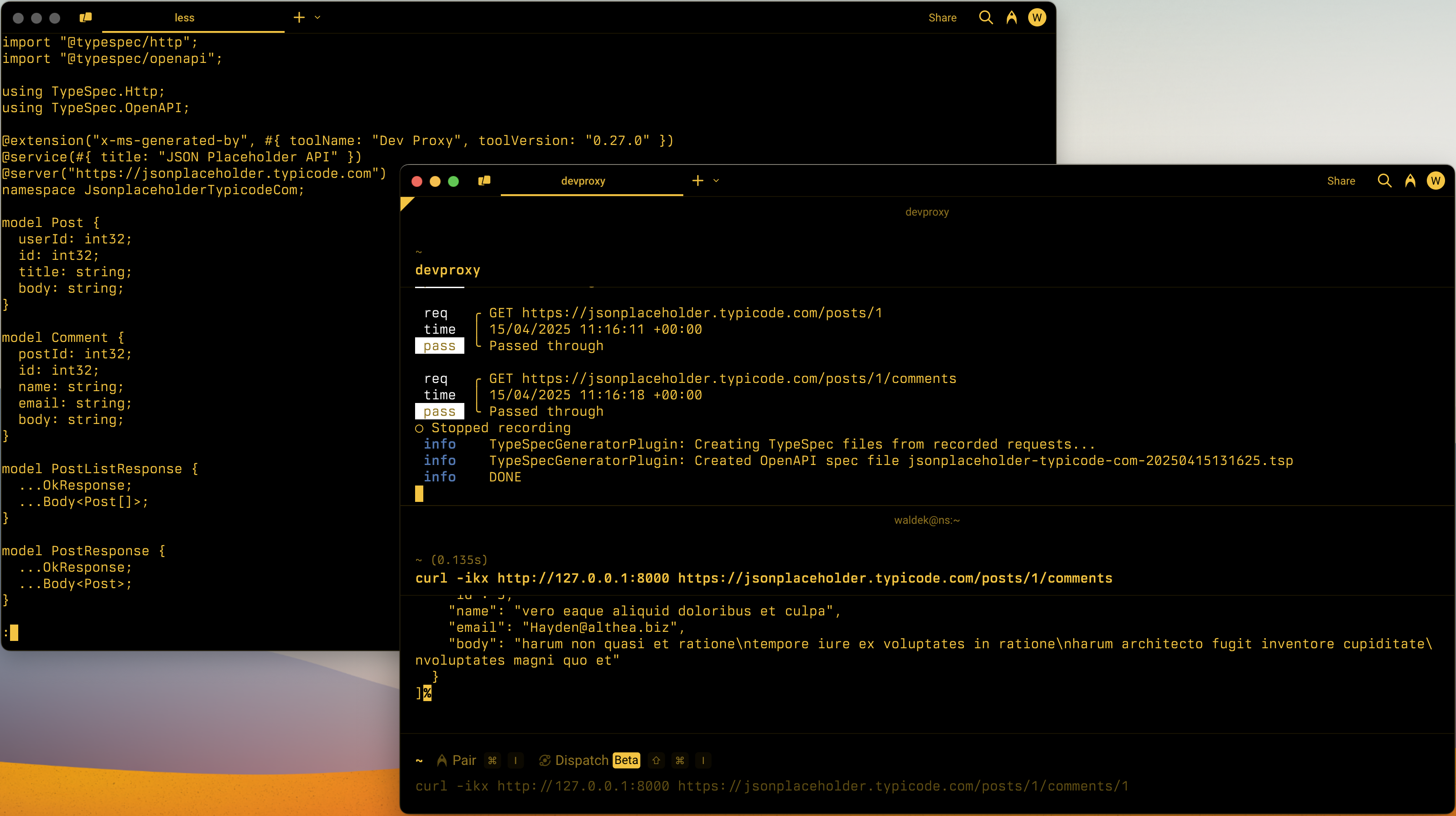
Configuration example
{
  "$schema": "https://raw.githubusercontent.com/dotnet/dev-proxy/main/schemas/v2.0.0/rc.schema.json",
  "plugins": [
    {
      "name": "TypeSpecGeneratorPlugin",
      "enabled": true,
      "pluginPath": "~appFolder/plugins/DevProxy.Plugins.dll",
      "configSection": "typeSpecGeneratorPlugin"
    }
  ],
  "typeSpecGeneratorPlugin": {
    "$schema": "https://raw.githubusercontent.com/dotnet/dev-proxy/main/schemas/v2.0.0/typespecgeneratorplugin.schema.json",
    "ignoreResponseTypes": false
  }
}
Configuration properties
| Property | Description | Default |
|---|---|---|
ignoreResponseTypes |
Determines whether to generate types for API responses (false) or to set them to string (true). |
false |
Command line options
None
Remarks
To create better TypeSpec files, consider using a local language model with Dev Proxy. Using a local language model, the TypeSpecGeneratorPlugin generates clearer operation IDs and descriptions, giving you a better starting point for your TypeSpec file. To use a local language model with the TypeSpecGeneratorPlugin, enable the language model in the configuration file. For more information, see Use a local language model.
Cộng tác với chúng tôi trên GitHub
Bạn có thể tìm thấy nguồn cho nội dung này trên GitHub, nơi bạn cũng có thể tạo và xem lại các vấn đề và yêu cầu kéo. Để biết thêm thông tin, hãy xem hướng dẫn dành cho người đóng góp của chúng tôi.
