Note
L’accès à cette page nécessite une autorisation. Vous pouvez essayer de vous connecter ou de modifier les répertoires.
L’accès à cette page nécessite une autorisation. Vous pouvez essayer de changer de répertoire.
Dans ce guide, vous allez utiliser le filtre de ciblage pour déployer une fonctionnalité destinée aux audiences ciblées pour votre application web Go Gin. Pour plus d’informations sur le filtre de ciblage, consultez Déployer des fonctionnalités pour les audiences ciblées.
Prerequisites
- Un compte Azure avec un abonnement actif. Créez-en un gratuitement.
- Un magasin App Configuration, comme illustré dans le didacticiel pour la création d’un magasin.
- Un indicateur de caractéristiques avec un filtre de ciblage. Créer l’indicateur de fonctionnalité.
- Accédez à la version 1.21 ou ultérieure. Pour plus d’informations sur l’installation de Go, consultez la page téléchargements Go.
- Azure App Configuration fournisseur Go v1.1.0 ou version ultérieure.
Créez une application web avec un indicateur de fonctionnalité
Dans cette section, vous créez une application web qui permet aux utilisateurs de se connecter et d’utiliser l’indicateur de fonctionnalité Bêta que vous avez créé précédemment.
Créez un répertoire pour votre projet Go et accédez-y :
mkdir gin-targeting-quickstart
cd gin-targeting-quickstart
Initialiser un nouveau module Go :
go mod init gin-targeting-quickstartInstallez les packages Go requis :
go get github.com/gin-gonic/gin
go get github.com/gin-contrib/sessions
go get github.com/gin-contrib/sessions/cookie
go get github.com/microsoft/Featuremanagement-Go/featuremanagement
go get github.com/microsoft/Featuremanagement-Go/featuremanagement/providers/azappconfig
Créez un répertoire de modèles pour vos modèles HTML et ajoutez les fichiers HTML requis :
mkdir templatesAjoutez les fichiers de modèle HTML suivants à partir du référentiel GitHub et placez-les dans le répertoire
templates:-
index.html- Modèle de page d’accueil -
beta.html- Modèle de page bêta -
login.html- Modèle de page de connexion
-
Créez un fichier nommé
appconfig.goavec le contenu suivant : Vous pouvez vous connecter à votre magasin App Configuration en utilisant Microsoft Entra ID (recommandé) ou une chaîne de connexion.package main import ( "context" "log" "os" "github.com/Azure/AppConfiguration-GoProvider/azureappconfiguration" "github.com/Azure/azure-sdk-for-go/sdk/azidentity" ) func loadAzureAppConfiguration(ctx context.Context) (*azureappconfiguration.AzureAppConfiguration, error) { // Get the endpoint from environment variable endpoint := os.Getenv("AZURE_APPCONFIG_ENDPOINT") if endpoint == "" { log.Fatal("AZURE_APPCONFIG_ENDPOINT environment variable is not set") } // Create a credential using DefaultAzureCredential credential, err := azidentity.NewDefaultAzureCredential(nil) if err != nil { log.Fatalf("Failed to create credential: %v", err) } // Set up authentication options with endpoint and credential authOptions := azureappconfiguration.AuthenticationOptions{ Endpoint: endpoint, Credential: credential, } // Set up options to enable feature flags options := &azureappconfiguration.Options{ FeatureFlagOptions: azureappconfiguration.FeatureFlagOptions{ Enabled: true, RefreshOptions: azureappconfiguration.RefreshOptions{ Enabled: true, }, }, } // Load configuration from Azure App Configuration appConfig, err := azureappconfiguration.Load(ctx, authOptions, options) if err != nil { log.Fatalf("Failed to load configuration: %v", err) } return appConfig, nil }
Utiliser le ciblage avec des indicateurs de fonctionnalité
Créez un fichier nommé
main.goavec le contenu suivant :package main import ( "context" "fmt" "log" "net/http" "strings" "github.com/gin-contrib/sessions" "github.com/gin-contrib/sessions/cookie" "github.com/gin-gonic/gin" "github.com/microsoft/Featuremanagement-Go/featuremanagement" "github.com/microsoft/Featuremanagement-Go/featuremanagement/providers/azappconfig" ) type WebApp struct { featureManager *featuremanagement.FeatureManager appConfig *azureappconfiguration.AzureAppConfiguration } func main() { // Load Azure App Configuration appConfig, err := loadAzureAppConfiguration(context.Background()) if err != nil { log.Fatalf("Error loading Azure App Configuration: %v", err) } // Create feature flag provider featureFlagProvider, err := azappconfig.NewFeatureFlagProvider(appConfig) if err != nil { log.Fatalf("Error creating feature flag provider: %v", err) } // Create feature manager featureManager, err := featuremanagement.NewFeatureManager(featureFlagProvider, nil) if err != nil { log.Fatalf("Error creating feature manager: %v", err) } // Create web app app := &WebApp{ featureManager: featureManager, appConfig: appConfig, } // Setup Gin with default middleware (Logger and Recovery) r := gin.Default() // Start server if err := r.Run(":8080"); err != nil { log.Fatalf("Failed to start server: %v", err) } fmt.Println("Starting server on http://localhost:8080") fmt.Println("Open http://localhost:8080 in your browser") fmt.Println() }Activez l’actualisation de la configuration et de l’indicateur de fonctionnalité à partir d’Azure App Configuration avec l’intergiciel.
// Existing code
// ... ...

func (app *WebApp) refreshMiddleware() gin.HandlerFunc {
    return func(c *gin.Context) {
        go func() {
            if err := app.appConfig.Refresh(context.Background()); err != nil {
                log.Printf("Error refreshing configuration: %v", err)
            }
        }()
        c.Next()
    }
}

func (app *WebApp) featureMiddleware() gin.HandlerFunc {
    return func(c *gin.Context) {
        // Get current user from session
        session := sessions.Default(c)
        username := session.Get("username")

        var betaEnabled bool
        var targetingContext featuremanagement.TargetingContext
        if username != nil {
            // Evaluate Beta feature with targeting context
            var err error
            targetingContext = createTargetingContext(username.(string))
            betaEnabled, err = app.featureManager.IsEnabledWithAppContext("Beta", targetingContext)
            if err != nil {
                log.Printf("Error checking Beta feature with targeting: %v", err)
            }
        }

        c.Set("betaEnabled", betaEnabled)
        c.Set("user", username)
        c.Set("targetingContext", targetingContext)
        c.Next()
    }
}

// Helper function to create TargetingContext
func createTargetingContext(userID string) featuremanagement.TargetingContext {
    targetingContext := featuremanagement.TargetingContext{
        UserID: userID,
        Groups: []string{},
    }

    if strings.Contains(userID, "@") {
        parts := strings.Split(userID, "@")
        if len(parts) == 2 {
            targetingContext.Groups = append(targetingContext.Groups, parts[1]) // Add domain as group
        }
    }

    return targetingContext
}

// The rest of existing code
//... ...
Configurez les itinéraires avec le contenu suivant :
// Existing code
// ... ...

func (app *WebApp) setupRoutes(r *gin.Engine) {
    // Setup sessions
    store := cookie.NewStore([]byte("secret-key-change-in-production"))
    store.Options(sessions.Options{
        MaxAge:   3600, // 1 hour
        HttpOnly: true,
        Secure:   false, // Set to true in production with HTTPS
    })
    r.Use(sessions.Sessions("session", store))


    r.Use(app.refreshMiddleware())
    r.Use(app.featureMiddleware())

    // Load HTML templates
    r.LoadHTMLGlob("templates/*.html")

    // Routes
    r.GET("/", app.homeHandler)
    r.GET("/beta", app.betaHandler)
    r.GET("/login", app.loginPageHandler)
    r.POST("/login", app.loginHandler)
    r.GET("/logout", app.logoutHandler)
}

// Home page handler
func (app *WebApp) homeHandler(c *gin.Context) {
    betaEnabled := c.GetBool("betaEnabled")
    user := c.GetString("user")

    c.HTML(http.StatusOK, "index.html", gin.H{
        "title":       "TestFeatureFlags",
        "betaEnabled": betaEnabled,
        "user":        user,
    })
}

// Beta page handler
func (app *WebApp) betaHandler(c *gin.Context) {
    betaEnabled := c.GetBool("betaEnabled")
    if !betaEnabled {
        return
    }

    c.HTML(http.StatusOK, "beta.html", gin.H{
        "title": "Beta Page",
    })
}

func (app *WebApp) loginPageHandler(c *gin.Context) {
    c.HTML(http.StatusOK, "login.html", gin.H{
        "title": "Login",
    })
}

func (app *WebApp) loginHandler(c *gin.Context) {
    username := c.PostForm("username")

    // Basic validation - ensure username is not empty
    if strings.TrimSpace(username) == "" {
        c.HTML(http.StatusOK, "login.html", gin.H{
            "title": "Login",
            "error": "Username cannot be empty",
        })
        return
    }

    // Store username in session - any valid username is accepted
    session := sessions.Default(c)
    session.Set("username", username)
    session.Save()
    c.Redirect(http.StatusFound, "/")
}

func (app *WebApp) logoutHandler(c *gin.Context) {
    session := sessions.Default(c)
    session.Clear()
    session.Save()
    c.Redirect(http.StatusFound, "/")
}

// The rest of existing code
//... ...
Mettez à jour le
main.goavec le contenu suivant :// Existing code // ... ... r := gin.Default() // Setup routes app.setupRoutes(r) // Start server if err := r.Run(":8080"); err != nil { log.Fatalf("Failed to start server: %v", err) } // The rest of existing code // ... ...Une fois les étapes précédentes terminées, votre
main.gofichier doit maintenant contenir l’implémentation complète, comme indiqué ci-dessous :package main import ( "context" "fmt" "log" "net/http" "strings" "github.com/gin-contrib/sessions" "github.com/gin-contrib/sessions/cookie" "github.com/gin-gonic/gin" "github.com/microsoft/Featuremanagement-Go/featuremanagement" "github.com/microsoft/Featuremanagement-Go/featuremanagement/providers/azappconfig" ) type WebApp struct { featureManager *featuremanagement.FeatureManager appConfig *azureappconfiguration.AzureAppConfiguration } func (app *WebApp) refreshMiddleware() gin.HandlerFunc { return func(c *gin.Context) { go func() { if err := app.appConfig.Refresh(context.Background()); err != nil { log.Printf("Error refreshing configuration: %v", err) } }() c.Next() } } func (app *WebApp) featureMiddleware() gin.HandlerFunc { return func(c *gin.Context) { // Get current user from session session := sessions.Default(c) username := session.Get("username") var betaEnabled bool var targetingContext featuremanagement.TargetingContext if username != nil { // Evaluate Beta feature with targeting context var err error targetingContext = createTargetingContext(username.(string)) betaEnabled, err = app.featureManager.IsEnabledWithAppContext("Beta", targetingContext) if err != nil { log.Printf("Error checking Beta feature with targeting: %v", err) } } c.Set("betaEnabled", betaEnabled) c.Set("user", username) c.Set("targetingContext", targetingContext) c.Next() } } // Helper function to create TargetingContext func createTargetingContext(userID string) featuremanagement.TargetingContext { targetingContext := featuremanagement.TargetingContext{ UserID: userID, Groups: []string{}, } if strings.Contains(userID, "@") { parts := strings.Split(userID, "@") if len(parts) == 2 { targetingContext.Groups = append(targetingContext.Groups, parts[1]) // Add domain as group } } return targetingContext } func (app *WebApp) setupRoutes(r *gin.Engine) { // Setup sessions store := cookie.NewStore([]byte("secret-key-change-in-production")) store.Options(sessions.Options{ MaxAge: 3600, // 1 hour HttpOnly: true, Secure: false, // Set to true in production with HTTPS }) r.Use(sessions.Sessions("session", store)) r.Use(app.refreshMiddleware()) r.Use(app.featureMiddleware()) // Load HTML templates r.LoadHTMLGlob("templates/*.html") // Routes r.GET("/", app.homeHandler) r.GET("/beta", app.betaHandler) r.GET("/login", app.loginPageHandler) r.POST("/login", app.loginHandler) r.GET("/logout", app.logoutHandler) } // Home page handler func (app *WebApp) homeHandler(c *gin.Context) { betaEnabled := c.GetBool("betaEnabled") user := c.GetString("user") c.HTML(http.StatusOK, "index.html", gin.H{ "title": "TestFeatureFlags", "betaEnabled": betaEnabled, "user": user, }) } // Beta page handler func (app *WebApp) betaHandler(c *gin.Context) { betaEnabled := c.GetBool("betaEnabled") if !betaEnabled { return } c.HTML(http.StatusOK, "beta.html", gin.H{ "title": "Beta Page", }) } func (app *WebApp) loginPageHandler(c *gin.Context) { c.HTML(http.StatusOK, "login.html", gin.H{ "title": "Login", }) } func (app *WebApp) loginHandler(c *gin.Context) { username := c.PostForm("username") // Basic validation - ensure username is not empty if strings.TrimSpace(username) == "" { c.HTML(http.StatusOK, "login.html", gin.H{ "title": "Login", "error": "Username cannot be empty", }) return } // Store username in session - any valid username is accepted session := sessions.Default(c) session.Set("username", username) session.Save() c.Redirect(http.StatusFound, "/") } func (app *WebApp) logoutHandler(c *gin.Context) { session := sessions.Default(c) session.Clear() session.Save() c.Redirect(http.StatusFound, "/") } func main() { // Load Azure App Configuration appConfig, err := loadAzureAppConfiguration(context.Background()) if err != nil { log.Fatalf("Error loading Azure App Configuration: %v", err) } // Create feature flag provider featureFlagProvider, err := azappconfig.NewFeatureFlagProvider(appConfig) if err != nil { log.Fatalf("Error creating feature flag provider: %v", err) } // Create feature manager featureManager, err := featuremanagement.NewFeatureManager(featureFlagProvider, nil) if err != nil { log.Fatalf("Error creating feature manager: %v", err) } // Create web app app := &WebApp{ featureManager: featureManager, appConfig: appConfig, } // Setup Gin with default middleware (Logger and Recovery) r := gin.Default() // Setup routes app.setupRoutes(r) // Start server if err := r.Run(":8080"); err != nil { log.Fatalf("Failed to start server: %v", err) } fmt.Println("Starting server on http://localhost:8080") fmt.Println("Open http://localhost:8080 in your browser") fmt.Println() }
Filtre de ciblage en action
Définissez la variable d’environnement pour l’authentification et exécutez l’application :
go mod tidy
go run .
Ouvrez une fenêtre de navigateur, puis accédez à
http://localhost:8080. Au départ, l’élément Bêta n’apparaît pas dans la barre d’outils, car l’option Pourcentage par défaut est définie sur 0.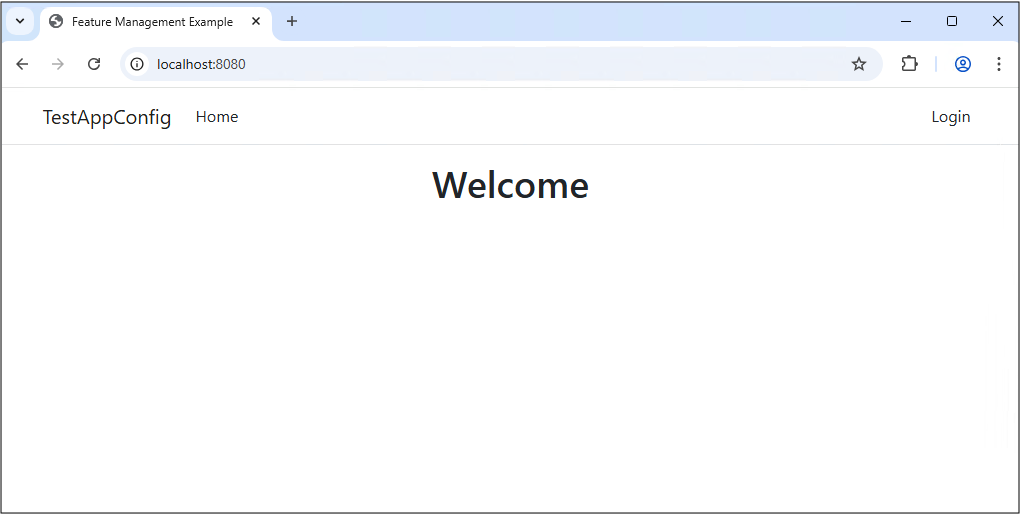
Cliquez sur le lien De connexion dans le coin supérieur droit. Essayez de vous connecter avec
test@contoso.com.Une fois connecté en tant que
test@contoso.com, l’élément bêta apparaît désormais dans la barre d’outils, cartest@contoso.comil est spécifié en tant qu’utilisateur ciblé.
Maintenant, déconnectez-vous et connectez-vous en tant que
testuser@contoso.com. L’élément bêta n’apparaît pas dans la barre d’outils, cartestuser@contoso.comil est spécifié en tant qu’utilisateur exclu.
Étapes suivantes
Pour en savoir plus sur les filtres de fonctionnalités, consultez les documents suivants.
Pour plus d’informations sur la bibliothèque Go Feature Management, passez au document suivant :