Nota
L'accesso a questa pagina richiede l'autorizzazione. È possibile provare ad accedere o modificare le directory.
L'accesso a questa pagina richiede l'autorizzazione. È possibile provare a modificare le directory.
Nei moderni progetti di business intelligence (BI) una delle possibili problematiche da affrontare è la necessità di conoscere il flusso dei dati dall'origine dati alla destinazione. La sfida è ancora più grande se si creano progetti analitici avanzati che si estendono su più origini dati, elementi e dipendenze.
È difficile rispondere a domande come "Cosa accade se si modificano questi dati?" o "Perché questo report non è aggiornato?". Tali domande potrebbero richiedere un team di esperti o un'indagine approfondita per comprendere. La visualizzazione derivazione di Microsoft Fabric consente di rispondere a queste domande.
Tracciabilità e Machine Learning
Esistono diversi motivi per cui la derivazione è importante nel flusso di lavoro di Machine Learning:
- Riproducibilità: conoscere la derivazione di un modello semplifica la riproduzione del modello e dei relativi risultati. Se un altro utente vuole replicare il modello, può seguire gli stessi passaggi usati per crearlo e usare gli stessi dati e parametri.
- Trasparenza: comprendere la derivazione di un modello consente di aumentare la trasparenza. Gli stakeholder, ad esempio le autorità di regolamentazione o gli utenti, possono comprendere come è stato creato il modello e come funziona. Questo fattore può essere importante per garantire equità, responsabilità e considerazioni etiche.
- Debug: se un modello non viene eseguito come previsto, conoscere la derivazione può aiutare a identificare l'origine del problema. Esaminando i dati di training, i parametri e le decisioni prese durante il processo di training, gli utenti potrebbero essere in grado di identificare i problemi che influiscono sulle prestazioni del modello.
- Miglioramento: conoscere la derivazione di un modello può anche contribuire a migliorarlo. Comprendendo come è stato creato e sottoposto a training il modello, gli utenti potrebbero essere in grado di apportare modifiche ai dati, ai parametri o al processo di training che possono migliorare l'accuratezza del modello o altre metriche delle prestazioni.
Tipi di elementi di data science
Microsoft Fabric integra modelli e esperimenti di Machine Learning in una piattaforma unificata. Nell'ambito di questo approccio, gli utenti possono esplorare la relazione tra gli elementi di data science di Fabric e altri elementi di Fabric.
Modelli di Machine Learning
In Infrastruttura gli utenti possono creare e gestire modelli di Machine Learning. Un elemento del modello di Machine Learning rappresenta un elenco con controllo delle versioni dei modelli, che consente agli utenti di esplorare le varie iterazioni del modello.
Nella visualizzazione derivazione gli utenti possono esplorare la relazione tra un modello di Machine Learning e altri elementi di Fabric per rispondere alle domande seguenti:
- Qual è la relazione tra modelli di Machine Learning e esperimenti nell'area di lavoro?
- Quali modelli di Machine Learning esistono nell'area di lavoro?
- Come è possibile tracciare la derivazione per vedere quali elementi del lakehouse sono correlati a questo modello?
Esperimenti di apprendimento automatico
Un esperimento di apprendimento automatico è l'unità primaria di organizzazione e controllo per tutte le esecuzioni di apprendimento automatico correlate.
Nella visualizzazione derivazione gli utenti possono esplorare la relazione tra un esperimento di Machine Learning e altri elementi di Fabric per rispondere alle domande seguenti:
- Qual è la relazione tra esperimenti di Machine Learning ed elementi di codice nell'area di lavoro? Ad esempio, qual è la relazione tra notebook e definizioni di processi Spark?
- Quali esperimenti di Machine Learning esistono nell'area di lavoro?
- Come posso risalire alla provenienza per identificare quali elementi del lakehouse erano collegati a questo esperimento?
Esplora vista della derivazione
Ogni area di lavoro Fabric ha una vista predefinita di tracciabilità. Per accedere a questa visualizzazione, è necessario un ruolo dell'area di lavoro (Amministratore, Membro, Collaboratore o Visualizzatore). Gli utenti con il ruolo Visualizzatore possono visualizzare la derivazione degli elementi, ma non le origini dati. Per altre informazioni sulle autorizzazioni in Fabric, vedere Ruoli e autorizzazioni di data science.
Per accedere alla visualizzazione derivazione:
Seleziona il tuo spazio di lavoro Fabric e quindi vai all'elenco degli spazi di lavoro.
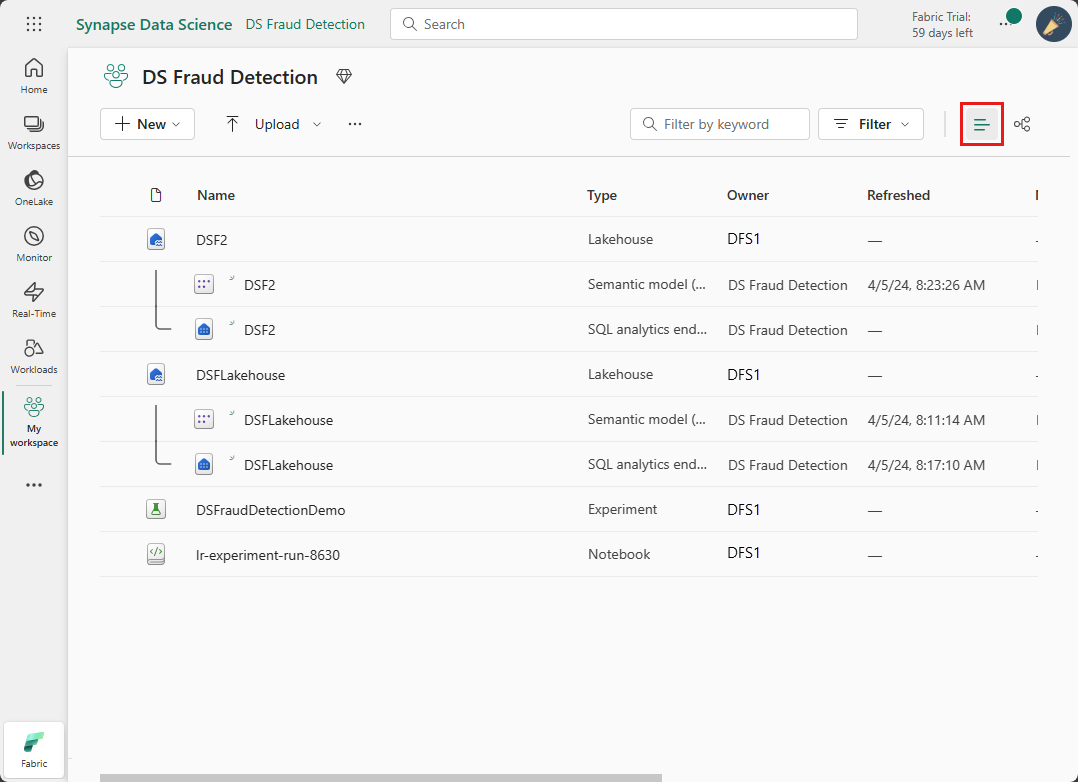
Passare dalla visualizzazione Elenco dell'area di lavoro alla visualizzazione Derivazione dell'area di lavoro.
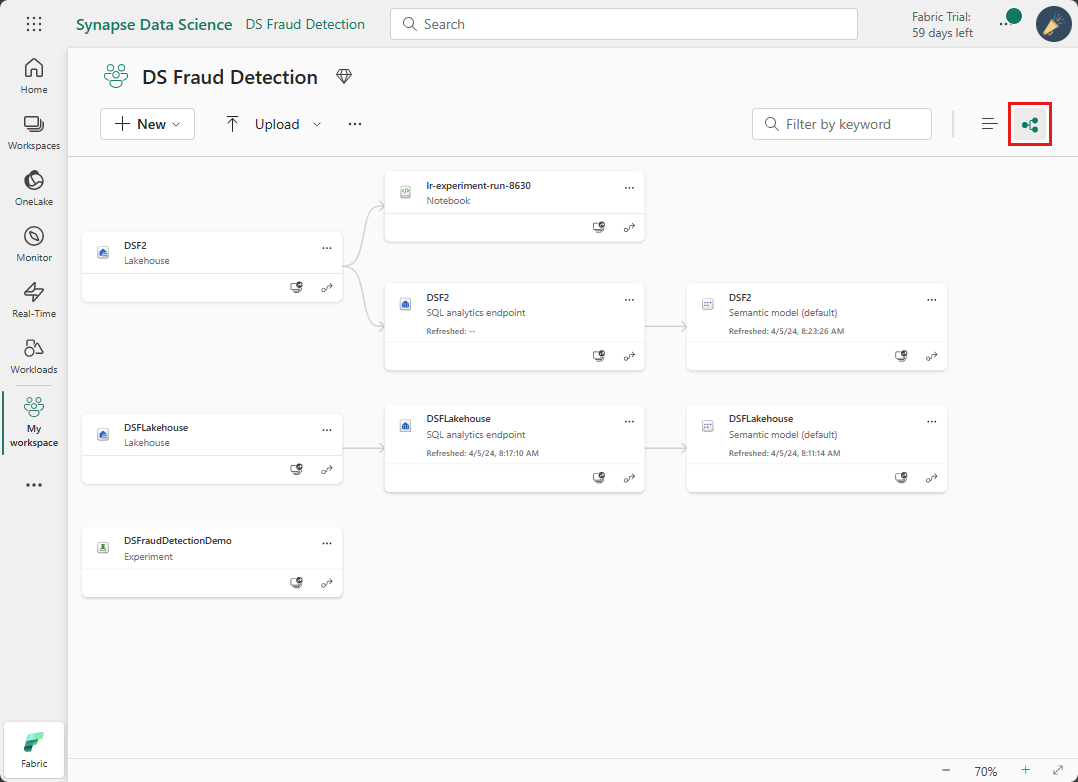
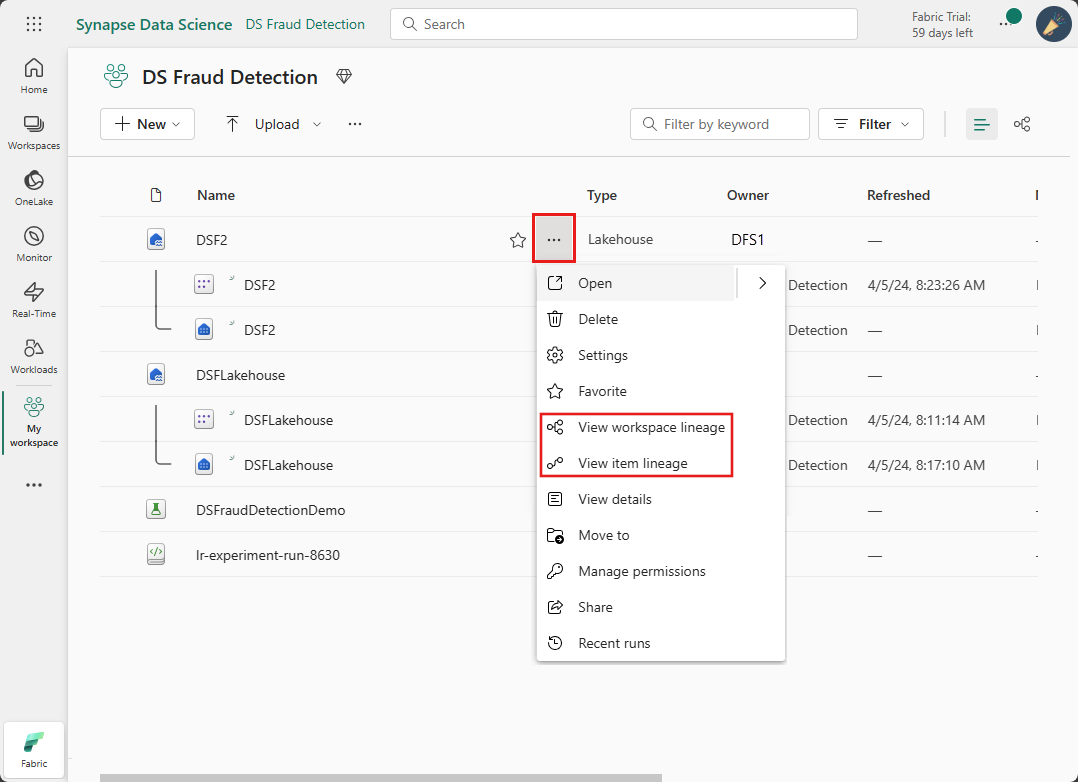
È anche possibile passare alla visualizzazione Derivazione per un elemento specifico aprendo il menu di scelta rapida e selezionando per visualizzare l'area di lavoro o la derivazione degli elementi.
Contenuti correlati
- Informazioni sui modelli di Machine Learning: Modelli di Machine Learning
- Informazioni sugli esperimenti di Machine Learning: Esperimenti di Machine Learning