Note
Access to this page requires authorization. You can try signing in or changing directories.
Access to this page requires authorization. You can try changing directories.
This article provides an executive overview of Microsoft AI solutions and helps decision makers determine how their organization should adopt AI.
Organizations are investing in AI to create business value. The challenge is determining where AI can deliver value and whether that value justifies the investment. Without a clear strategy, teams can experiment without producing enough value and AI investment can become fragmented.
Microsoft AI solutions address different business needs and provide different levels of customization. This range gives organizations options to align AI investments with the value they expect to achieve.
Outcome: This guidance helps decision makers establish the foundation for AI adoption and determine where their organization should invest.
AI decision tree and architectures
1. What is AI?
Artificial intelligence (AI) uses algorithms to analyze data and produce results. Many AI models learn patterns from existing data and use those patterns to process new information and produce results. AI capabilities generally fall into three broad areas:
Traditional AI (nongenerative): Analyzes data and produces results for a defined purpose, such as making predictions, classifying information, and detecting anomalies.
Generative AI: Creates new content or responses based on a user's request and available context. Common uses include drafting content, answering questions, summarizing information, generating code, and assisting employees with their work.
Agentic AI: Uses AI models with instructions and tools to pursue a goal and complete tasks. Agents can interpret requests, determine what to do, and use connected systems to take actions within defined permissions and controls.
These types can work together. For example, an agent might use generative AI to interpret a request and traditional AI to make a prediction before taking an authorized action. The business decision is therefore not simply whether to adopt AI. It is where AI can create value and which level of capability is appropriate for each use case.
2. Foundation of AI adoption
What should leadership do first? Successful AI adoption requires more than selecting the right technology. Leaders need to create the organizational conditions that allow teams to use AI productively and responsibly. Start with three actions:
Lead AI adoption: How should leaders guide AI adoption? AI adoption works best when executive leaders establish a common direction for the organization. Leaders should define the business outcomes that AI is expected to support and provide visible sponsorship for those priorities. An AI strategy or charter should document organizational priorities and decision rights. It should also define how the organization measures the value of AI investments.
Centralize AI governance: What should we centralize? AI creates governance decisions that apply across the organization. Successful organizations establish central ownership for organization-wide AI policies and standards. A central governance function, such as an AI Center of Excellence, can define Responsible AI requirements and common boundaries. Business groups can then pursue AI opportunities within those boundaries. See Responsible AI Policies.
Workforce access: Who should have access to AI? Broad access to approved AI capabilities can help organizations identify valuable uses for AI and build organizational experience. Employees understand the business processes they perform every day and can identify opportunities where AI might improve their work. Organizations should pair access with training so employees understand how to use approved AI capabilities effectively and responsibly.
3. What AI should we use?
What AI solutions should we make available? Organizations generally adopt AI for two broad purposes:
Enhance individual efficiency: AI helps employees complete work more effectively through capabilities such as drafting, research, meeting preparation, and information discovery.
Automate business functionality: AI helps organizations augment or automate business functionality through capabilities such as agents, forecasting, and decision support.
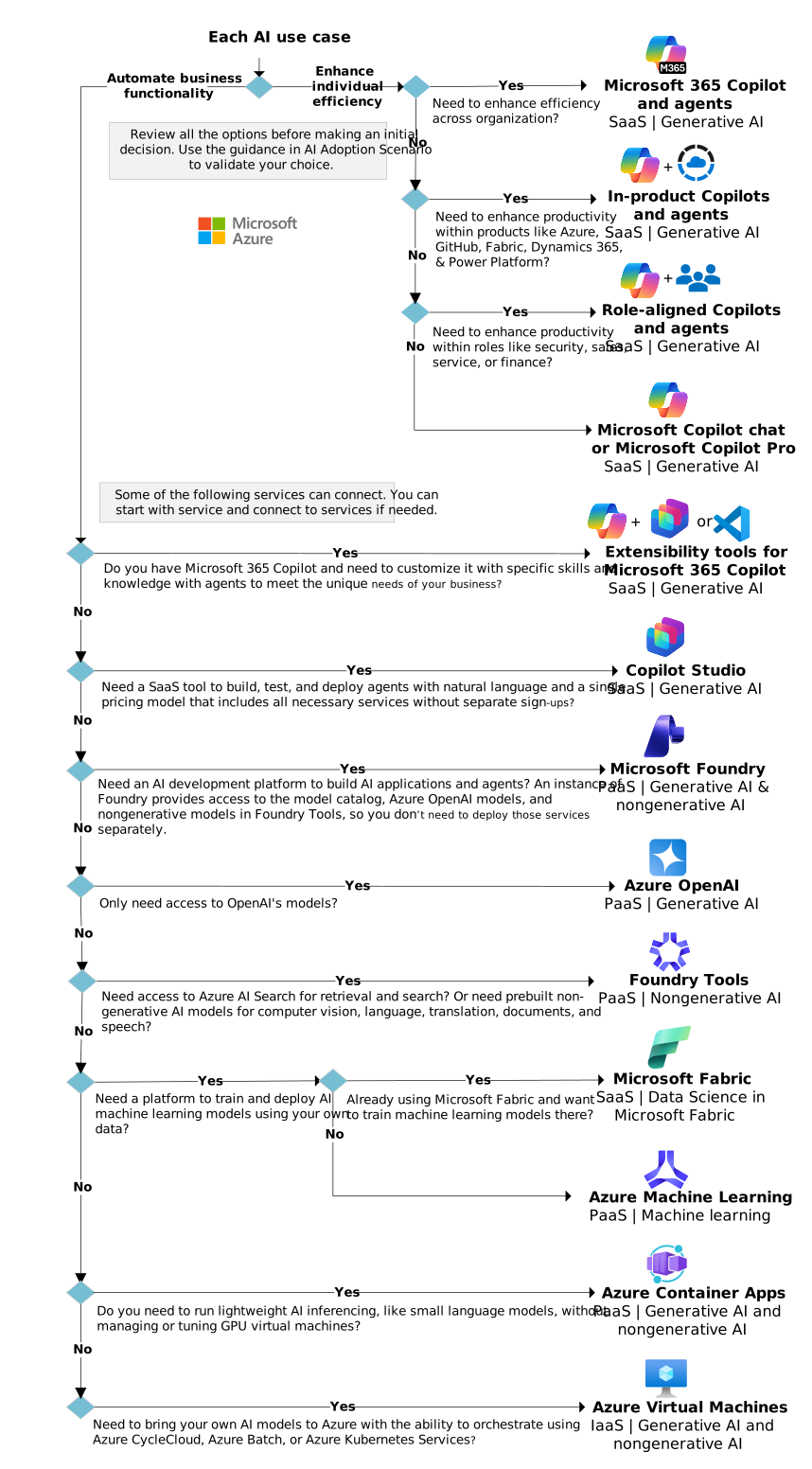
Microsoft provides solutions for both purposes. Organizations should approve the solution that meets their requirements with the least operational responsibility. Greater customization generally requires more specialized skills and greater operational ownership. Use the Microsoft AI decision tree.
3.1 Enhance individual efficiency
Do you want to enhance individual efficiency? If the goal is to improve how employees work, identify where you need assistance. Microsoft provides AI experiences that can support employees across the organization, within specific products, or within specific roles.
| AI solution | When to use | Main cost factors |
|---|---|---|
| Microsoft Copilot | Use when you need to enhance individual efficiency across the organization with AI grounded in work and web context. | License |
| In-product Copilots and agents | When you need AI productivity assistance in GitHub, Power Apps, Power BI, Dynamics 365, Power Automate, Microsoft Fabric, Microsoft Entra, and Azure. | Base product subscription or included |
| Role-based Copilots and agents | When you need role-specific help for Security, Sales agent, Service, and Finance agent. | License or included |
| Copilot chat | Use when you need secure AI chat grounded primarily in web data and don't need the full licensed Microsoft Copilot experience. | Free |
3.2 Automate business functionality
Do you want to automate business functionality? If the goal is to augment or automate business processes, choose the AI solution that provides the required level of customization with the lowest operational responsibility.
3.2.1 AI on SaaS platforms
Do you want to make SaaS (low-code, no-code) AI development platforms available? SaaS and low-code platforms reduce the technical effort required to create AI capabilities. Start with these AI options when they provide enough customization for the business need. Microsoft Copilot Studio provides a managed platform for creating agents and connecting them to organizational data and systems.
| AI solution | When to use | Main cost factors |
|---|---|---|
| Extensibility tools for Microsoft Copilot | Use when your organization uses Microsoft Copilot and needs to customize it with specialized knowledge and agents. | Microsoft Copilot licensing and metered usage |
| Microsoft Copilot Studio | Use when you need a managed SaaS platform to create and deploy agents with low-code or natural-language development. | Credits based on agent usage |
3.2.2 AI on Azure platforms (PaaS)
Do you want to build AI with Azure platform-as-a-service solutions? Managed Azure AI platforms provide greater customization than SaaS development without requiring organizations to manage the underlying compute infrastructure directly. Use this approach when SaaS capabilities don't provide enough control over models, application logic, data integration, or AI development.
| AI solution | When to use | Main cost factors |
|---|---|---|
| Microsoft Foundry | Use when you need a managed Azure platform to build custom AI applications and agents. | Model usage and other tool usage |
| Microsoft Fabric | Use when you need to train and deploy machine-learning models in Microsoft Fabric and your organization already uses Fabric for its data and analytics. | Compute (capacity), storage, replication |
| Azure Machine Learning | Use when you need to train and deploy machine-learning models on Azure using your own data. | Compute and supporting components like storage and data transfer |
| Azure Container Apps with serverless GPU support | Use when you need to run AI inference or small models on GPU compute without managing GPU virtual machines. | Compute and supporting components like model usage, storage, and data transfer |
3.2.3 AI on Azure infrastructure
Azure infrastructure shouldn't be the default approach for AI adoption. Use managed AI platforms when they meet business and technical requirements. Azure infrastructure is appropriate when the organization requires control over models or runtime environments that managed platforms can't provide. It can also support specialized performance or compliance requirements. Organizations that choose this approach must plan for greater technical expertise and ongoing operational responsibility.
| AI solution | When to use | Main cost factors |
|---|---|---|
| AI on Azure infrastructure | Use when you need to bring your own AI models or runtimes to Azure and require control that managed AI platforms don't provide. | Compute and supporting components like model usage, storage, and data transfer |
4. How to prepare an AI data foundation
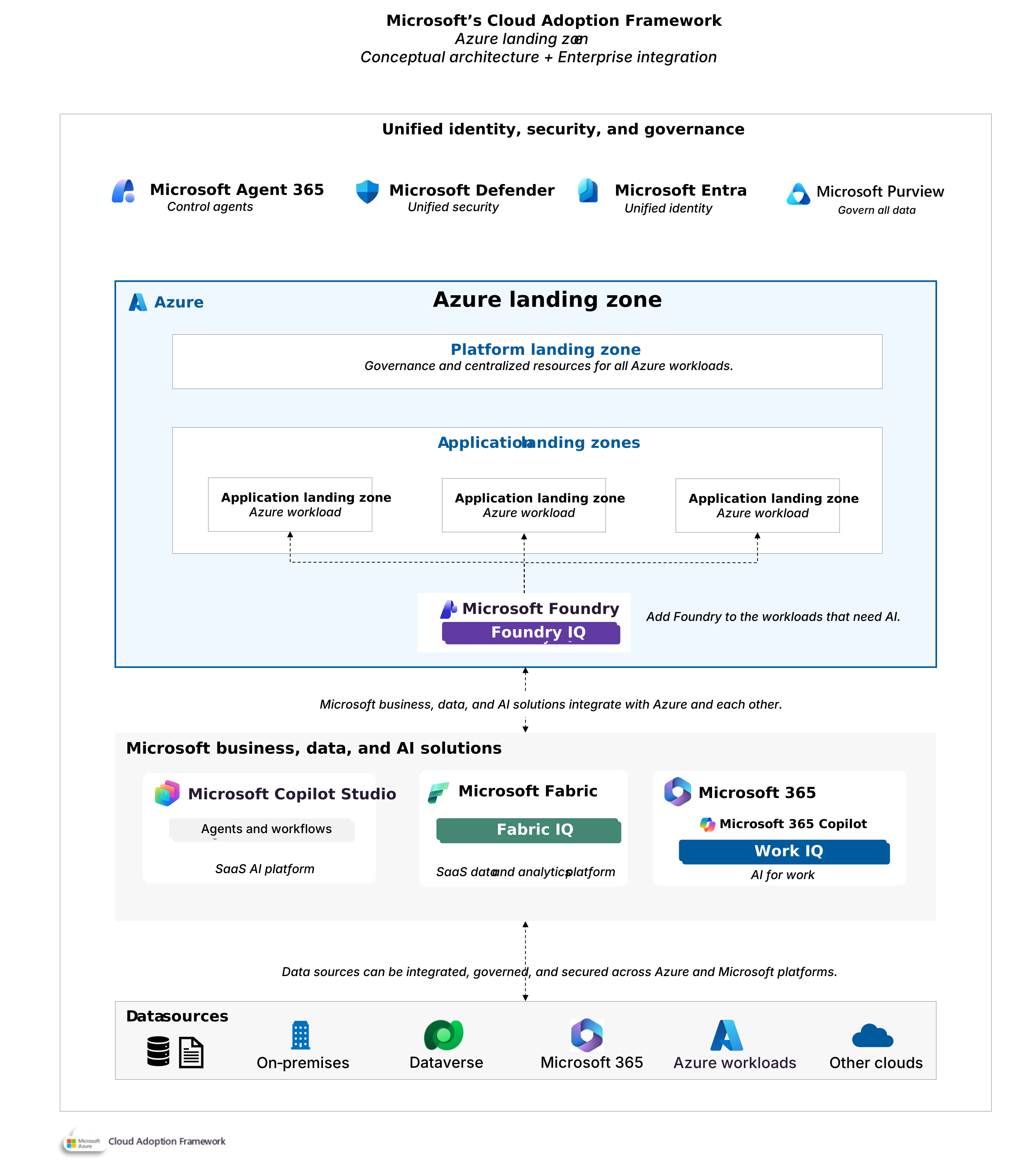
How should data support AI? AI doesn't require organizations to create an entirely new data strategy before adoption begins. The data capabilities required depend on the AI solutions and use cases the organization adopts. Identify the organizational data each AI capability requires, and ensure that you can access the data securely and govern it appropriately. For guidance, see Unified data platform for AI and Analytics.
5. How to adopt AI
Microsoft's Cloud Adoption Framework gives you a structured path, and you can distill it into steps for AI adoption. Each step builds on the one before it.

- AI planning: Turn AI use cases into a plan for moving them into production.
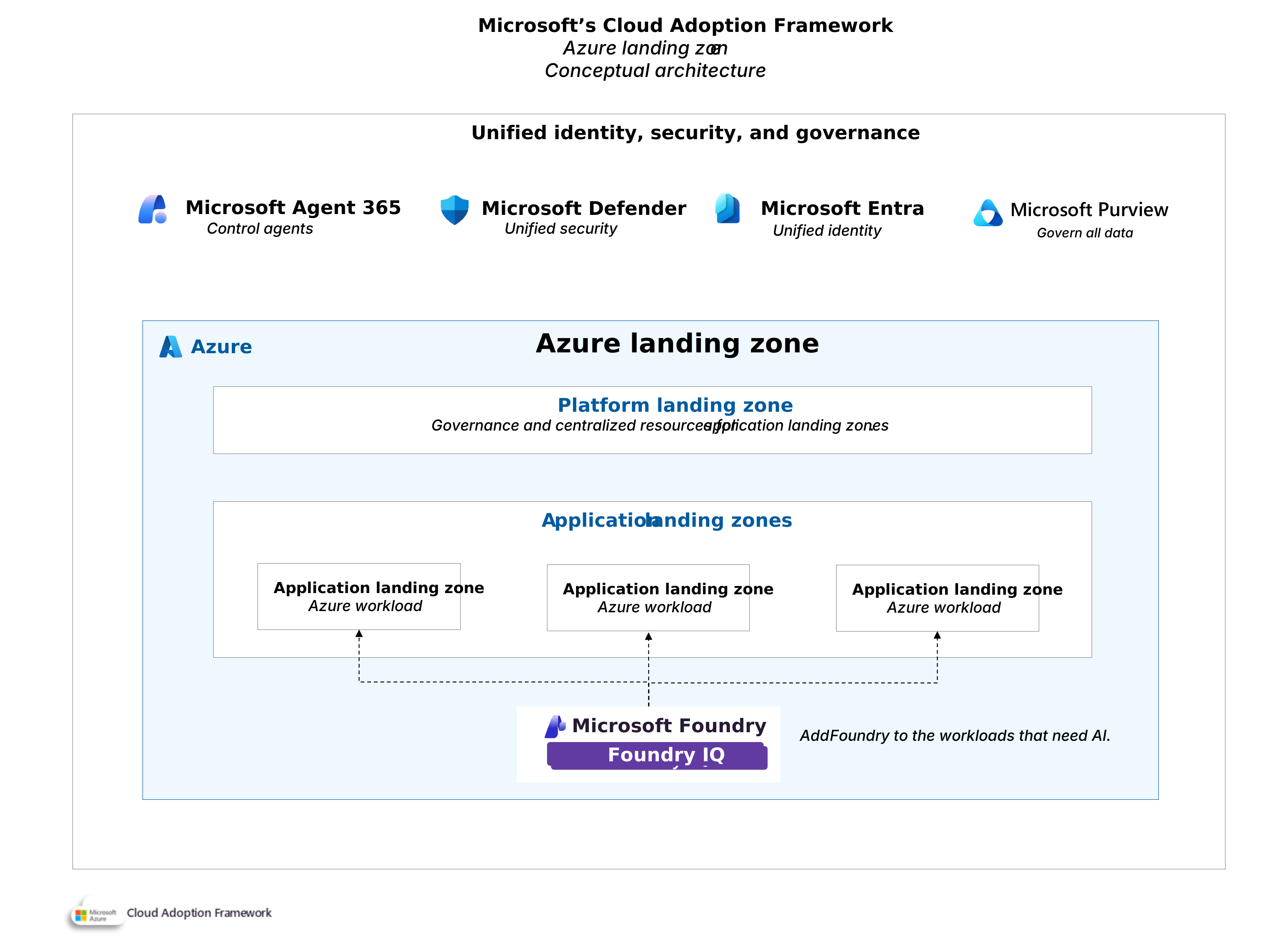
- AI ready: Learn how AI workloads fit into your Azure landing zone and determine whether your architecture or governance needs to change.
- AI govern, secure, manage: Establish standards for governing, securing, and managing AI workloads.