Note
Access to this page requires authorization. You can try signing in or changing directories.
Access to this page requires authorization. You can try changing directories.
Important
Use the UWP Sensor API instead.
The COM-based Sensor API is deprecated and should not be used in new applications. No additional features or enhancements are planned, and support will be limited.
Now that you understand some basic principles for optimizing your UI for different lighting conditions, you can look at some examples of how this optimization makes a difference when viewing content outdoors. The following images are side-by-side comparisons of laptops in direct sunlight.
The following images compare light-aware UI to normal UI on a laptop in direct sunlight. The first photograph shows what content typically looks like outdoors when a laptop is using its battery usage display settings. The second photograph shows the combination of Adaptive Brightness and light-aware UI, and how these features can work together to increase screen readability.


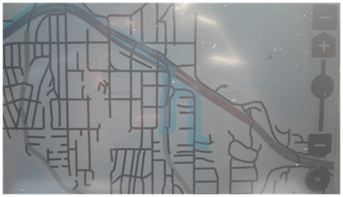
The following photographs show a navigation program as seen outdoors with light-awareness turned off and turned on. The indoor content is not usable outdoors, whereas the outdoor content is easily legible. Also note how the reflections are minimized when a black-on-white color scheme is used, as shown in the second photograph.